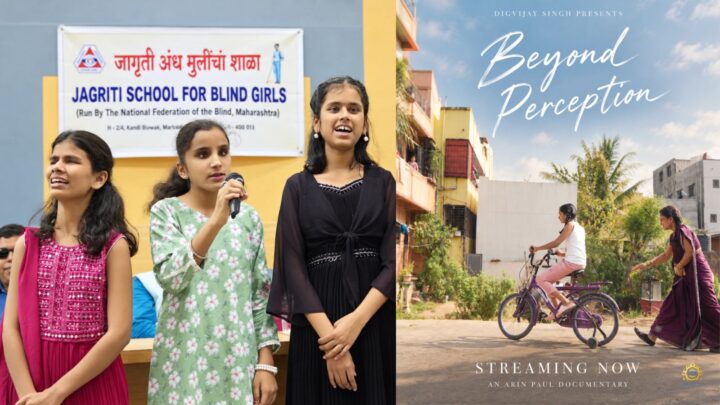
Disability is often seen before the individual, and visual impairment is no exception. Assumptions about dependence, limitation, and inability continue to shape how society interacts with people who are blind or visually impaired. But what happens when those assumptions are challenged by the voices and lived experiences of persons with visual impairment themselves?
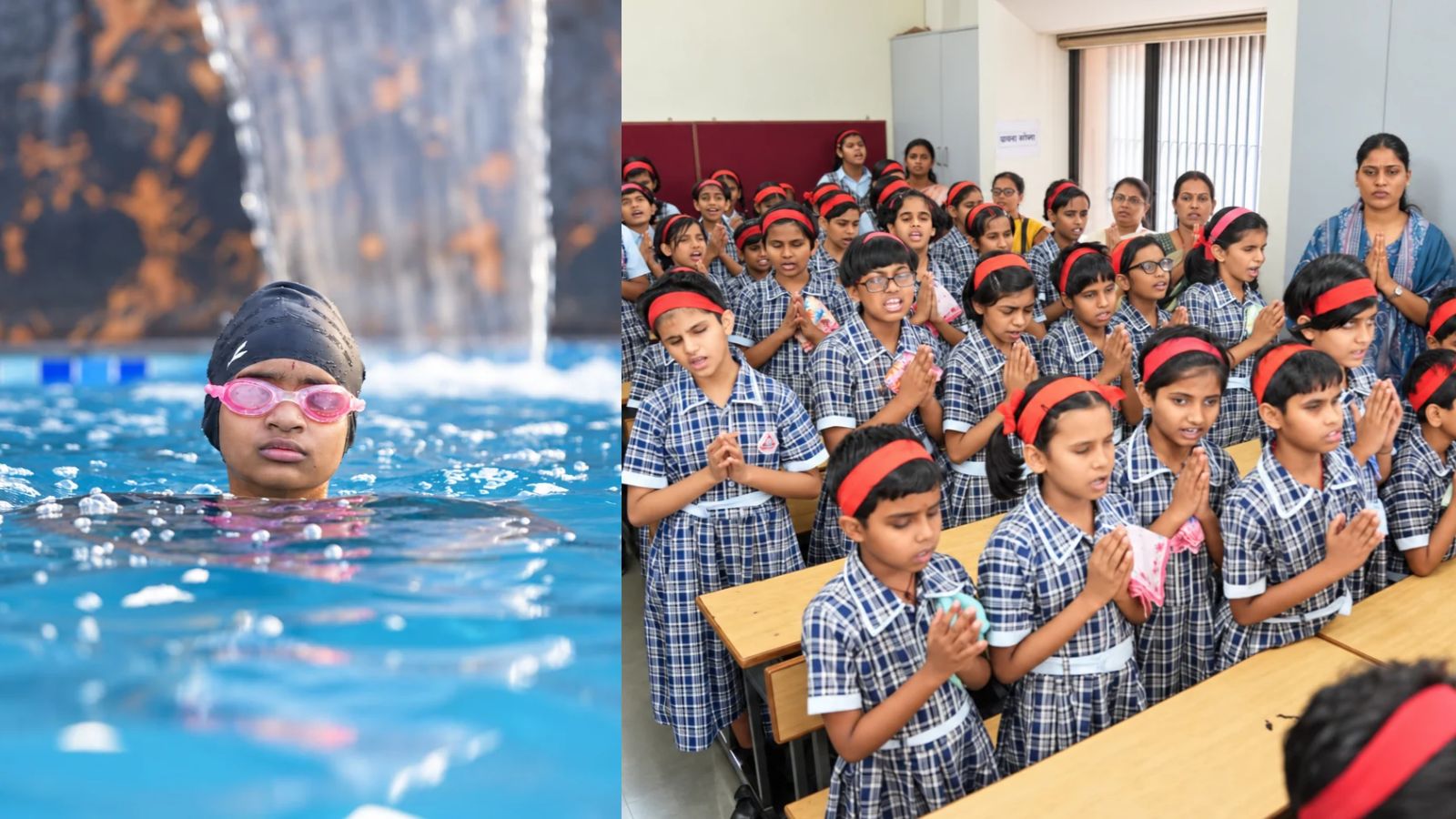
Beyond Perception is a 37-minute, 54-second documentary that addresses issues of identity, dignity, independence, and the preconceived notions that society harbours regarding persons with visual disabilities. Taking place in and around the NFBM Jagriti School for Blind Girls, in Alandi, Pune, Beyond Perception tells the story of visually disabled women who face the challenges associated with education, work, marriage, family, relationships, and other experiences.
The documentary was initiated by Digvijay Singh based on his experience of witnessing the work done by Ms. Sakina Bedi and Jagriti towards the cause of empowering persons with disabilities. The documentary was directed by the highly acclaimed and award-winning director of films related to disability, rehabilitation and social inclusion, Mr. Arin Paul, who is the founder of Arin Paul Productions. The documentary was creatively guided by Ms. Ananya Arin Paul, who is a media professional and a Creative, Executive and co-writer of the documentary.
Also Read: Autistic Teen Solves 1,000-Piece Puzzles in Minutes: How Rishaan Found His Happy Place
In this interview with us, director Arin Paul talks about visual impairment, social stigma, inclusion, and how Beyond Perception aims to change the way society sees disability.
Question) What Inspired you to make ‘Beyond Perception’ and what perception about Visual Impairment did you most want to challenge?
Answer) Beyond Perception began with Digvijay Singh. He had been deeply moved by the work of Ms. Sakina Bedi and NFBM Jagriti School for Blind Girls in Alandi, Pune. It was he who first proposed that a documentary should be made about Sakina Ji, the girls and the institution. He subsequently brought the project together and secured the financial support required to make the film possible.
When Ananya and I entered the project, our first responsibility was simply to understand this world better. We had limited awareness of visual impairment, except the fact that they are blind and thus incapable of doing many things. But visiting Alandi, speaking to Sakina ji and most importantly listening to the girls and women themselves began to change our understanding. The traces of the sympathy that we had initially actually changed into awe.
Also Read: An Ailing Wife, An Autistic Son And A Father’s Fight To Hold His Family Together.
We felt an urge to tell the world about them. To the people who may have perceptions like we did and at that point the film did not become our responsibility to make a documentary on blindness but a medium of telling stories. Removing our misconceptions. We were trying to uncover the altered perception, if I may say.
Society often notices disability before it notices the individual. The first response can be sympathy, pity, discomfort or an assumption about what that person may not be able to do. And thus comes the ignorance.
But once we began listening to the girls, those assumptions started falling apart. The limitations we often associate with Visual impairment may have less to do with the individual and more to do with the assumptions we bring to them.
They are very normal and brimming with much potential. They have their ambitions, humor, friendships, relationships, frustrations, careers, dreams and very clear ideas about the lives they want to lead. Visual Impairment is a part of their lives, but it does not define the entirety of who they are. A great deal of the thought process behind Beyond Perception developed through conversations between Ananya and me. Her perspective was particularly important because this is largely a film about girls and women, their independence, their families and the way society sees them.
Also Read: Can Children Outgrow ADHD or Autism?
Much of the eventual structure of the film came from her thinking. She repeatedly questioned whether we were allowing the women to remain individuals rather than reducing them to their visual impairment.
For us, Beyond Perception became more than a film about Visual Impairment or an institution doing meaningful work. It became an exploration of identity, independence, dignity and the distance between who people are and how they are perceived.
We did not want to make a film that asked audiences to feel sorry for these women or simply admire them. We wanted audiences to listen to them, understand their lives and question their own assumptions. In that sense, Beyond Perception is also a reflection on us. Sometimes, before we can change the way we see others, we must first recognize the limitations of our own perceptions.
Question) What drew you to Sakshi, Sheetal and Rukmini’s stories and what do their lives reveal about the realities of living with visual impairnment?
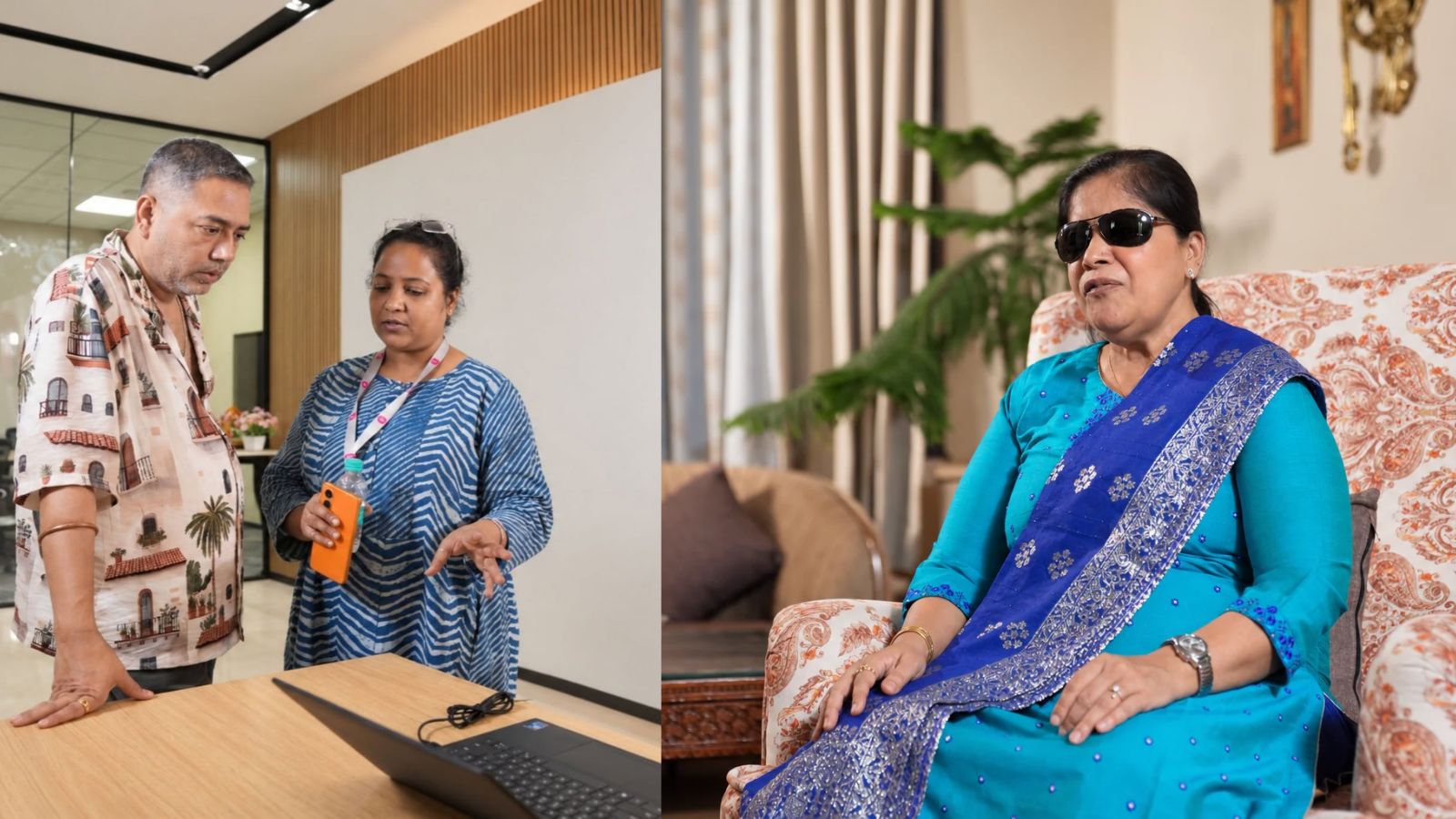
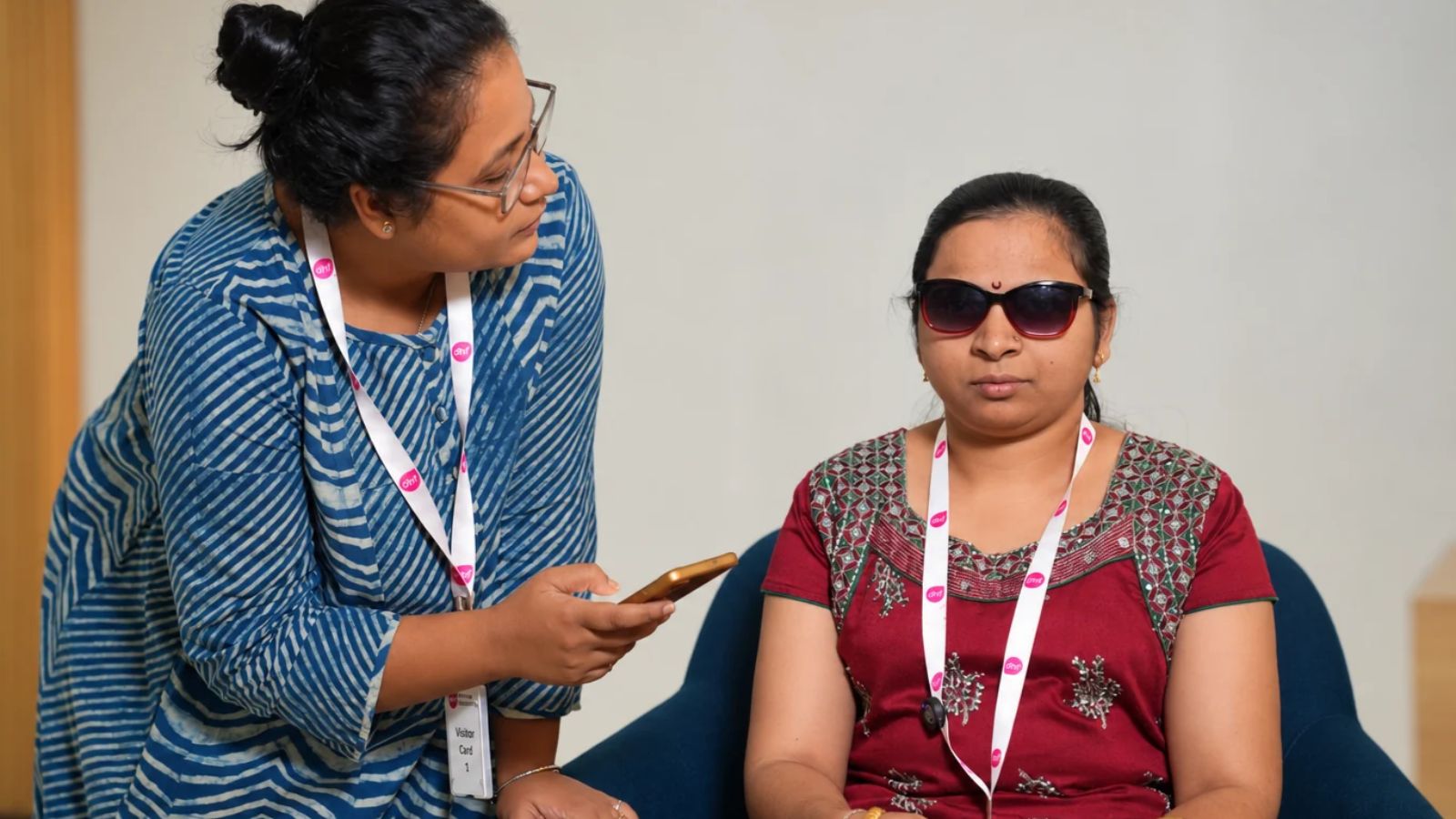
Answer) What interested us most was that there is no single experience of blindness. Sakshi, Sheetal and Rukmini are three different individuals. Their backgrounds, personalities, aspirations and ways of negotiating with the world are different. Sakshi speaks very candidly about social stigma and about childhood experiences when she could not participate in certain activities and celebrations in the same way as other children. That stayed with me because exclusion does not always arrive in dramatic forms. Sometimes it exists in very ordinary moments.
Also Read: Shivani and Vivaan: An Inspiring Autism Story From the UK
The other women reveal different dimensions of education, independence, employment, family expectations, relationships and everyday life. During the construction of the film, Ananya was very particular that these women should never begin to feel like “case studies.” Their individuality had to survive the structure. That influenced the way their stories were placed in the film and the amount of space we allowed for their voices. What emerged very strongly was that visual impairment is only one part of their identity.
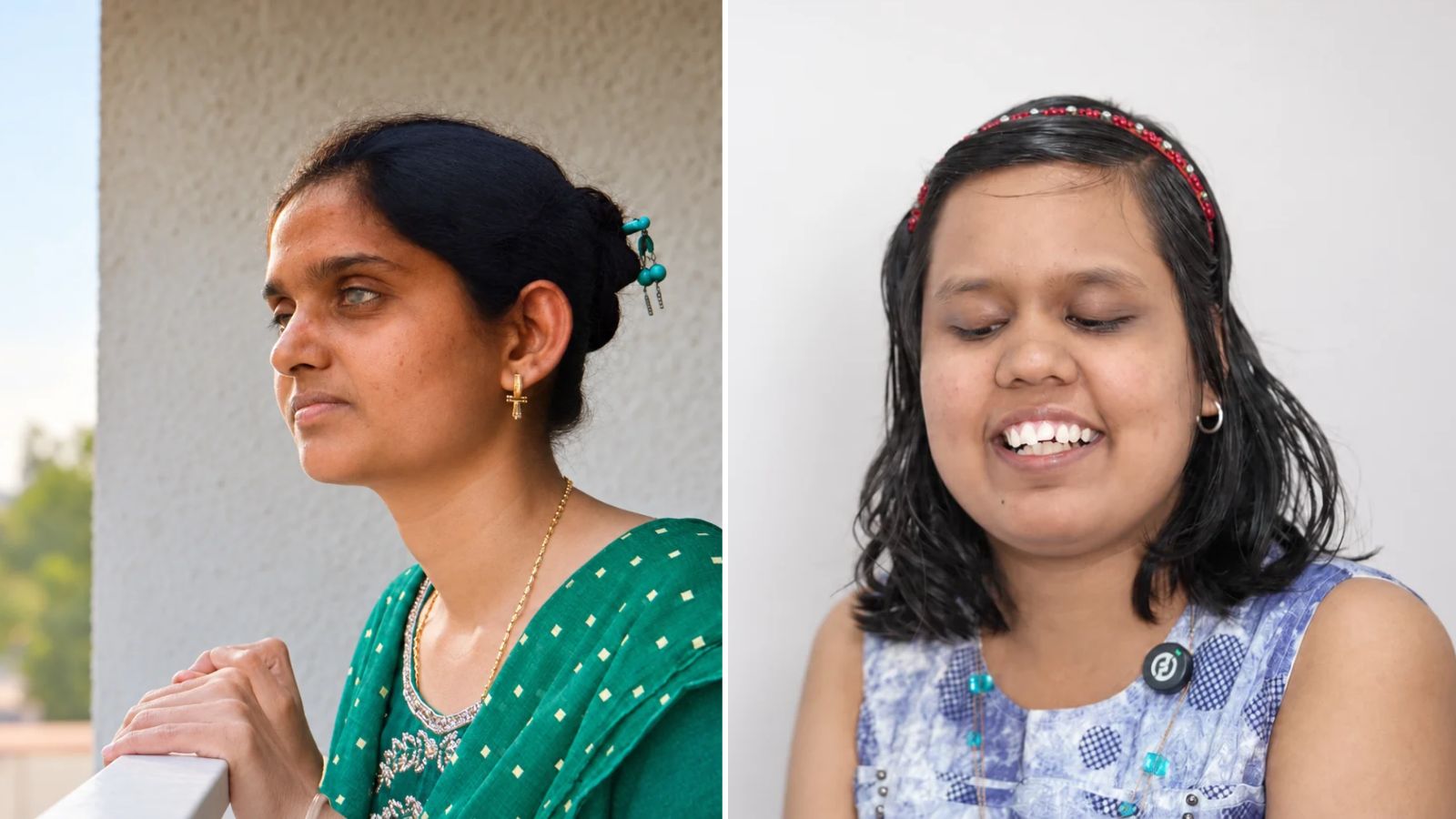
A great deal of the difficulty comes from the world around them: inaccessible environments, social attitudes and other people deciding in advance what they supposedly cannot do. We also consciously avoided presenting them either as victims or as extraordinary “inspirational” figures. They are people living their lives. That, to us, was far more powerful.
Question) One participant says,’I Can do everything. I don’t lack anything. Just the basics are different.” How does this challenge the way society defines ability and Independence?
Answer) That sentence contains a large part of what Beyond Perception is trying to say. Independence does not mean that every human being performs every task in the same way. A sighted person may use one method. A visually impaired person may use another. Touch, sound, memory, orientation skills, assistive technology or occasionally another person’s assistance may become part of that process. Different does not mean incapable. Ananya and I kept returning to this while shaping the film. Why should the sighted person’s method automatically become the standard against which everyone else’s ability is measured?
The problem begins when society defines ability according to one predetermined model of how a person is supposed to function. For me, independence means having the knowledge, confidence, access and opportunity to make one’s own choices and live with dignity. Once we understand that, the question changes. Instead of asking: “What can this person not do?” we begin asking: “What environment and opportunity will allow this person to do what they are capable of?”
Also Read: How My Autistic Son Changed My Life: A Father’s Inspiring Story
Question) How does social stigma affect not just visually impaired poeple but also their families, relationships and freedom to partcipate in everyday life?
Answer: Stigma rarely affects only one person. It enters families. Parents naturally worry about safety, education, employment, marriage and the future. Sometimes genuine concern can gradually become overprotection. Outside the family, prejudices can influence friendships, relationships, employment opportunities and even ordinary social interaction. A person may be perfectly capable of doing something, but someone else has already decided that they cannot. That is a particularly difficult barrier because it is invisible.
This was something Ananya responded to very strongly while we were working with the material. Several conversations in the film are not simply about disability. They are also about being a girl, becoming an adult, being allowed to make choices, negotiating family concerns and wanting to participate in ordinary life on one’s own terms. Physical barriers can often be identified. A staircase can be redesigned. Technology can be made accessible. But changing an attitude requires people first to recognize that prejudice exists. One of the fundamental things the film tries to suggest is that inclusion is not an act of generosity. A person with a disability should not have to earn our sympathy in order to receive an opportunity.
Participation should be normal.
Question) After making this documentary, what do you believe is the biggest obstacle preventing India from moving from the idea of Inclusion to its actual practice?
Answer) I think one of the greatest obstacles is the distance between intention and everyday behavior. We speak a great deal about inclusion, accessibility and equal opportunity. Policies and institutions are important, but inclusion ultimately must exist in schools, workplaces, public transport, families, neighborhoods and relationships. Infrastructure certainly remains a challenge. Accessible education, assistive technology, mobility, employment opportunities and trained support systems all need to improve. But attitudes are equally important. If an employer assumes that accommodating a visually impaired employee will be difficult, exclusion begins there. If a school hesitates to admit a child, exclusion begins there. If a family believes independence is simply too dangerous, exclusion can begin inside the home itself.
We will move from the idea of inclusion to actual inclusion when accessibility stops being treated as a special concession and becomes part of ordinary planning.
Also Read: He Was Bullied for Being Different. Today, Naman Misra Is Hargovind in ‘Sitaare Zameen Par’
Question) When the audience walks away from ‘Beyond Perception’, what is the one change in perception or behaviour you hope the film will inspire?
Answer: I would like people to stop making immediate assumptions. When we encounter a person with a disability, we often unconsciously begin by noticing what appears to be missing. Perhaps we should begin with the person instead. Ask what they want. Listen before helping. Do not automatically assume dependence. And do not turn every ordinary achievement into something extraordinary simply because the person has a disability. Ananya and I were very clear about one thing. We did not want people to leave the film simply saying: “How unfortunate.”
But we also did not necessarily want them to say: “How inspiring.” We would rather have someone ask: “Why did I assume that this person needed my sympathy in the first place?” If the film creates even that small discomfort or self-questioning, it has done something meaningful. The title Beyond Perception is ultimately an invitation to look beyond our first perception.
Question) Could you givs us details of the poeple who were part of this documentary, their background and stories?
Answer: Beyond Perception brings together students, former students, working professionals, parents, teachers, staff and people associated with NFBM Jagriti School for Blind Girls in Alandi, Pune. Among the central voices in the film are Sakshi, Sheetal and Rukmini.
What was important to Ananya and me was that they should never become three examples of one generic “experience of blindness.” They are three individuals with different personalities, backgrounds, ambitions and ways of negotiating life. Their stories take the film into childhood, education, independence, employment, family expectations, social stigma, relationships and aspiration.
Sakshi, for instance, speaks very candidly about experiences of exclusion and stigma from childhood. In other parts of the film we encounter women studying, working, using technology, building careers and negotiating the same questions of adulthood and independence that concern everyone else. The film also includes parents and family members. Their perspective was extremely important because disability does not exist in isolation from the family. Parents speak about fear, uncertainty, protection, education and the gradual transformation that occurs when they see their daughters developing skills, confidence and independence.
Also Read: From India to Canada: A Father’s Journey for His Autistic Daughter
We wanted all these voices to coexist without forcing them into a single narrative.
Question) What was the most emotional part of making this documentary?
Answer: There were several. One sequence that remained particularly close to me is when the screen becomes completely black while one of the girls describes her room. For those few moments, I deliberately removed the image. Cinema is fundamentally a visual medium. Suddenly, the audience has nothing to look at. They have to listen. For me, that moment was never intended to simulate blindness. That would be impossible and, in my opinion, dishonest. It was simply an attempt to temporarily remove the viewer’s dependence on the image and invite another way of experiencing that space.
But emotionally, this film was never simply my experience. Ananya and I lived with these voices for months. Some of the conversations with the girls and their families affected her very deeply and those responses eventually influenced the structure of the film. There were occasions during the edit when a sequence changed because we felt that the emotion was becoming too explanatory, too sentimental or too easy. Ananya was often the first person to question that. We both felt very strongly that compassion should never become pity. When parents speak about fear and uncertainty and then about seeing their daughters becoming increasingly confident and independent, the issue stops being abstract. And when the girls speak about the ordinary things they want from life, the distance between “their world” and “our world” begins to disappear.
Also Read: Waiting for Your Child to Speak? A Speech Therapist on the Signs Parents Should Not Miss
That was perhaps the most emotional discovery for both of us. The girls did not need us to manufacture courage or inspiration for them. Their lives already contained strength, humour, vulnerability, ambition, disappointment, affection and complexity. Our responsibility was to listen carefully enough and try to represent that honestly.