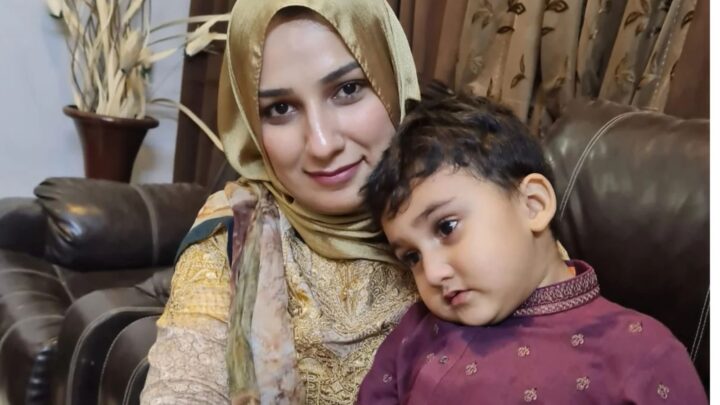
Being a clinical psychologist working in Karachi, Pakistan, when Tahira Anas was told about the diagnosis of autism spectrum disorder (ASD) of her two-and-a-half to three years old son Abdullah Bin Anas, there was no comfort she could draw from her profession. She says that the silence that ensued when sitting on the other side of the table as a mother felt surreal.
On the way back home, Tahira could not stop staring at her child’s face asking herself, “Why? How?” and thinking about his future. It was the night of endless Google searches, crying, denial and finally accepting the situation for herself and her husband, Anas Sardar. Today, as they raise six-year-old Abdullah and his sister, Sakina, Tahira’s journey is also one of reconciling clinical understanding with a mother’s vulnerability. Through her work in mental health, parent guidance and educational advocacy, she has come to see autism beyond clinical definitions, discovering the importance of acceptance, everyday breakthroughs and allowing every child to belong.
Also Read: Cannes Grand Prix to Autism Dad: How Ashiish V. Patil’s Son Changed His Definition of Success
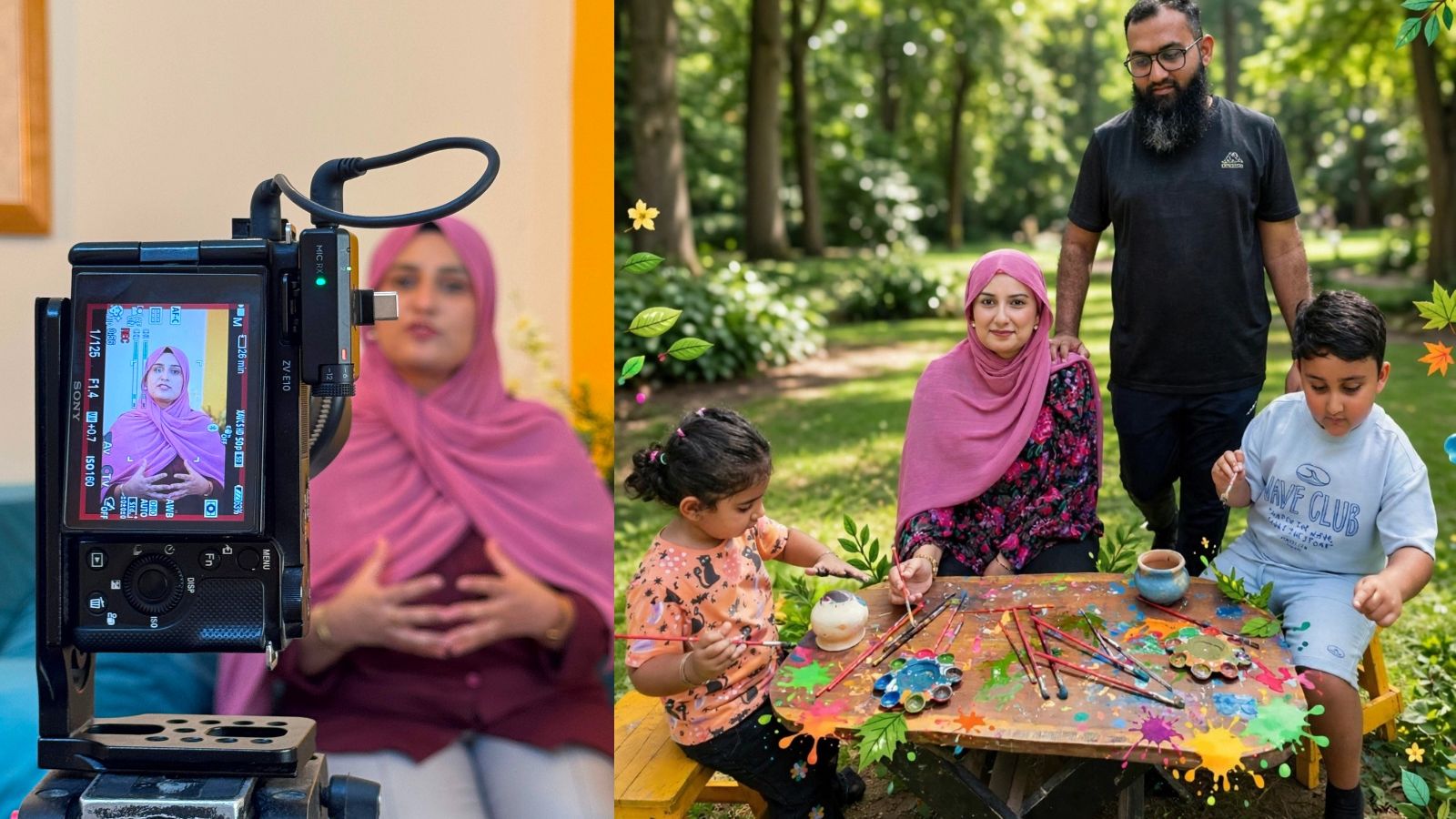
In this interview with All About Inclusive, Tahira shares about the emotions behind having an autistic child even when she is a trained clinical psychologist. She recounts how it feels to be faced with the grief of the initial diagnosis, redefining what it means to succeed, finding balance between raising both her children and creating an environment that is accepting and accommodating to all people with autism.
Question) As a clinical psychologist, you may understand the diagnosis professionally, but how did you process it emotionally as a mother?
Answer) Trust me when I say this, no amount of clinical training can insulate a mother’s heart from the raw weight of a diagnosis. As a clinical psychologist, my brain immediately began categorizing: DSM criteria, developmental milestones, speech and occupational therapy protocols, and early intervention frameworks. I knew the roadmap on paper.
But as a mother, the emotional reality was entirely different. I sat with the heavy, human quiet of mourning the effortless path I had unconsciously imagined for my child. There was a period of intense grief not because I loved him any less, but because I feared how a rigid world would treat my Abdullah. For a while, I felt completely split in two: the practitioner who knew what to do next, and the mom sitting on the bathroom floor just wanting to hold her child and cry. The real healing began when I allowed the mother in me to process the grief fully, using my clinical knowledge not as armor to hide behind, but simply as a quiet compass to help guide us forward.
Also Read: An Ailing Wife, An Autistic Son And A Father’s Fight To Hold His Family Together.
Question) Did becoming a mother to an autistic child change the way you look at autism, parenting and neurodiversity?
Answer) Becoming Abdullah’s mother completely dismantled and rebuilt my professional perspective. In clinical textbooks, developmental conditions are often framed around deficits what a child cannot do compared to neurotypical benchmarks. Living with autism daily taught me to view neurodiversity through an acceptance-based, strength-focused lens. Parenting Abdullah forced me to toss out societal timelines and standard definitions of success. Progress is no longer measured by arbitrary age charts; it is measured in the profound beauty of everyday breakthroughs a new form of communication, a moment of unforced eye contact, a shared belly laugh, or a successful transition through a sensory overload moment. Neurodiversity isn’t a disorder that needs to be “cured” or masked to fit into society; it is a distinct, valid, and deeply authentic way of experiencing the world.
Question) What is one thing you wish every parent of an autistic child knew when they first receive the diagnosis?
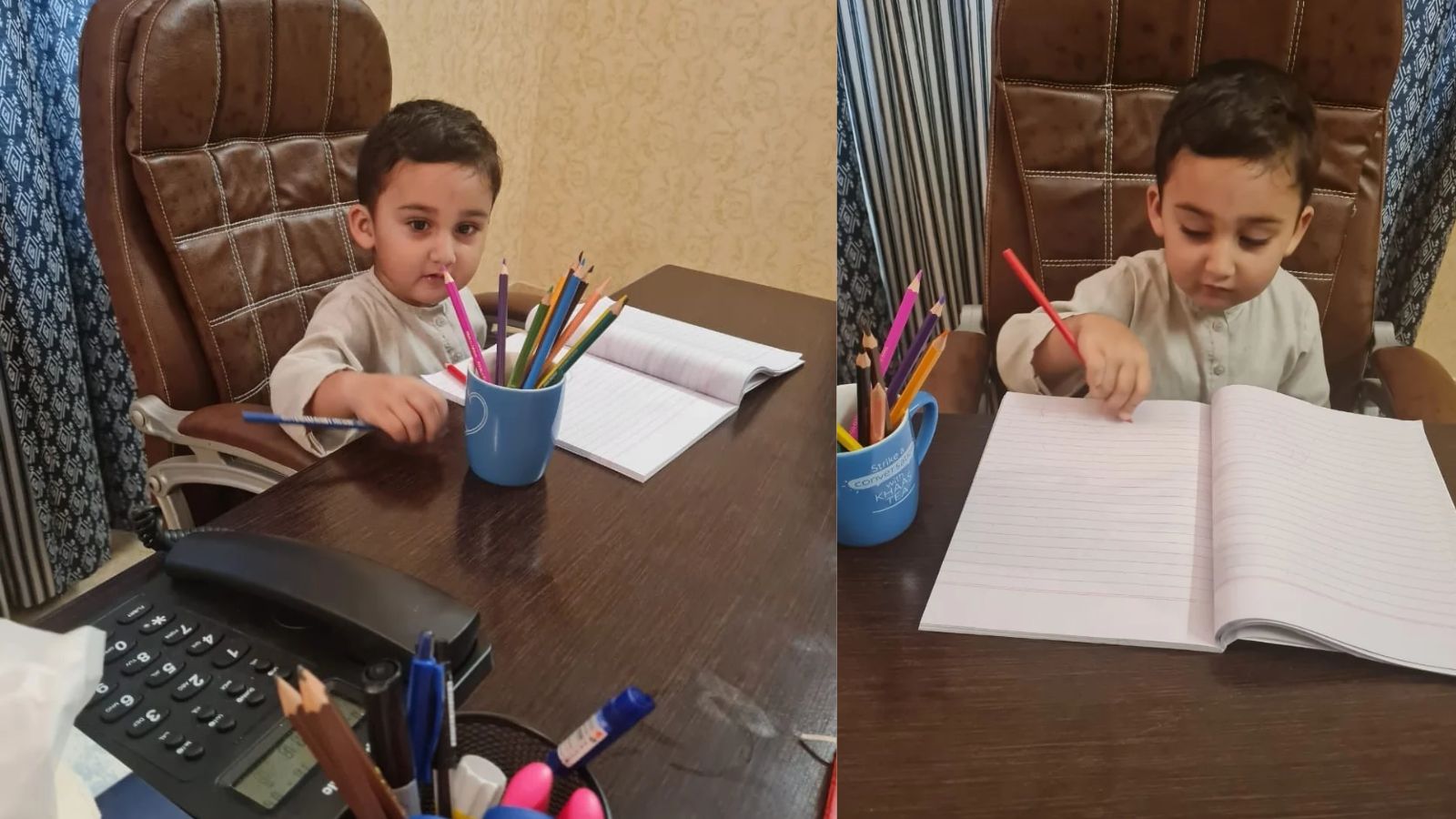
Answer) Your child is the exact same beautiful soul they were five minutes before the diagnostic report was signed. A diagnosis is a tool for access, understanding, and support, use it like that only. It is not a limit on your child’s potential, nor is it a rededication of who they are. Do not let clinical terminology or scary statistics eclipse the joy of discovering your child’s personality, humor, and unique strengths. The piece of paper gives you a map to advocate for them; it does not change the essence of the child holding your hand.
Question) Have you ever experienced the fear of not doing enough for your child? How do you deal with those emotions?
Answer) I guess daily! The constant worry of whether you are doing enough therapy, enough sensory integration, enough patience, enough research is an almost universal burden for parents of neurodivergent children. I have felt that heavy exhaustion in my chest many times, many times in a single day…wondering if I’m failing him on days when therapies feel overwhelming or when meltdowns occur despite our best efforts. When those emotions take over, I ground myself in a simple clinical and maternal truth: self-regulation precedes co-regulation.
Also Read: The Mother I Became After My Child’s Autism Diagnosis
A burnt-out, perpetually anxious parent cannot provide the calm anchor an autistic child needs to feel safe. I handle those feelings by:
-Focusing on micro-moments: Prioritizing genuine connection over a rigid checklist of therapeutic goals.
-Reframing success: Reminding myself that doing my best looks different every single day, and love and emotional safety are the most critical therapies of all.
-Practicing self-compassion: Extending the same grace to myself that I offer to my therapy clients.
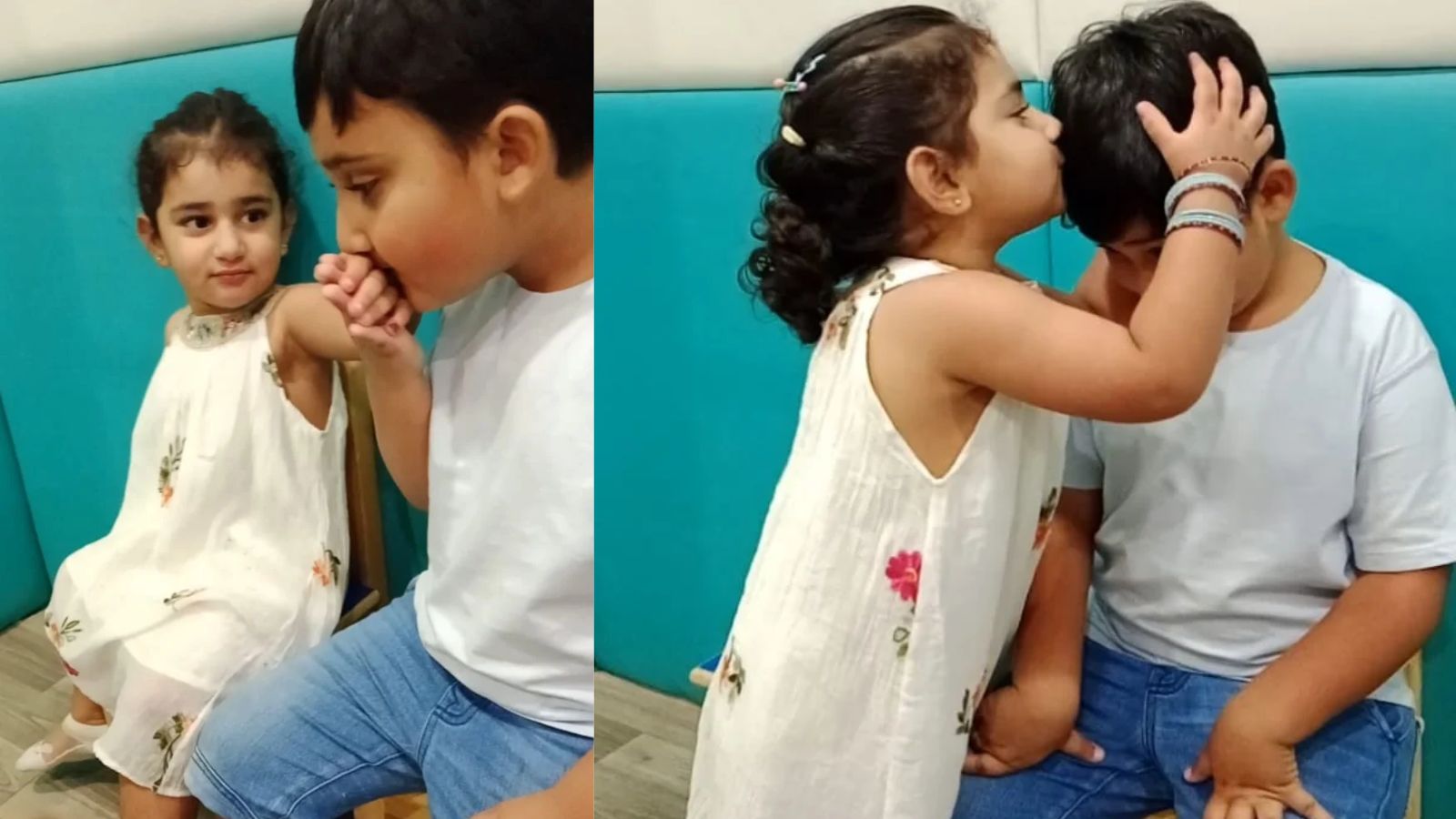
Question) How do you ensure that your other child feels equally loved, heard and included while meeting the additional needs of your autistic child?
Answer) Ensuring that my daughter, Sakina, feels deeply seen, cherished, and prioritized alongside Abdullah’s additional needs is one of my most intentional daily efforts. It is easy for siblings of children with special needs to inadvertently become “glass children” quietly suppressing their own needs because they see how much support their sibling requires.
To prevent this, my husband and I build intentional structures into our home:
-Dedicated One-on-One Time: Creating sacred, uninterrupted rituals just for Sakina where she has our total, unshared attention to talk about her day, play, or express whatever is on her mind.
– Validating Her Emotions: Giving her absolute permission to express frustration, jealousy, or sadness without guilt. She is allowed to have hard days too.
– Protecting Her Childhood: Ensuring she is allowed to simply be a child and Abdullah’s sister, rather than expecting her to carry the emotional burden of being a secondary caregiver.
But yes, still I sometimes feel I am failing Sakina! When she says Abdullah is your favourite just because she sees me being out with him for his therapies and routine.
Also Read: Can Children Outgrow ADHD or Autism?
Question) As a mental health advocate, philanthropist and mother, who do you turn to when you feel emotionally exhausted? How do you take care of your own mental health?
Answer) When you work at the intersection of mental health advocacy, philanthropy, community work, and raising a family, burnout is a real risk. But off course it multiplies when you are a special needs parent specially in our society so When I reach emotional exhaustion, I turn first to my husband, Anas. He is my absolute anchor and sounding board. Most of the days he understands but some days even he himself is exhausted and drained. I also lean on a close circle of family and trusted peers who understand the nuanced realities of our life without needing explanations.
My personal mental health routine isn’t about grand gestures; it’s anchored in daily boundaries:
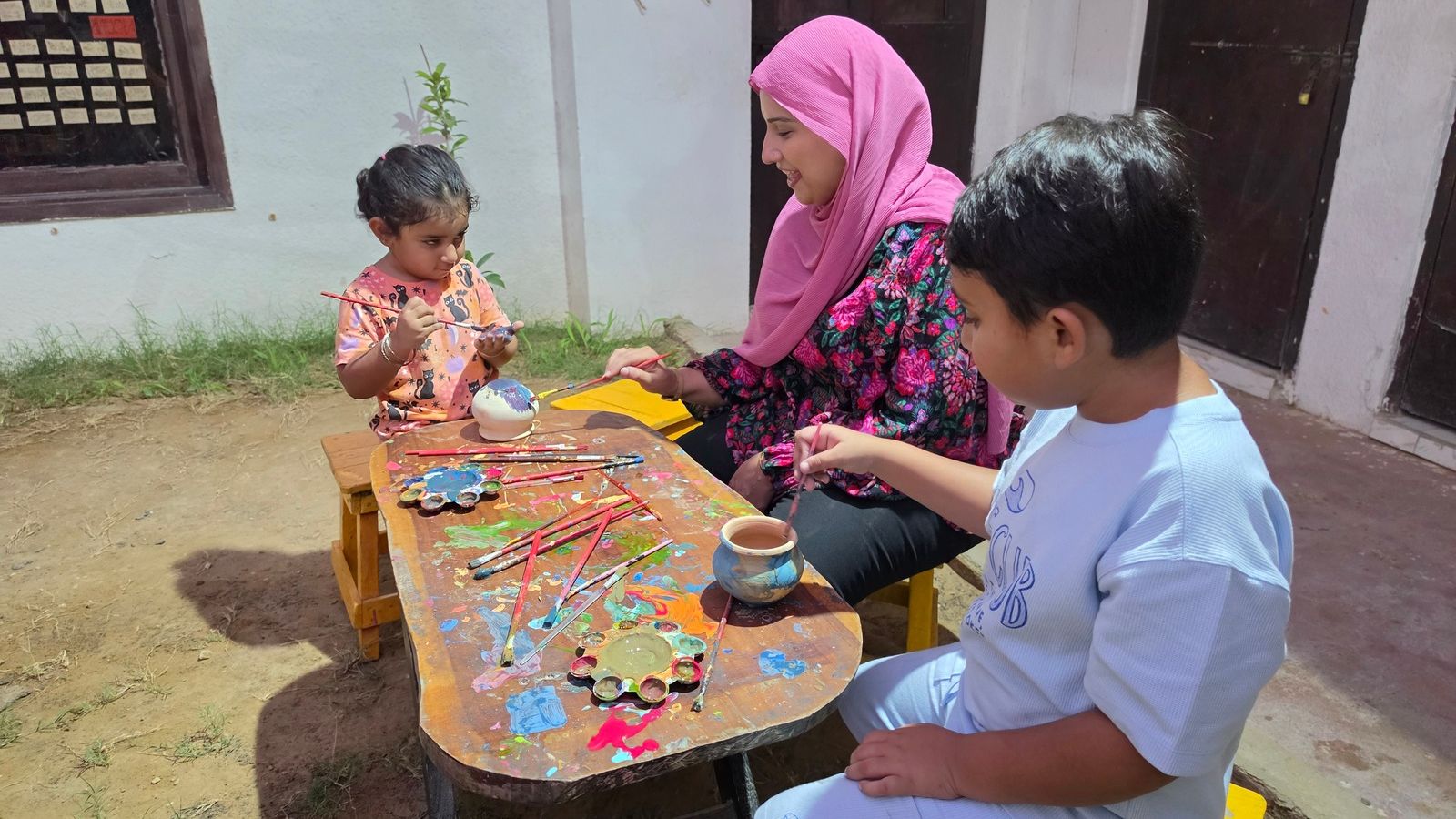
– Creative and Professional Outlets: Channelling my energy into educational content creation, parent consultations, advocacy work, and helping My father-in-law in His clothing brand Tana. Having fulfilling creative domains outside of daily domestic routines restores my sense of identity.
– Sensory and Physical Grounding: Taking quiet walks, practicing quiet reflection, and enjoying simple, solitary moments with a warm cup of tea.
-Setting Hard Boundaries: Learning to say no to non-essential commitments so I can protect my energy for my family and my core work.
Also Read: Autistic Teen Solves 1,000-Piece Puzzles in Minutes: How Rishaan Found His Happy Place
Question) What is one deeply rooted misconception about autism you want society to unlearn? And what would a truly inclusive world look like for your child?
Answer) The most deeply rooted misconception I want society to unlearn is that different doesn’t mean any lesser than us, or inferior. They are different yet beautiful and unique.
Another is autistic individuals lack empathy, emotion, or a desire for connection. Autistic people often feel empathy and sensory input far more intensely than neurotypical individuals so intensely that it can become overwhelming. Their expression of connection, affection, and empathy simply looks different than traditional social expectations. Silence or self-stimulation is not disinterest; it is often how they process a world that is too loud.
A truly inclusive world for Abdullah would not be one that merely “tolerates” or accommodates him out of obligation. It would be a world built with universal design and sensory awareness in mind, where schools, public spaces, workplaces, and communities naturally accommodate different communication styles, learning paces, and sensory needs without judgment, pity, or the expectation that a neurodivergent person must mask who they are to belong.
Abdullah was diagnosed with autism spectrum disorder (ASD) when he was around two and a half to three years old. Even with my professional background, sitting on the other side of the desk as a parent hearing those diagnostic conclusions confirmed brought a heavy, surreal stillness to the room. I vividly remember the drive home, I & Abdullah was in car, I was looking at his face again and again and asking Myself why? How? the overwhelming flood of questions about what his future would look like, Googling things whole night, crying in episodes, building acceptance of Anas as he was in denial and building that capacity to accept we are going to learn how to navigate this together step by step.