Being a parent of a special child involves many things: getting a proper diagnosis, understanding the condition of your baby and undergoing the relevant treatments. But most importantly, a special parent has to face social discrimination in many cases. The problem does not lie in the disability but in social barriers surrounding it.
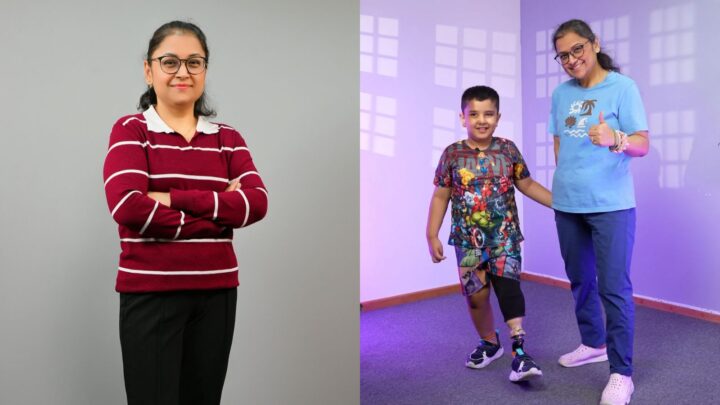
Isha Sahu, the Co-Founder and CEO of DiyaaHQ, a Dubai-based organization aimed at fostering inclusivity and acceptance for persons with disabilities, experienced many difficulties herself after her son was diagnosed with Amniotic Band Syndrome (ABS). This condition resulted in congenital limb difference. At first, Isha had to deal with challenges related to the lack of knowledge of her son’s condition in India. But when she moved to the UAE in 2021, everything changed – she saw what an inclusive society is capable of.
Now Isha decided to use her experience and work on making society even more inclusive with DiyaaHQ. She hopes to fight for accessibility, representation and acceptance as well as give a voice to those whose voices were ignored so far.
Also Read: Faith Over Fear: Dubai-Mother Dr Nazima Saiyed on Raising Her Non-Speaking Autistic Son
In this conversation with All About Inclusive, Isha reflects on her journey from India to Dubai, what countries can learn from the UAE’s approach to inclusion, and the emotional realities of special parenting. She also shares a heartfelt message for parents who worry about their children’s futures.
Here’s what she has to say:
Question) If you could give us details about your journey?
Answer) My journey into the world of People of Determination did not begin with Diyaa. It began the day my son was born. My son was born with Amniotic Band Syndrome (ABS), which resulted in a congenital limb difference. And very suddenly, we found ourselves navigating a world we knew almost nothing about.
What I was perhaps least prepared for was not his limb difference. It was how differently the world could sometimes respond to him because of it. In India, as a family, we experienced moments of exclusion and a lack of understanding across different parts of our ecosystem, sometimes within family and community, sometimes in the larger environments we were trying to navigate. I don’t say this to blame a country or a culture. I think much of it came from unfamiliarity. People often simply did not know how to respond to a child who looked or moved differently.
But when you are a parent, that lack of awareness can feel deeply personal.
You are already trying to understand your child’s future, advocate for them and make the right decisions. At the same time, you find yourself explaining your child to the world, why they are not broken, why they do not need pity, and why they deserve the same childhood, opportunities, friendships and sense of belonging as any other child.
In 2021, in the middle of COVID, we made the decision to restart our family journey in the UAE. And, over time, the UAE has become much more than the country we had moved to. It has become home.
What we found here was an ecosystem that was willing to understand. We encountered greater awareness around People of Determination, conversations around accessibility and inclusion, and, most importantly for us as parents, a sense that our son did not constantly have to be explained before he could simply be a child.
That does not mean every experience has been perfect, or that the work of inclusion is finished. It isn’t. But we experienced enough empathy, acceptance and possibility here to understand what happens when a society consciously chooses to make inclusion part of its language and its systems.
We will proudly call the UAE our forever home for that reason.
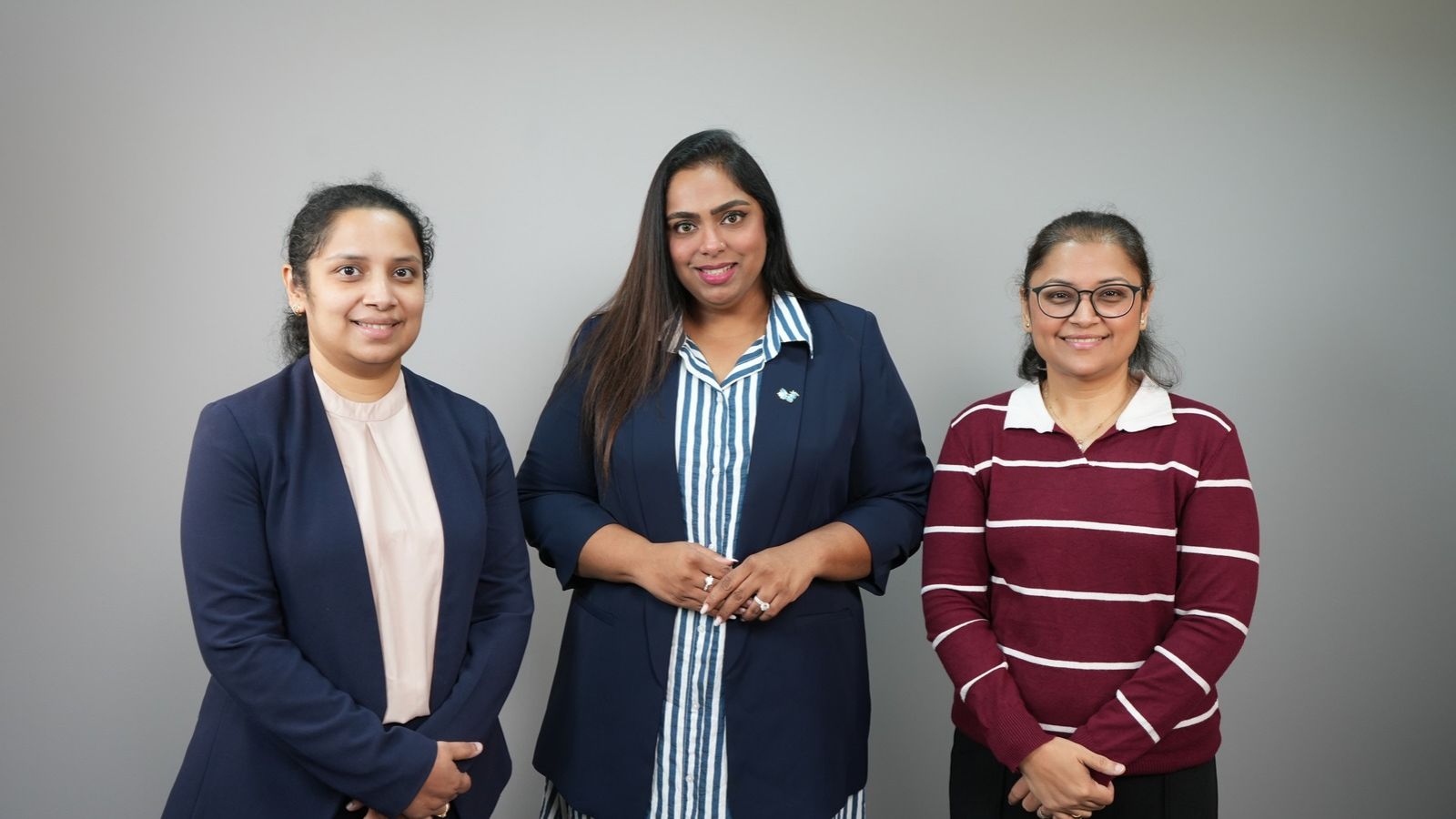
And somewhere along this journey, my experience as a mother also became our reason for building DiyaaHQ, an ecosystem for inclusion and accessibility and registered brand of ThriveHQ, with my 2 co-founders who are also mothers navigating motherhood and parenthood in their own special way. We are also building Paretning360HQ and TheMomsHQ alongside for Parents and Mothers exclusively.
Because I realized that awareness matters. Representation matters. The words we use matter. The environments we create matter. And sometimes the difference between a family feeling isolated and a family feeling that they belong begins simply with someone being willing to understand. DiyaaHQ comes from that lived experience. It is our hope that through stories, conversations, advocacy and real-world inclusion, we can help create more spaces where children and People of Determination do not have to first prove that they belong. They Simply Do.
Also Read: The Mother I Became After My Child’s Autism Diagnosis
Q) Dubai is emerging as a powerful example of inclusion. When it comes to inclusive education and understanding children of determination, what can India and other countries genuinely learn from Dubai?
Answer: What Dubai, UAE is showing the world is that inclusion works best when it is not treated as charity, but as a right. One of the biggest lessons other countries can take from Dubai and UAE is that inclusion needs to be intentional. It has to be visible in schools, in public spaces, in policy, in parenting conversations, and in the wider culture. UAE has made meaningful and impactful efforts to shift the conversation from “accommodating” children of determination to actively creating environments where they can participate, learn and belong.
There is still work to be done, of course, as there is everywhere. But what stands out is the willingness to build systems, language and awareness around inclusion in a way that feels forward-moving. That mindset matters. Because when a society starts seeing Children and People of Determination (a term coined in 2017 by His Highness Sheikh Mohammed bin Rashid Al Maktoum, Vice President and Prime Minister of the UAE and Ruler of Dubai) not as exceptions, but as part of the fabric of community life, everything begins to change.
Question) What is Dubai doing differently to ensure that inclusion is not limited to policy or classrooms but becomes part of how children are understood, taught and welcomed—and could this model inspire the rest of the world?
Answer: What makes UAE’s approach powerful is that the conversation around inclusion is not staying locked inside official documents. It is beginning to move into everyday life.
You can see it in schools trying to become more inclusive, in public dialogue around accessibility, in parenting communities, in sensory-friendly initiatives, and in the larger language of belonging that is slowly becoming more mainstream. Inclusion, at its best, is not just about allowing a child into a classroom. It is about understanding how that child learns, what support they need, how they communicate, and how we can make them feel genuinely welcomed.
That is the real shift. Inclusion is no longer only about access. It is about dignity, participation and understanding. And yes, this absolutely can inspire the rest of the world. Because every country needs to ask the same question: are we merely placing children into spaces, or are we building spaces that are ready for them?
Question) Every special parent remembers the moment they realized their parenting journey was going to be different. What do you think they need to hear in that moment—but rarely do?
They need to hear this: You are allowed to grieve the life you thought you were going to have, while still deeply loving the child you do have. So many parents carry guilt for feeling fear, confusion, overwhelm or heartbreak in those early moments. But those emotions do not make them less loving. They make them human.
They also need to hear that they do not have to become superhuman overnight. They do not need to know everything immediately. They do not need to have all the answers by tomorrow. What they need is space, support, information, and the reassurance that their child’s life is still full of possibility. Most of all, they need to know this journey may be different, but different does not mean lesser.
Also Read: Pranav Bakhshi Saw Himself in Mr. Bean. Today, He Is India’s First Fashion Model with Autism
Question) Special parents spend years celebrating milestones that the world may consider small—a first word, a friend, eye contact, independence. Why do you think these “small” moments carry an entire universe of emotions for a parent?
Answer) Because for many parents of children of determination, those moments are never “small.” They are hard-earned. They are often built through years of effort, therapy, waiting, advocating, hoping, worrying and showing up again and again even when progress feels invisible. So when a child says a first word, makes a friend, tolerates a new environment, communicates a need, or takes one more step toward independence, the moment carries everything that came before it.
It is not just the milestone itself that brings emotion. It is the journey behind it. The world may see one small moment. A parent sees courage, persistence, breakthrough and possibility. That is why these moments feel enormous. Because they are.
Question) Behind every child of determination is often a parent fighting battles nobody sees. How can we create a world where parents don’t constantly have to fight just to give their child a chance to belong?
Answer) We begin by shifting the burden away from families and back onto systems.
Parents should not have to fight every step of the way for access, understanding, empathy or basic inclusion. Schools, service providers, workplaces, public spaces and communities all need to become more informed and more responsive so that belonging does not depend on how loudly a parent can advocate.
We also need to stop isolating families. When support networks are stronger, when information is easier to access, when inclusive practice becomes standard rather than exceptional, parents get to spend less time in survival mode and more time actually parenting. A more inclusive world is not built by admiring parental resilience. It is built by reducing the number of battles parents are forced to fight in the first place.
Question) Many special parents quietly carry guilt—wondering if they did enough, started early enough or made the right choices. Why is it so important to remind them that they, too, are human and allowed to feel exhausted?
Answer) Because guilt has become one of the quietest and heaviest things many parents carry.
Parents of children of determination are often expected to be endlessly strong, endlessly patient, endlessly informed and endlessly available. But the truth is, they are carrying emotional, mental, physical and sometimes financial loads that are difficult for the outside world to fully see.
Reminding them that they are human is not a small thing. It is essential. They are allowed to feel tired. They are allowed to feel overwhelmed. They are allowed to question, pause, cry, rest and ask for help. In fact, they need that permission. Because burnout does not help the parent, and it certainly does not help the child. Caregivers need care too. And compassion must include them.
Also Read: Her Speech Was Delayed, Not Her Potential: Story Of 10-year-old Sanvika
Question) If you could sit across from a special parent who is scared about their child’s future tonight, what would you want to tell them—not as an advocate or an organisation, but simply from one human heart to another?
Answer) I would tell them this: Take a breath. You do not have to solve your child’s entire future tonight. I know the fear is real; I have been there. Sleepless nights, silently crying, anger, sadness, the Why Me conversation with self. I know the questions can feel endless. What will happen next? Will they be okay? Will the world be kind? Will they belong? Will they be safe, supported and loved?
But tonight, before anything else, I would want that parent to know they are not failing because they are afraid. Fear and love often live side by side in this journey. And I would remind them that children of determination are not defined only by the uncertainties ahead of them. They are also defined by their joy, their potential, their individuality and their right to a meaningful life.
One day at a time. One step at a time. One moment at a time. You do not have to carry tomorrow all at once.