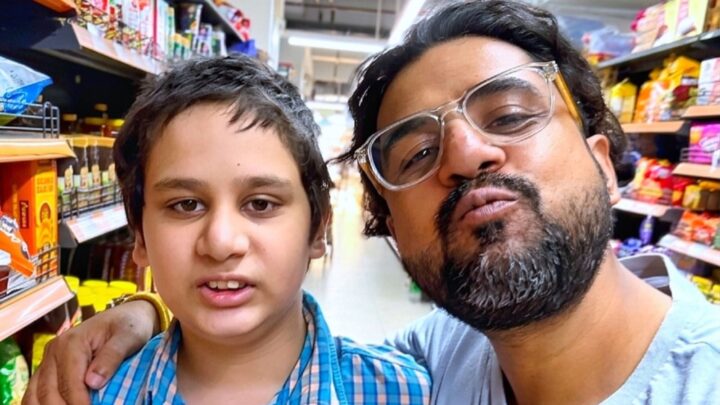
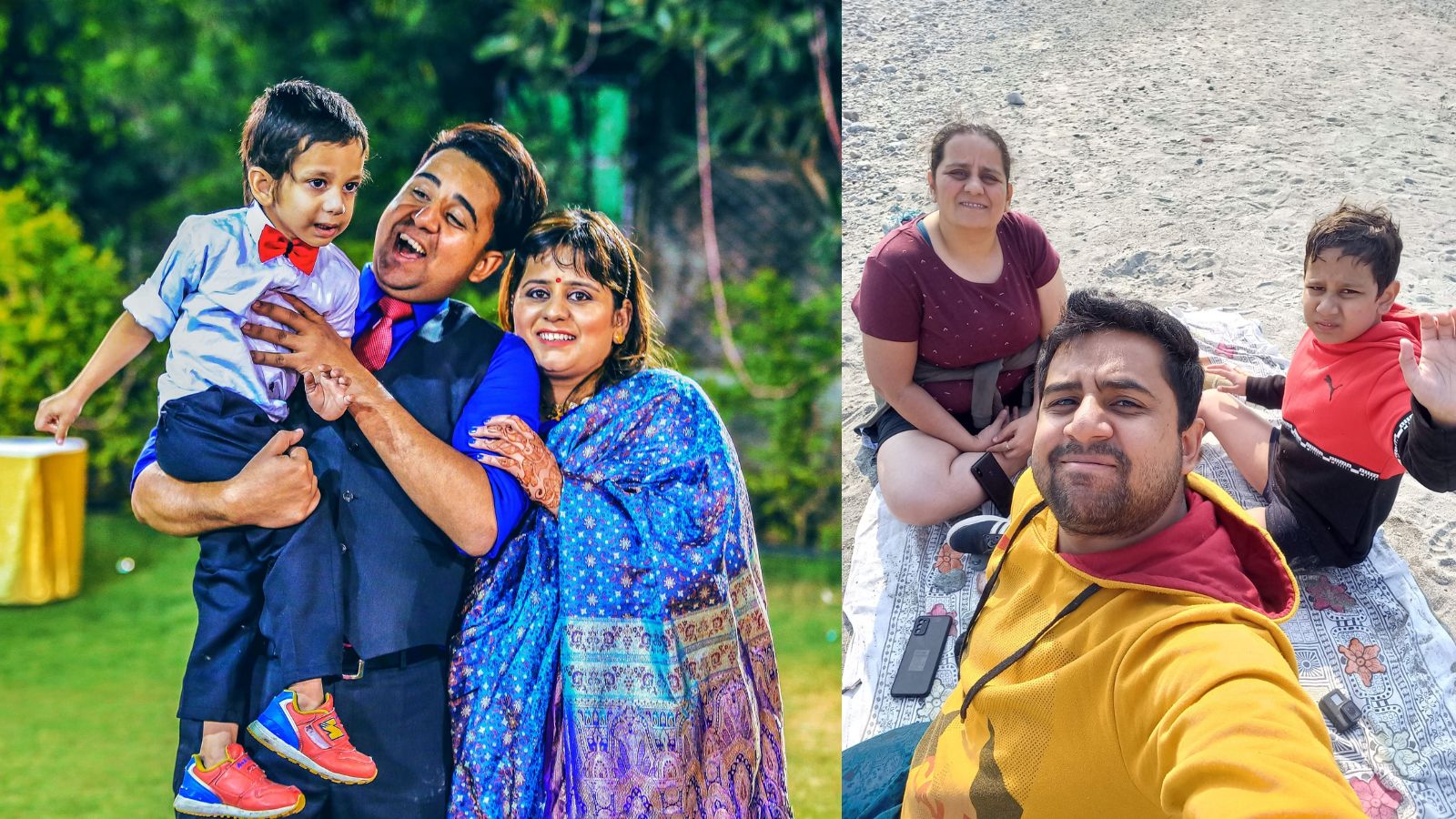
Medhya was diagnosed with autism when he was 1.8 years old. He is now 14 and giving some major life goals to his father—goals that his father never thought he had in him. The power to say no, the detachment from unwanted people, and not getting affected by things that don’t belong to him. That’s the power of autism, and that’s the life Medhya is living with his beautiful family—his 38-year-old father, Swapnil Narendra, and 42-year-old mother, Iva Bhatt, in Delhi.
Also Read: (Dis)ABLE at CJP Protest: What’s Your Excuse?
Swapnil recalls the time when his previous society became so cruel to his son that they had to vacate the house after the landlord’s persistence, but that didn’t deter their smile towards a better future with their son.
In this interview with All About Inclusive, Swapnil talks about the challenges they had to face from society at some point in life and how his son taught them the most valuable lessons of life.
Q) In one of your videos, you speak about feeling judged when your child has a public meltdown. Was there a specific incident that changed the way you saw society—and yourself—as a father?
There wasn’t just one incident. There were many. But one that has stayed with me happened in the society where we once lived. This was not one of Medhya’s meltdowns, but something where the society showed us its true colours.
Also Read: Open Letter to Therapy Centre Owners of India
Medhya loves elevators. He could spend hours watching the doors open and close. One day, a neighbour locked my mother, my wife and him inside the building because they felt he was “disturbing” people. What followed wasn’t concern or curiosity. It was a humiliation where my family was called to the RWA offices and were verbally abused along with my toddler. Later, they conspired with our landlord and made us vacate the flat.
That day I realised something important. Most autistic children are not fighting autism in public. They’re fighting society’s expectations. For a long time, I kept apologising for my son. “Sorry, he’s autistic”. “Sorry, he doesn’t understand.” Somewhere along the way, I stopped.
Today, if Medhya takes up space in a park, a mall or a restaurant, I don’t feel guilty anymore. Public spaces belong to him just as much as they belong to everyone else. And now I have a rule that as a father my most important job is to ensure that my son feels safe.
Also Read: Can Children Outgrow ADHD or Autism?
That wasn’t just a change in society. It was a change in me.
Q) People often celebrate mothers for caregiving, but fathers are expected to “stay strong.” What emotional struggles have you faced that very few people know about?
People think fathers don’t cry because we don’t feel enough, but the truth is the opposite. Many of us don’t cry because we don’t know where to put those emotions.
My wife, Iva, carried the heavier burden for years. She left her career, took Medhya to therapies, fought battles I wasn’t even present for. I often say that whatever independence Medhya has today is because of her. But my struggle was different. I was trapped in an abusive job, where I did not want to burden my family with my shame and guilt of not being enough.
On the other hand, even I was struggling with understanding my son’s condition, but the world does not allow you the space to do that. Society expects men to be productive, no matter what is going on in their lives. And even when I would bottle it up, there was the biggest fear; wondering who will hold my son’s hand after we’re gone.
A lot of men resort to alcoholism or detachment, I was lucky enough to have a wife who supported me through all this. But now nothing takes a bigger headspace in my life than my family. This is another rule I have set myself in place -Work won’t take care of my child when I won’t be there so work should not distract me from my child.
Q) How has raising an autistic child changed your definition of success, happiness, and what it means to be a good parent?
Before Medhya, success looked like money, fancy things, awards and recognition. Today, success sometimes looks like a peaceful meal. Or, a quiet morning, a good night’s sleep, or an outing without anxiety. As parents, we often begin by asking, “Will my child become normal?” Over time, the question changes and now it’s “Will he be understood? Will he be safe? Will he be loved?”
That shift changed me more than fatherhood itself. I no longer think a good parent is someone who can shape a child into a perfect adult. I believe a good parent is someone who keeps making home feel like the safest place in the world.
Q) If you could sit down with yourself on the day your child was diagnosed, what would you say to that frightened father?
The first thing I would tell that guy is to leave that abusive job snd the second thing I would tell him is to stop worrying about the child.
The child is fine! The child is going to turn into a wonderful teenager whom you would be proud of. I would tell that guy to stop shying away, and start demanding space for his special boy without feeling guilt or shame. I’d also tell him something else- Your son is just different from what you imagined and that’s okay.
Q) What’s one misconception about autistic children that you wish every school, neighbour, and stranger would stop believing?
I would tell them that an autistic child’s behaviour is not a choice. If they think an autistic child is aggressive, or incompetent, there is always a trigger, and it stems from the society’s behaviour towards them.
Also Read: Why The SC’s Intervention On Therapy Centres Could Be A Turning Point For Special Children
Often autistic children are treated like invalids but I can assure you that these children and individuals have a great sense of what is just and what is unjust. Sometimes an autistic child isn’t refusing, they’re overwhelmed, confused, dysregulated or they’re trying to communicate that they do not like being pushed into a corner.
I wish we’d become slower to judge and quicker to ask, “What might this child be trying to tell us?”
Q) Your content encourages parents to advocate fearlessly for their children. Where do you find strength on the days when you’re emotionally exhausted?
Honestly, I don’t always find strength, sometimes I just carry forward. I think we’ve romanticised resilience, people imagine resilience feels powerful but most days, it feels ordinary. You wake up, go to work, help your child and go to sleep. Repeat.
In the last 14 years, I have learned that strength isn’t always loud or imposing, sometimes it just means showing up and refusing to disappear. Even if you are doing the bare minimum, but as long as you are there for the child, its okay.
Q) How has your child’s way of seeing the world taught you lessons that neurotypical adults often miss? Can you share a moment that completely changed your perspective?
Medhya doesn’t care what car I drive, he doesn’t care what my job title is, he doesn’t care whether someone is rich, poor, famous or ordinary. If he likes you, he’ll smile, If he doesn’t, he’ll walk away. There is something incredibly honest and empowering about that, we spend our entire adult lives adding filters to human relationships. He removed them.
But there is one thing he has taught me that I will always cherish and that is the power to say NO to the things that you do not want to do. My son taught me to have boundaries with people. I remember one instance when I was on a call where I was neither needed, nor wanted to be present. Although Medhya did not know the details or what my heart actually wanted, but it was his time for a walk, and the call was extending.
After waiting patiently for about 10 minutes, he walked up to me, took my phone from my desk, and hung up. My son taught me to be free.
Q) For fathers who have just begun this journey and feel overwhelmed, isolated, or ashamed, what is the one message you hope they carry with them every single day?
Don’t spend so much time trying to imagine the child you thought you were going to have that you miss the child who’s already standing in front of you. Grieve the expectations if you need to, that’s human but don’t let grief become so loud that you stop noticing your child’s laughter, their little victories, the strange ways they say “I love you.”
And one more thing.
You don’t have to become a perfect father, your child isn’t looking for perfection, they’re looking for someone who keeps coming back. Remember, money can be earned later, things can be bought. But the time you lose not spending with your child in their formative years, can never be recovered.
No man is rich enough to buy his past.