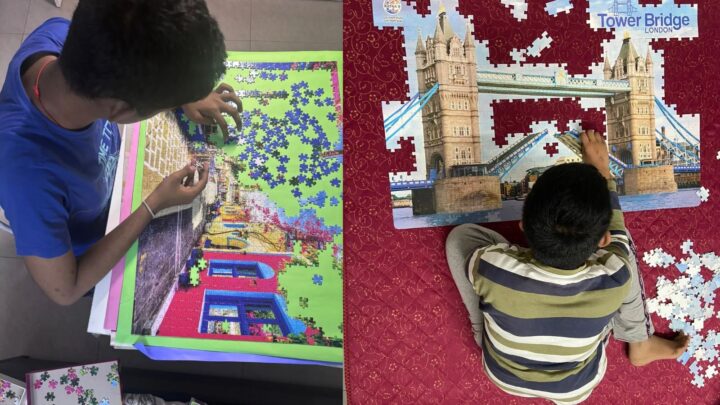
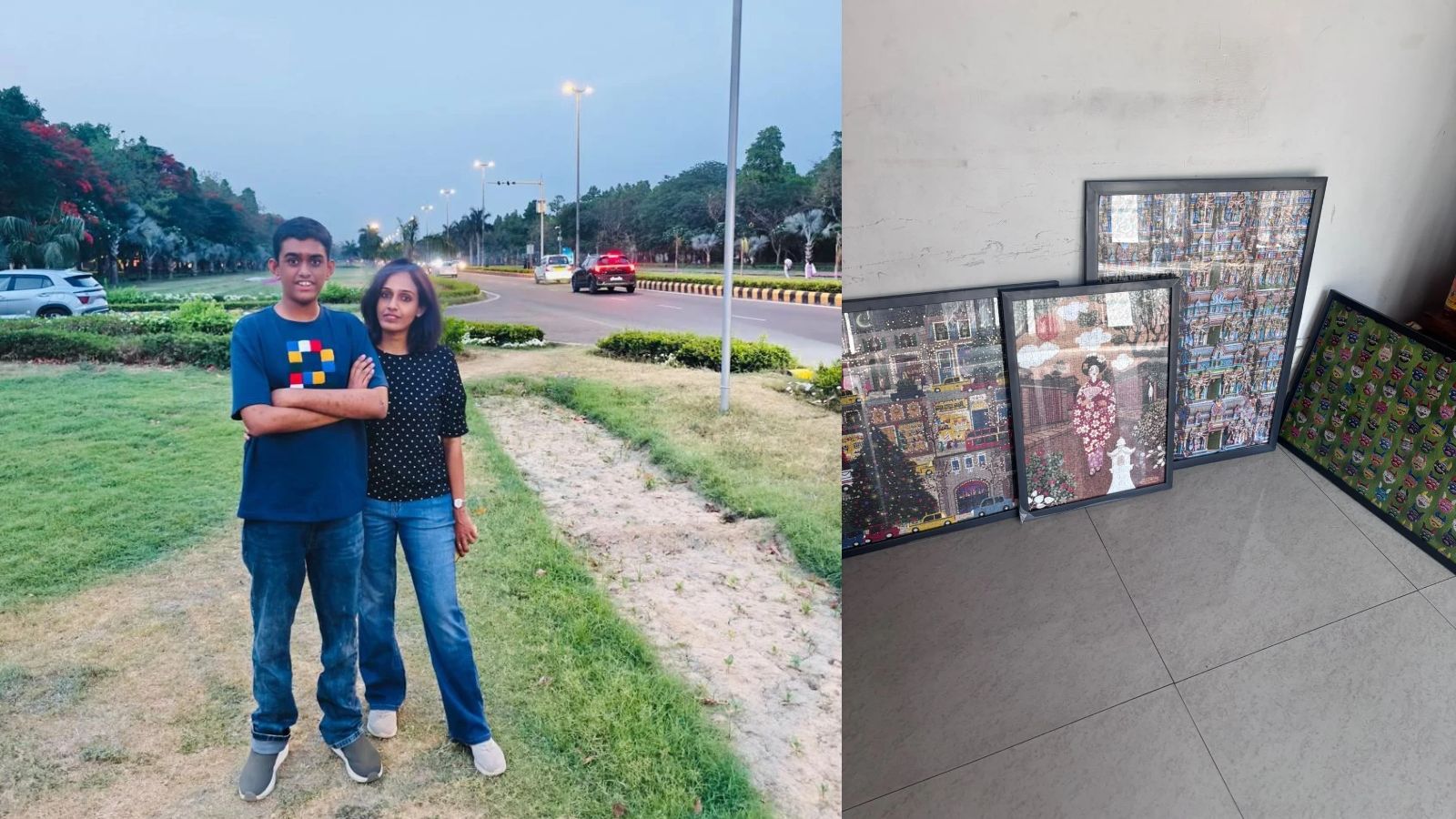
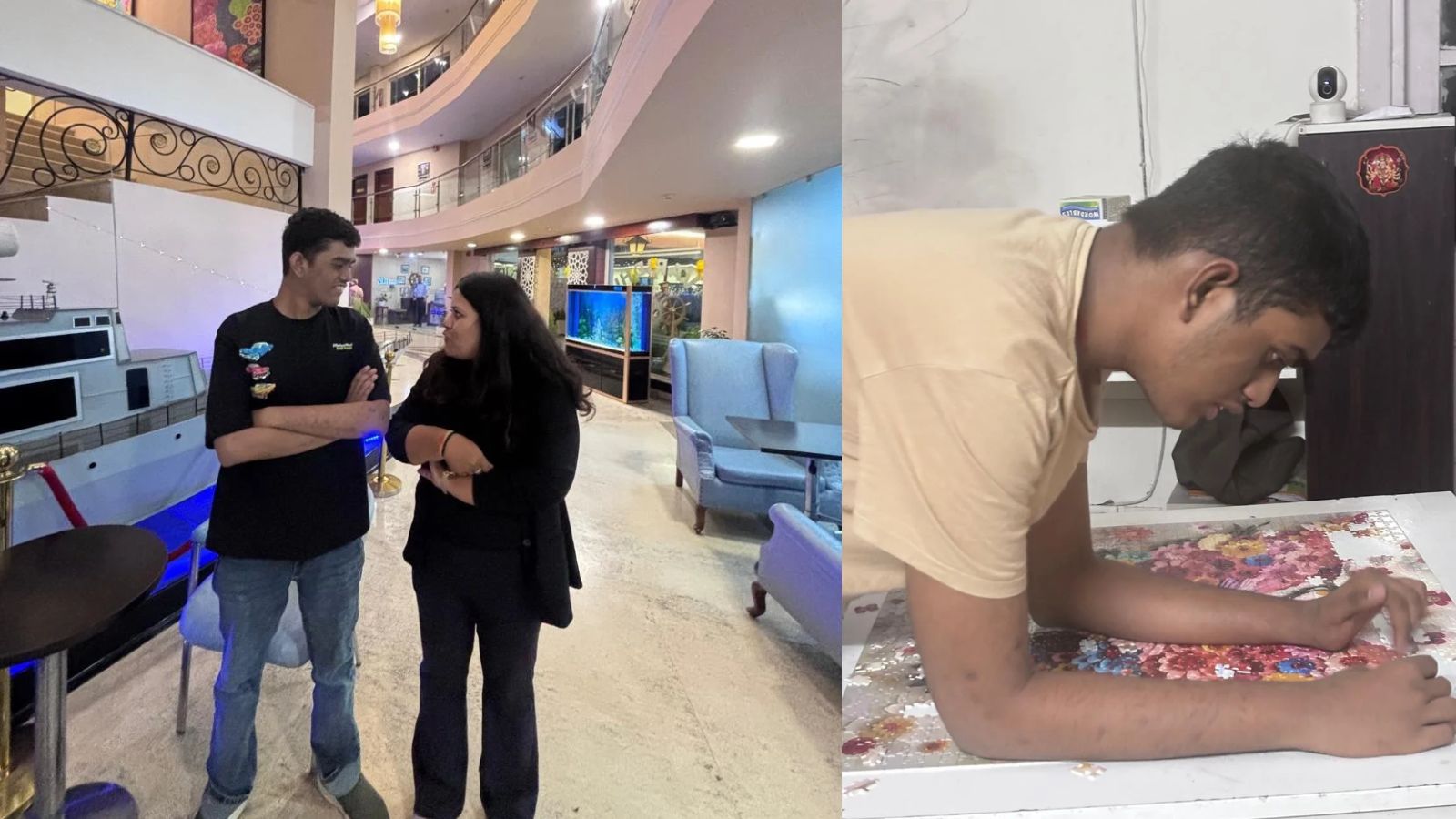
At only 15 years old, Rishaan can put together hundreds of puzzle pieces to form a cohesive picture, and sometimes in minutes. With mild autism and ADHD, Rishaan struggles during conversations but the world of shapes and puzzles has helped him develop a different means of expression.
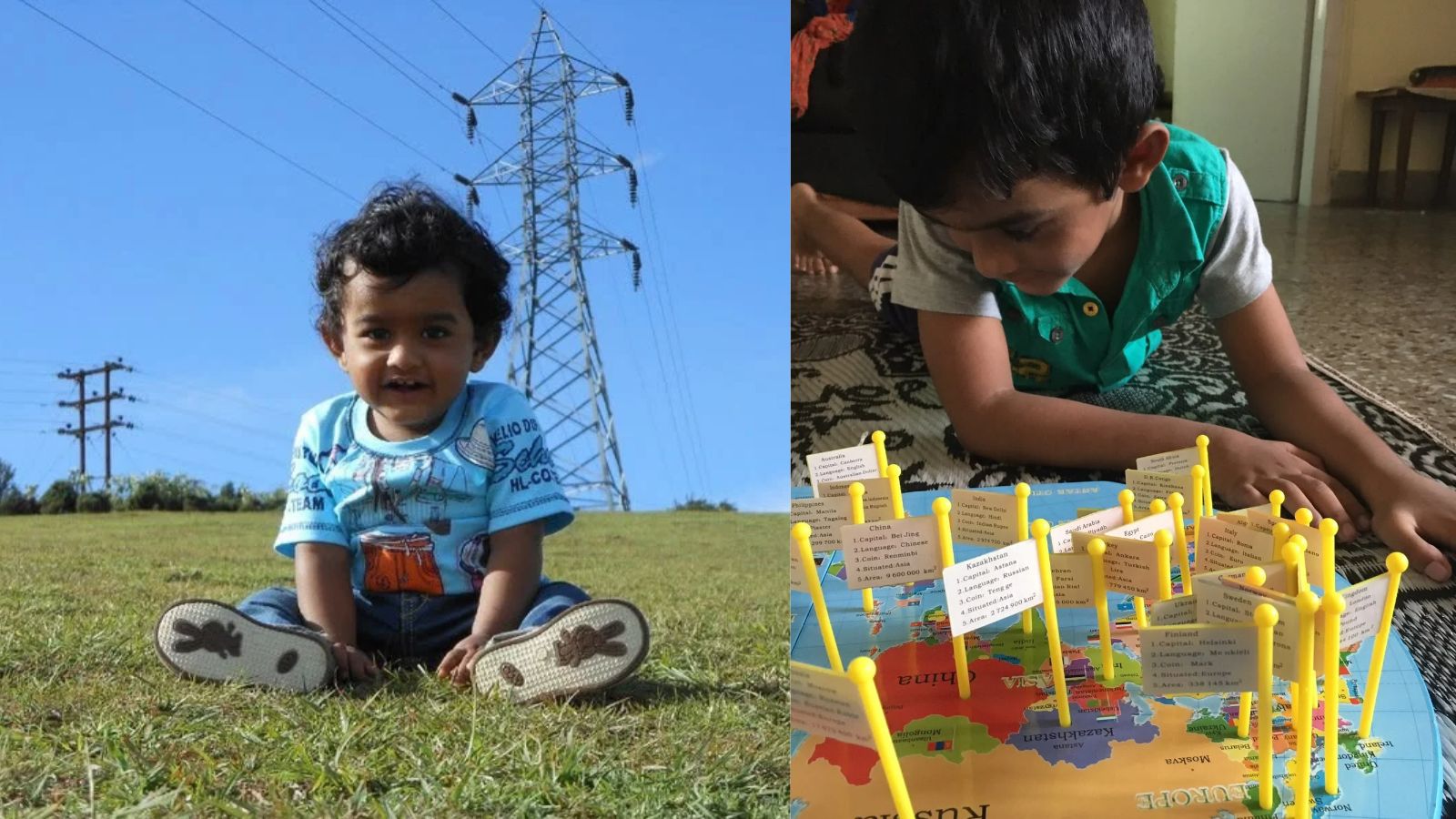
The love of flags came when he was just four and learned about them through watching videos on YouTube. His puzzle journey started out with eight-piece puzzles and progressed to the more challenging 1,000-piece puzzles. Even when studies kept him busy and away from puzzles, he made a return thanks to the reminder of his mother that there’s a different road to happiness for every child.
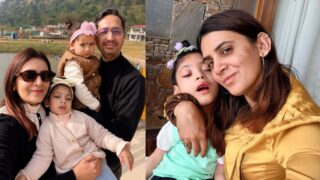
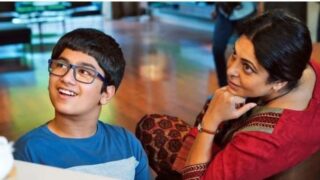
Originally from Tamil Nadu, Rishaan lives with his parents – Bala, an engineer in Indian navy and Suganya, a homemaker, and their beloved dog, Maya. As the family moves across India, Suganya has remained his constant support. Through Mind in Pieces, she now celebrates his remarkable talent, one puzzle at a time.
Also Read: An Ailing Wife, An Autistic Son And A Father’s Fight To Hold His Family Together.
In this conversation with All About Inclusive, Suganya talks about acknowledging Rishaan’s special talents, the hard choice of trying homeschooling, his affinity towards puzzles and how Mind in Pieces turned out to be an avenue to showcase his talent. She has one important thing to tell other parents – believe in your child and let him/her blossom.
Question) What were the biggest challenges during Rishaan’s early years, and how did you cope?
Answer) Rishaan’s early years were filled with uncertainty and anxiety. He underwent surgery for an inguinal hernia when he was just two months old. As he grew, I noticed that he wasn’t achieving his developmental milestones at the same time as other children.
As a first-time mother with very little parental support, I didn’t even know there were specific age ranges for each milestone. Seeing other babies his age rolling over, holding their heads up and crawling made me anxious, especially when relatives and others began asking questions. Our paediatrician reassured me that Rishaan was growing well and would eventually reach his milestones, and he did, although with delays. He walked at around 20 months.
I spent a lot of time playing with him, giving him floor time and buying toys that encouraged him to explore. I kept consulting our paediatrician and researching whatever I could on the internet. It was a difficult period, and I often wondered, “Why me? Why my child?” I felt I had very few people who truly understood what I was going through.
Also Read: Can Children Outgrow ADHD or Autism?
After he turned one, we noticed that he wasn’t consistently responding to his name. A BERA hearing test revealed profound hearing loss in his left ear and mild hearing loss in his right. We sought help at the Chandrasekhar Institute of Hearing and Speech in Bangalore and were given a hearing aid, but he found it difficult to tolerate. I also noticed that he responded more readily to familiar voices than to unfamiliar ones.
As he grew older, I realised that although he could memorise numbers, alphabets, shapes, planets, countries and flags remarkably well, everyday communication was a challenge.
Another major challenge was acceptance. For a long time, I found it difficult to accept the possibility that Rishaan might be autistic or have other developmental differences. When we moved to Mumbai, I explored therapies and sought a formal diagnosis. We followed the doctors’ recommendations and completed the assessments they advised.
Eventually, I understood that a diagnosis could help us understand Rishaan, but it did not define him. He was, first and foremost, my child, with his own strengths, challenges and pace of development. I didn’t want to see him only through labels; I wanted to understand and accept him for who he was.
Throughout this journey, my faith in God gave me strength. Every small milestone and every little improvement gave me hope. I learned to celebrate his progress rather than compare him with other children.
Looking back, the biggest lesson was to accept Rishaan for who he is, trust his journey and take things one step at a time. I didn’t have all the answers, but I knew I had to keep believing in him, supporting him and moving forward with him.
Also Read: Teaching Neurodivergent Girls About Periods: Senior Doctor Shares Proven Tools and Tips
Question ) When did you notice Rishaan’s unique interest in flags, maps and patterns, and how did you begin understanding his world?
Answer) Around 2014–2015, my brother gifted Rishaan an iPad. I was hesitant to expose him to gadgets so early, but I allowed him some screen time every day and wanted to make it educational. So, I downloaded apps about countries and flags, along with an alphabet-tracing app.
To my surprise, within a month or so, I realised he had memorised the flags and maps of different countries simply by watching them every day. I encouraged him to draw rectangles, use colours and recreate what he saw. I also bought him books, educational toys and flag jigsaw puzzles, which he absolutely loved.
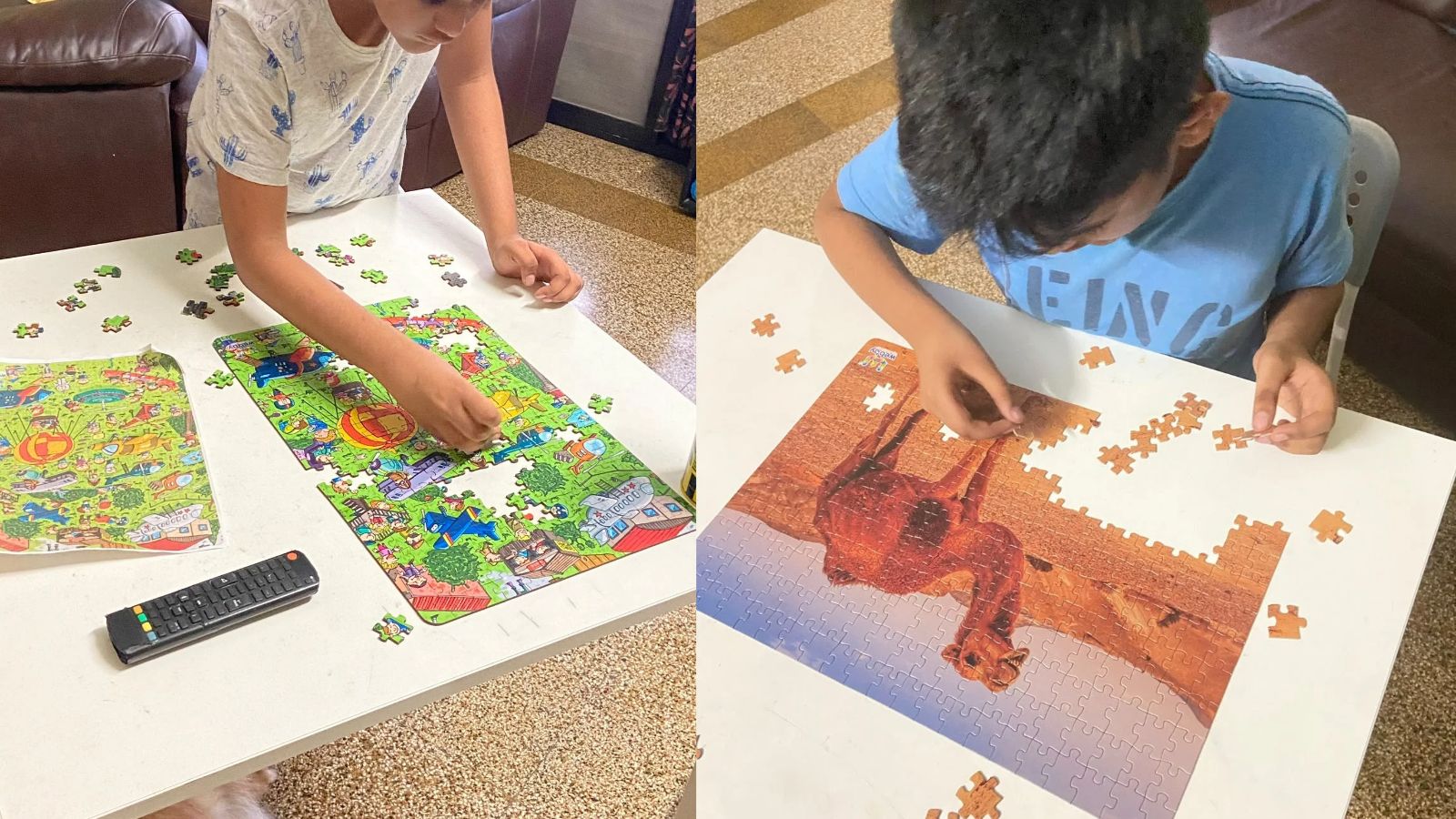
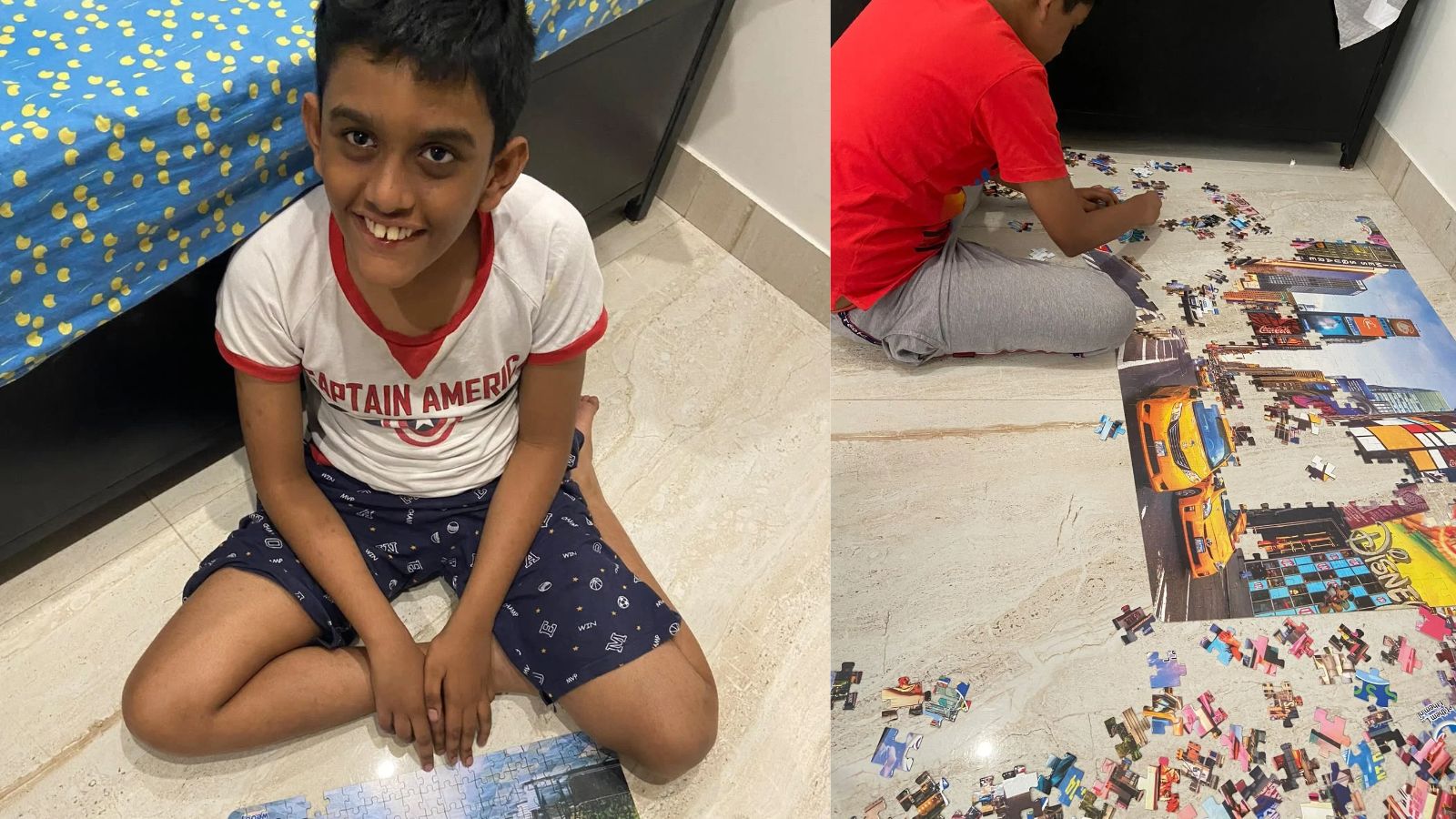
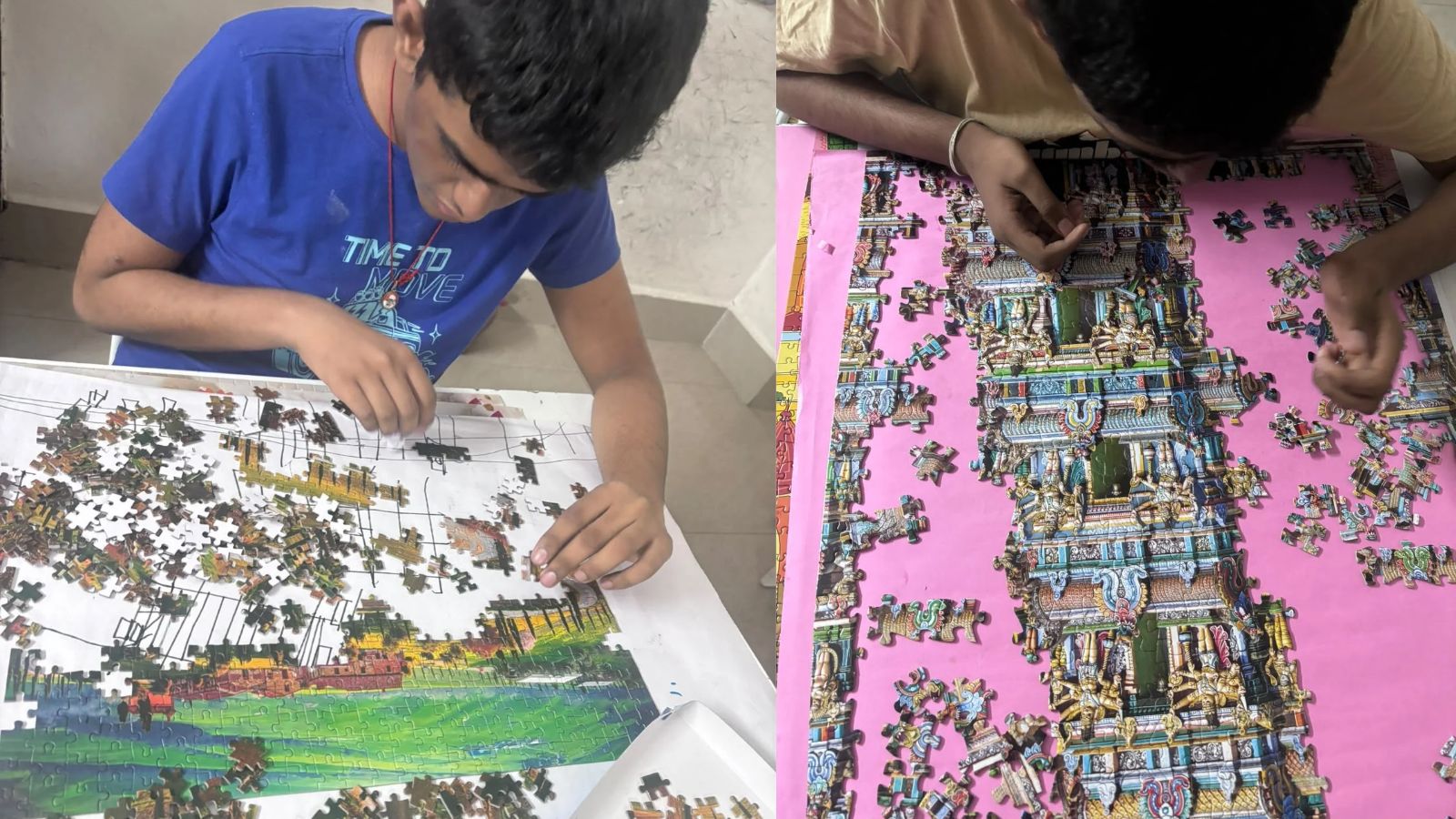
Puzzles became one of the most important ways I connected with Rishaan. I noticed how engaged and happy he was when putting pieces together, recognising shapes and matching patterns. So, I started encouraging this interest by getting him different puzzles and joining him in activities that he enjoyed. It gave us a way to spend time together, understand what interested him and connect with him through something he genuinely loved. I realised that sometimes, connecting with a child doesn’t always happen through words; it can happen through a shared activity that makes them feel understood.
I also discovered that he was learning shapes, planets and other concepts independently through the iPad. Wherever he went, he would look for shapes in his surroundings. Looking back, I feel his fascination with shapes, patterns and visual details played a significant role in developing his interest in puzzles.
That was when I began to understand that Rishaan had his own unique way of observing, learning and experiencing the world. Rather than trying to draw him into my world, I began finding ways to enter his—and puzzles became one of the bridges that brought us closer.
Also Read: The Mother I Became After My Child’s Autism Diagnosis
Question) How did Rishaan discover jigsaw puzzles, and when did you realise they were more than just a hobby for him?
Answer) Rishaan was around four or five when I discovered his interest in jigsaw puzzles. I used to see him watching what I thought were Disney cartoons on the iPad or my phone. Then I realised he was actually watching videos of people assembling jigsaw puzzles!
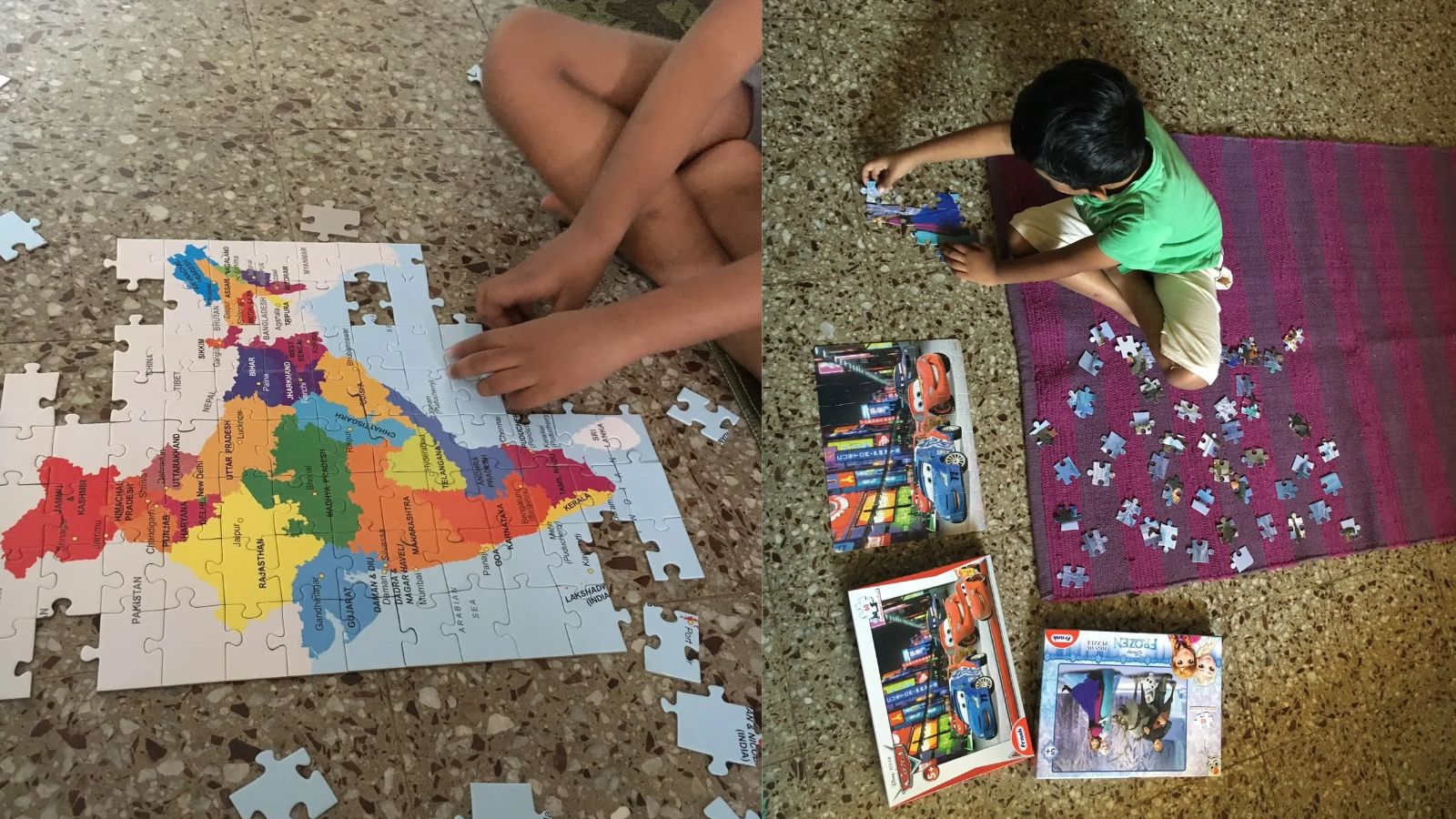
Since he had never shown much interest in toys, I decided to try a small eight-piece puzzle. To my surprise, he completed it quickly and brought it to me. That was how his puzzle journey began. Gradually, we moved to puzzles with 20, 50 and eventually 1,000 pieces. Sometimes, I would even mix three different 20-piece puzzles together, and he would patiently separate and assemble them.
I truly realised puzzles were more than a hobby when I gifted him a 1,000-piece puzzle during his homeschooling phase. He was experiencing considerable anxiety, but while doing the puzzle, I noticed he became calm, focused and settled. Puzzles gave him a sense of peace, patience and achievement. They also became a beautiful way for me to connect with him.
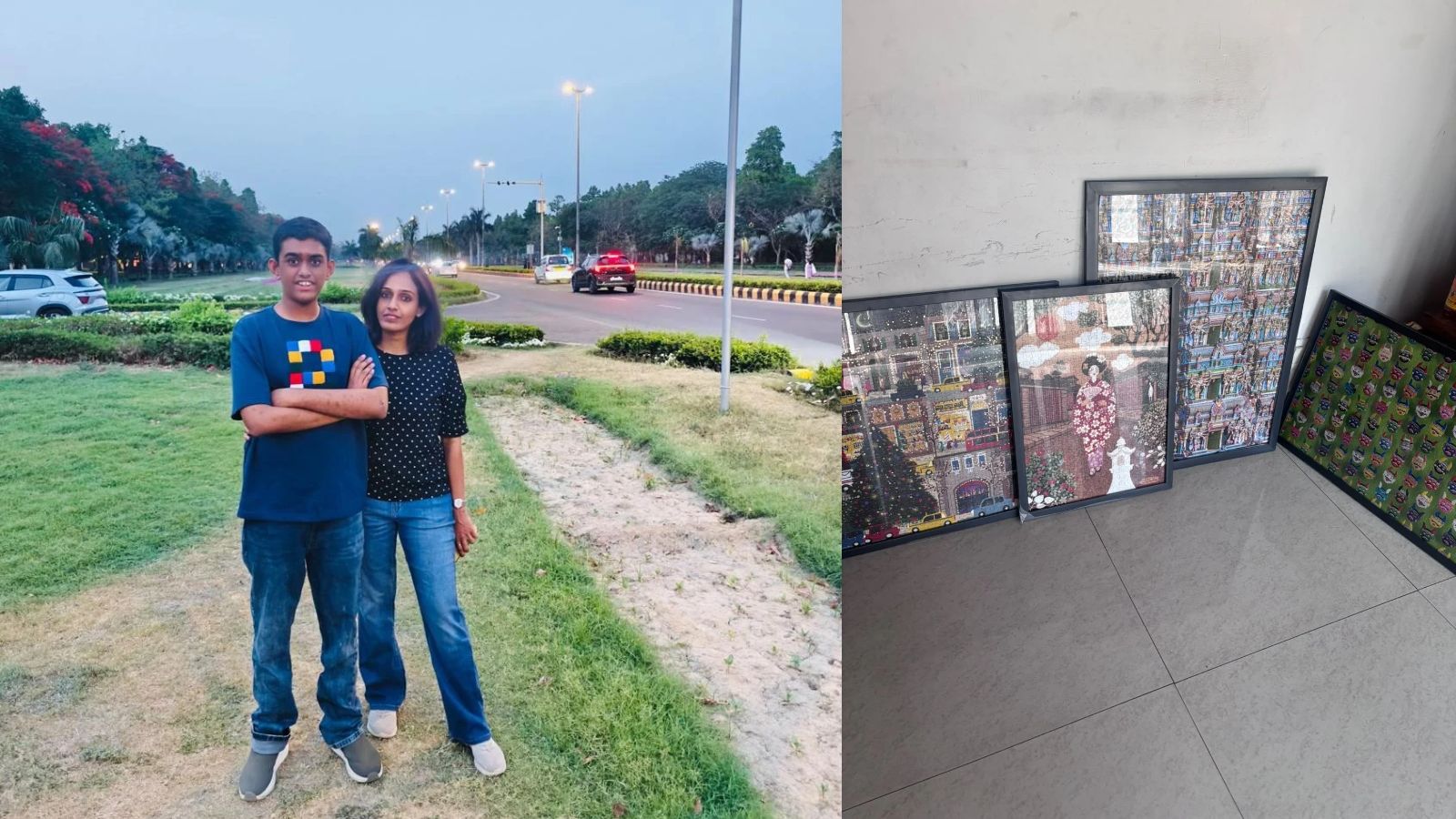
What makes me especially proud is that this interest is entirely his own. He discovered it and developed it independently. I am simply supporting him by helping him choose and purchase puzzles. Today, he selects his own puzzles, usually between 500 and 1,000 pieces, and even chooses which ones he wants to frame and display at home.
Recently, I started an Instagram page called Mind in Pieces to showcase the puzzles Rishaan completes. Through this page, I’ve discovered a wonderful community of jigsaw puzzle enthusiasts in India and across the world. What began with a simple eight-piece puzzle has become a meaningful part of his life. I am incredibly proud of his passion and happy to support him on this journey.
Question) Rishaan topped his class from Class One to Eight, but academic pressure led you to consider homeschooling. How difficult was this decision, and what did it teach you about prioritising his well-being?
Answer) Honestly, it was one of the most difficult decisions I have ever made. It wasn’t an overnight decision. From UKG onwards, every academic year was a trial for us. I was never sure whether Rishaan would cope with the next class, but he kept surprising me. He has an extraordinary memory and learns independently. My role was mainly to guide him on what to study and help him understand concepts like mathematics.
His success was never my effort alone. It required support from Rishaan, his teachers, the school and his shadow teacher. The school was very supportive in his early years, but that support gradually reduced from Class Seven onwards. The CBSE syllabus also became much more demanding, especially in Class Eight. There was hardly any break between examinations, and I could see him becoming exhausted under the constant academic pressure.
His shadow teacher, who had been a consistent presence in his life, could no longer continue. Since changes make him anxious, this was another challenge. At the same time, he was going through adolescence, with increasing anxiety, anger and mood swings.
What really made me reflect was how academic expectations kept rising. In Class Eight, he scored 76 out of 80 in English, yet his teacher questioned why his marks had dropped compared with Class Six, when he scored 78 or 79. That made me realise how easily even a child who performs exceptionally well can get caught up in the endless race for marks.
I began asking myself: What is the point of academic excellence if my child is struggling emotionally? I wanted Rishaan to develop life skills, manage his anxiety and emotions, and lead a peaceful, happy life. I didn’t want him to feel that his worth depended on his marks.
So, although the decision to move towards homeschooling was incredibly difficult, I felt it was necessary for his well-being. We are now trying to ensure he obtains his basic educational qualifications while giving him the space to grow at his own pace.
I still don’t have all the answers about his future, and honestly, we are taking it one step at a time. This journey has taught me that a child’s well-being is far more important than academic achievement. Success is not just about how much a child scores, but about whether that child is happy, confident and equipped to navigate life.
Also Read: How Special Olympics Is Changing the Meaning of Inclusion for People with Intellectual Disabilities
Question) After a break, Rishaan returned to puzzles and began solving 1,000-piece sets. What did this teach you about his abilities, patience and perseverance?
Answer) Honestly, gifting him that 1,000-piece puzzle after a long time was one of the best decisions I made. After withdrawing him from school, I was struggling with self-doubt and wondering whether I had made the right decision. Around that time, his birthday came in May, and I thought, why not challenge him with a 1,000-piece puzzle? I decided to give it a try, and to my happiness, he took to it immediately.
With his studies reduced for the time being, I wanted him to use his time at home meaningfully. He began spending his days doing puzzles and attending basketball classes in the evenings. I noticed how focused he was and how much patience he still had. He has continued solving 1,000-piece puzzles, and I sometimes deliberately choose challenging ones to see how far he can go.
When a puzzle becomes difficult, he does get frustrated, but he often needs just one thing from me—my presence. He calls me into his room, and I sit there doing my own work. Somehow, having me nearby helps him settle down and persevere until he completes it.
One thing that amazes me is that he never looks at the picture on the box while solving a puzzle. He has developed his own way of doing it. He also likes having his completed puzzles framed and displayed, so having a goal motivates him. When I promise to frame a puzzle, I make sure I keep that promise.
When I share his work in jigsaw puzzle communities, people are often amazed by the challenging puzzles he completes. Interestingly, Rishaan doesn’t think about whether a puzzle is easy or difficult; he simply enjoys doing it.
This journey has taught me not to underestimate his abilities or put limits on what he can achieve. I have also learnt to trust my child’s interests rather than thrust my own interests upon him. As parents, we may have our own ideas about what our children should learn or become, but I believe we must give them the freedom to explore what genuinely interests them. By trusting Rishaan’s passion for puzzles and supporting him in his own way, I hope to help him discover his true potential. I don’t know where this journey will lead, but I am happy to take it one step at a time, celebrating his progress along the way.
Also Read: Cerebral Palsy to Bollywood: Surya Kasibhatla’s Journey of Breaking Barriers
Question) With your husband often away at sea, you managed much of Rishaan’s early interventions. What were your biggest struggles as a mother, and what kept you going?
Answer) I had learnt to live independently even before Rishaan was born, and I had very little parental support. I also took care of him alone, without much parental help, right from his birth. So, when my husband was away at sea and we were living in a new place like Mumbai, I managed most of Rishaan’s early interventions on my own.
One of my biggest challenges was finding the right therapist. Initially, Rishaan struggled to adjust to new people, but then we found a young therapist who connected with him beautifully. He loved going to her sessions and would come home and practise what she had taught him. Watching him learn and make progress was wonderful. Even today, we are in touch with her, and she continues to guide us.
During this time, what kept me going was Rishaan’s progress, however small. Every milestone gave me hope. I learnt to take life one day at a time, sometimes even one hour at a time, focusing on his therapies, our routine and what we could do next rather than worrying too much about the future.
Looking back, I realise I didn’t need to have all the answers. I just needed to keep showing up for my child. His progress, our daily routines and my faith gave me the strength to keep moving forward.
Also Read: ‘They Took the Stage, We Held Back Tears’
Question) What inspired you to create Mind in Pieces, and what do you hope people learn about autism, ADHD and neurodivergent abilities through Rishaan’s puzzles?
Honestly, one of the things that inspired me was the misconceptions I encountered about autism, even among my own close relatives. Some had very low expectations of Rishaan and assumed he couldn’t learn certain things. Even when I shared his academic achievements, they questioned the need to teach him subjects like science. It was deeply disheartening because I knew what my child was capable of. I wanted to challenge these assumptions and show people that a neurodivergent child’s abilities should never be underestimated.
I have always believed in appreciating children for who they are rather than judging them by what they can or cannot do. Rishaan may not be interested in conventional toys or activities, but he has a genuine passion for jigsaw puzzles. I believe in encouraging his interests rather than imposing my own on him.
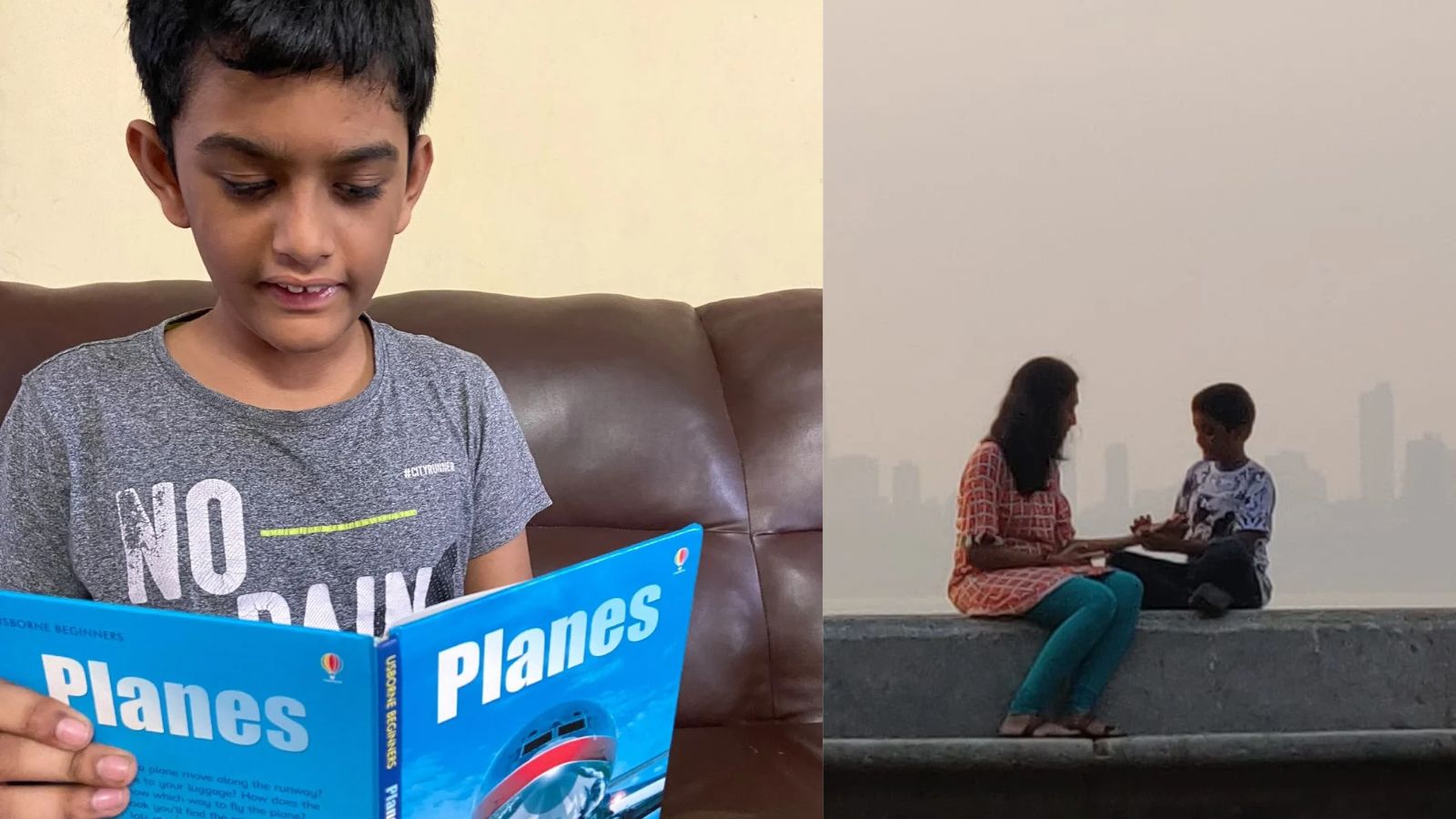
The idea for Mind in Pieces came naturally. One day, I noticed his table filled with completed puzzles and my phone gallery full of photographs and videos documenting his progress. I decided to create a page dedicated to his journey, sharing his puzzles and even looking back at photographs from 2016.
I often say that I am his camera person and the one who buys the puzzles, but Rishaan is the one who brings them to life. The interest, patience and effort are his, and my role is to support and encourage him. Through this page, I hope to inspire other parents who may be feeling as lost as I once did. Every child is different, with their own interests and strengths. I cannot tell parents what will work for their child, but I hope Rishaan’s journey encourages them to discover and nurture those interests.
Ultimately, I want people to look beyond a child’s diagnosis, recognise their abilities and give them the freedom and encouragement to reach their potential.
Also Read: Shivani and Vivaan: An Inspiring Autism Story From the UK
Question) What would you like society to understand about neurodivergent children, and what message would you give parents who worry about their child’s development and future?
Answer) My message to parents is simple: believe in your child, trust your instincts, and never compare your child with anyone else. Every child has their own strengths, weaknesses and pace of development. Our job is to recognise those strengths and help them flourish, rather than measure them against their siblings, cousins or peers.
I often think of the example of a fish. You cannot expect a fish to climb a tree. It thrives when it is in the environment it is meant for. Similarly, every child needs an environment where they feel safe, understood and accepted for who they are.
As parents, we must also learn to distance ourselves from people who constantly underestimate our children. I have experienced this myself, and I have consciously kept Rishaan away from people who don’t understand him or have already decided what he cannot do. A child’s emotional well-being and the environment in which they grow are far more important than society’s expectations.
If seeing another child’s achievements makes you anxious about your own child, step away from that comparison and focus on your child instead. A child who excels at solving a Rubik’s Cube may not necessarily enjoy jigsaw puzzles, and vice versa. Each child has a different set of abilities, and we must give them the freedom to discover their own strengths.
Ultimately, I want society to understand that neurodivergent children are not defined by their limitations. They need understanding, acceptance and opportunities to grow in their own way. Don’t spend your life trying to satisfy society. Trust your child, nurture their strengths and give them the freedom to become the best version of themselves.