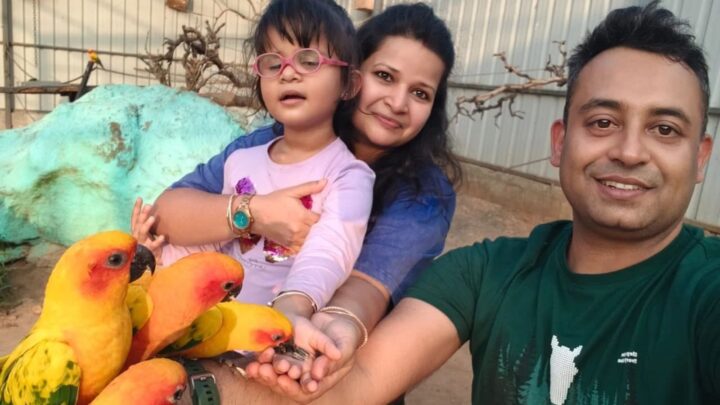
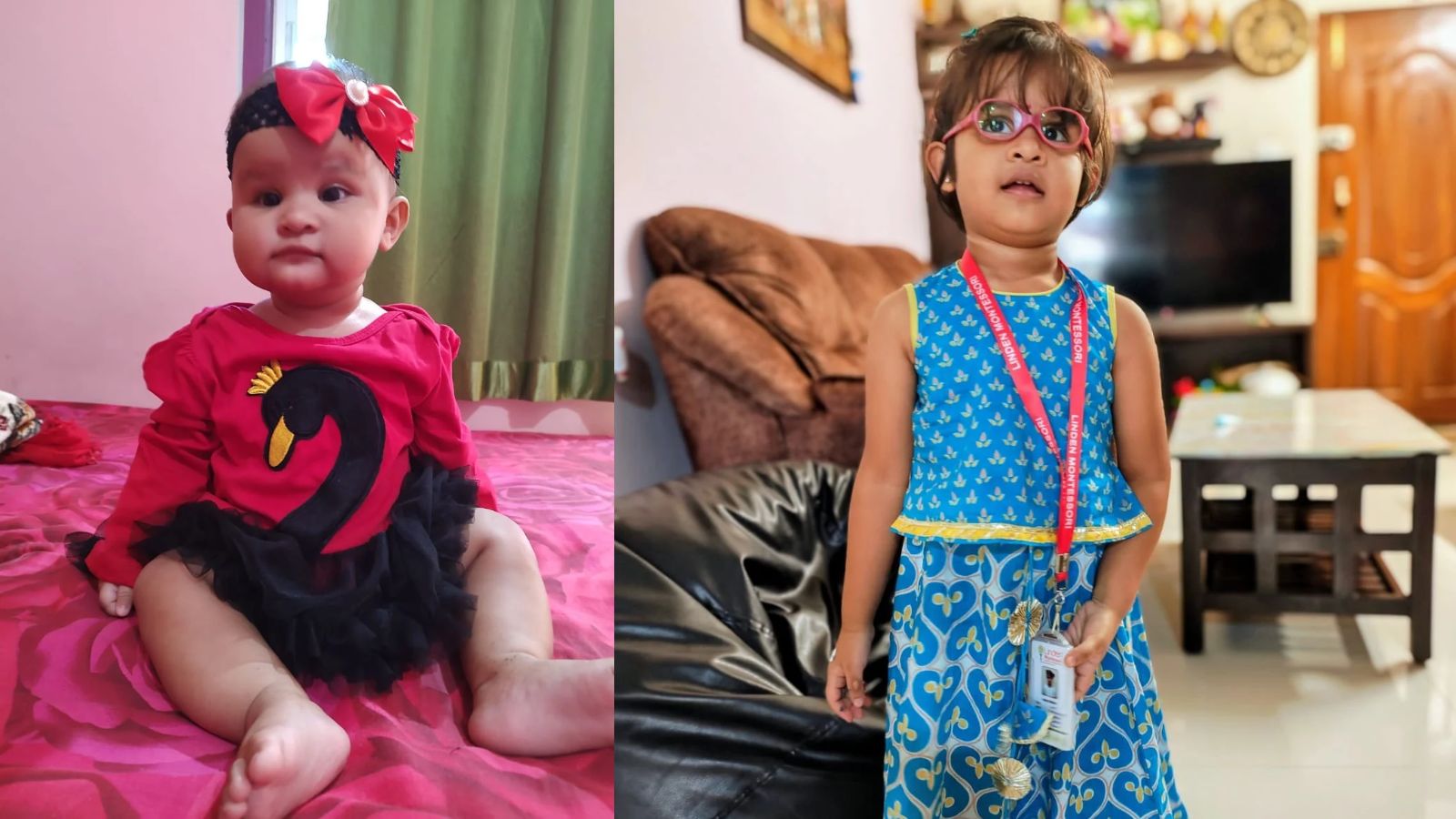
Initially, when Lopa observed that her four-month-old baby, Aeny, was failing to show any visual reaction and ability to grasp objects as normal children did, she realized that there was something unusual with her daughter. The diagnosis of the rare eye disease called Leber Congenital Amaurosis was devastating for the whole family. However, it only started a period of learning, adaptation and search for new ways to make Aeny explore the surrounding world. Creating tactile paintings for her, familiarizing her with Braille, encouraging her to participate in such activities as learning music, karate or spending time outdoors, Lopa is trying hard to ensure that her daughter’s visual deficiency would not be an obstacle.
The First Signs And A Life-Changing Diagnosis
“Yes, we noticed that Aeny was not holding toys when she was four months old, and that was when we became worried, thinking there might be something serious. Initially, I thought she might be autistic, as we had never heard about LCA as an eye disease. When she was diagnosed at the age of four-and-a-half months, it shattered us. The moment I heard the doctor say that it was incurable, I was devastated. We wondered why such medical conditions were not identified during the scans, as my pregnancy had been quite smooth,” says Lopa.
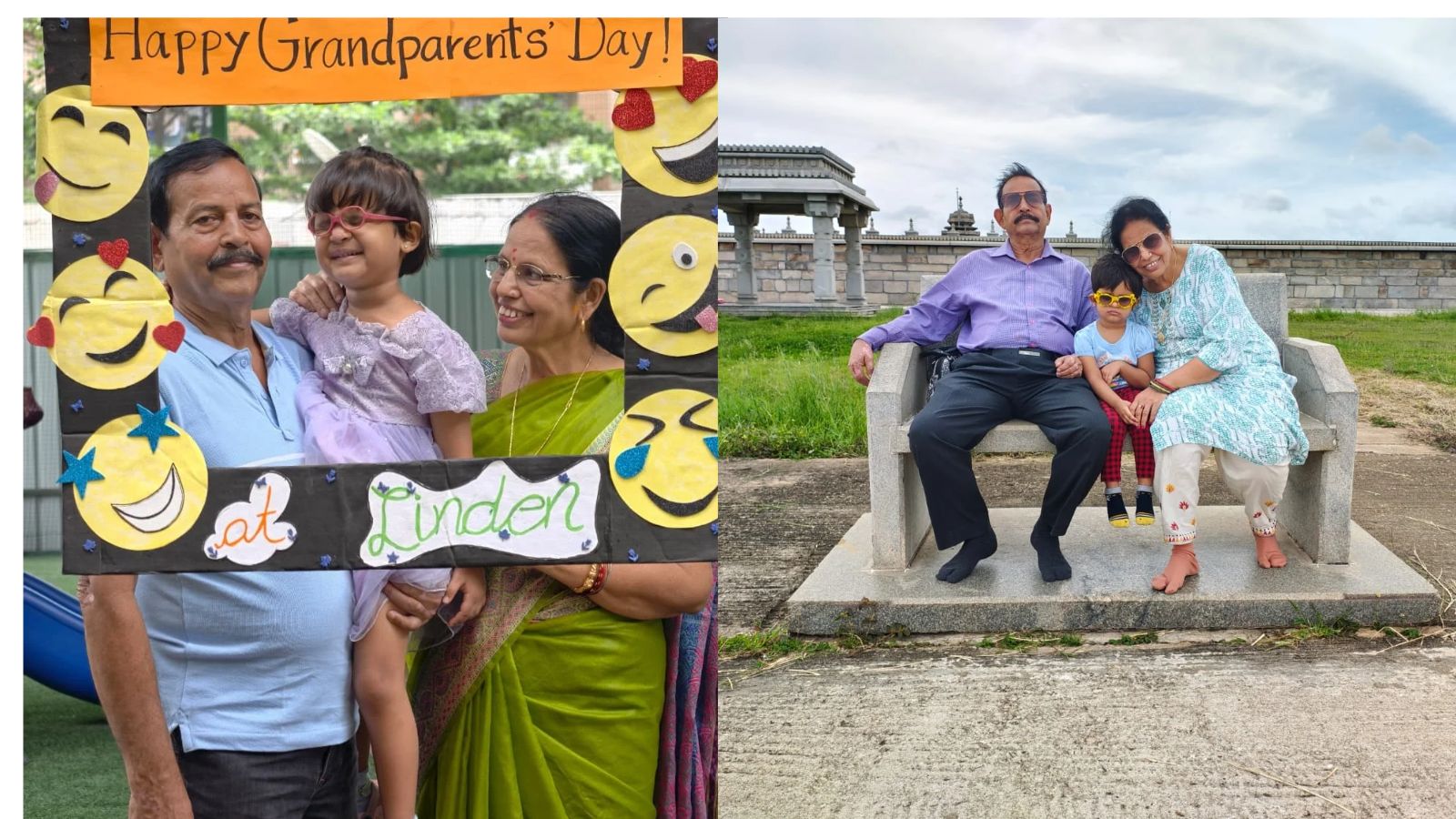
Also Read: More Than Down Syndrome: How Suhani Spreads Joy With Her Grandparents
Withdrawing From The World Amid Insensitive Remarks
It was tough for them as parents, as they didn’t know how to handle Aeny. “We didn’t know how to face the world. Moreover, some people thought Aeny had come into our lives because of our karma. That was the most painful thing to hear as a parent. How could people say something like that about such a small baby? We stopped facing the outside world because we were afraid that people would always stare at her, show sympathy and offer unwanted advice, saying things like, “She is blind and a girl child. God knows how she will survive,” says Lopa.
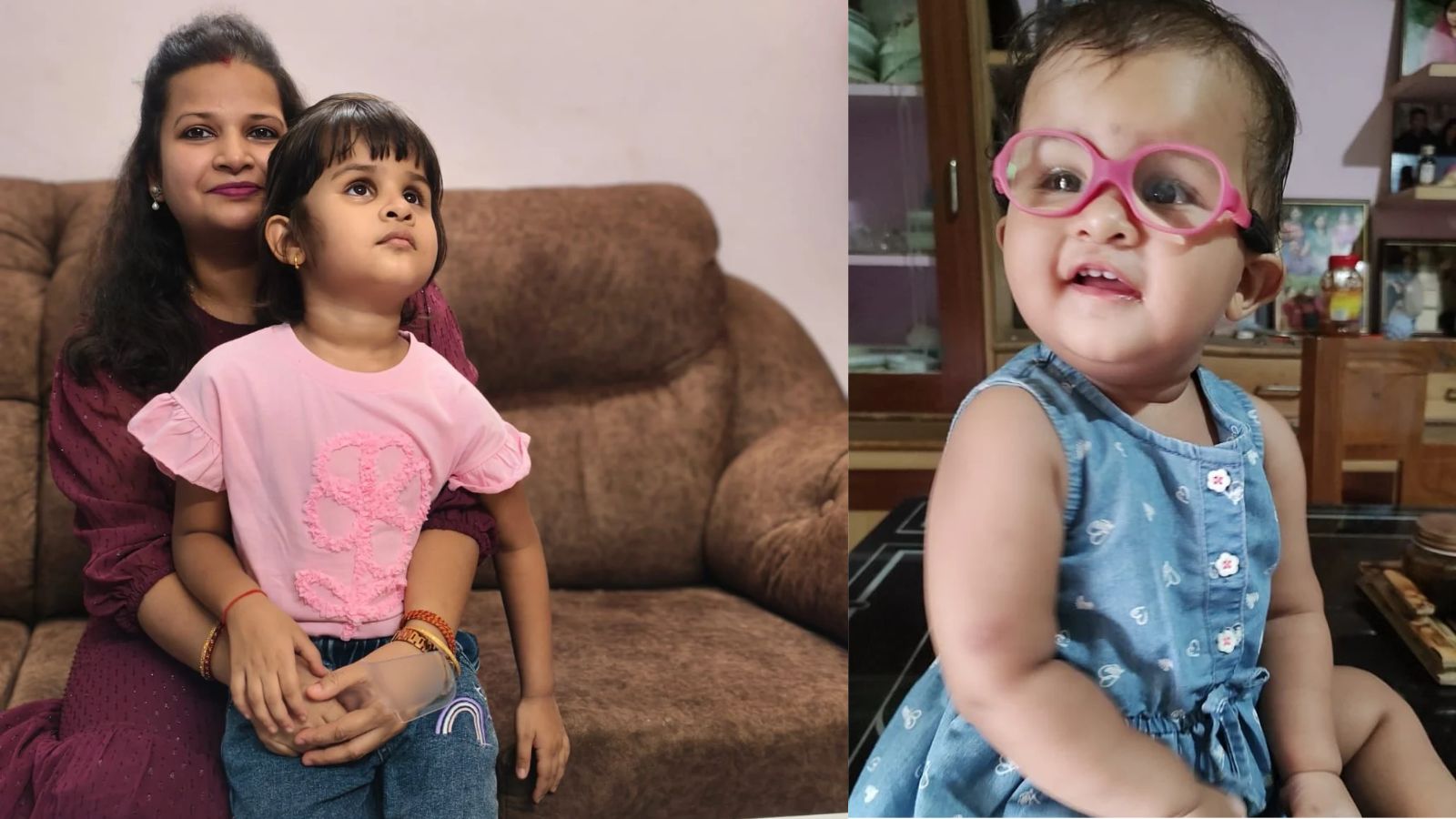
According to her, Aeny was also uncomfortable in crowds, which was understandable because she didn’t know what was happening around her. So, they stopped going to many places.
Creating A World Of Experiences Through Touch And Imagination
“I realised that I had to deal with the situation, help her grow and give her the best life possible,” says Lopa and added that she she started giving her toys of different shapes, such as circles and squares. “I also got different tactile toys. My sister, who lives in the US, used to send us a lot of tactile materials, and that helped Aeny because visually impaired children have a strong sensory ability in their fingertips and hands. Although she is not aware of how colours look, I used to make 3D rainbows for her. I also created many tactile paintings using 3D glue, which helped her touch and feel shapes and crafts,” she says.
Also Read: Between Clinical Knowledge And A Mother’s Heart: Tahira Anas’ Autism Journey
Whenever they go out, the parents ensure that she touches and feels everything around her so that she can understand and experience it.
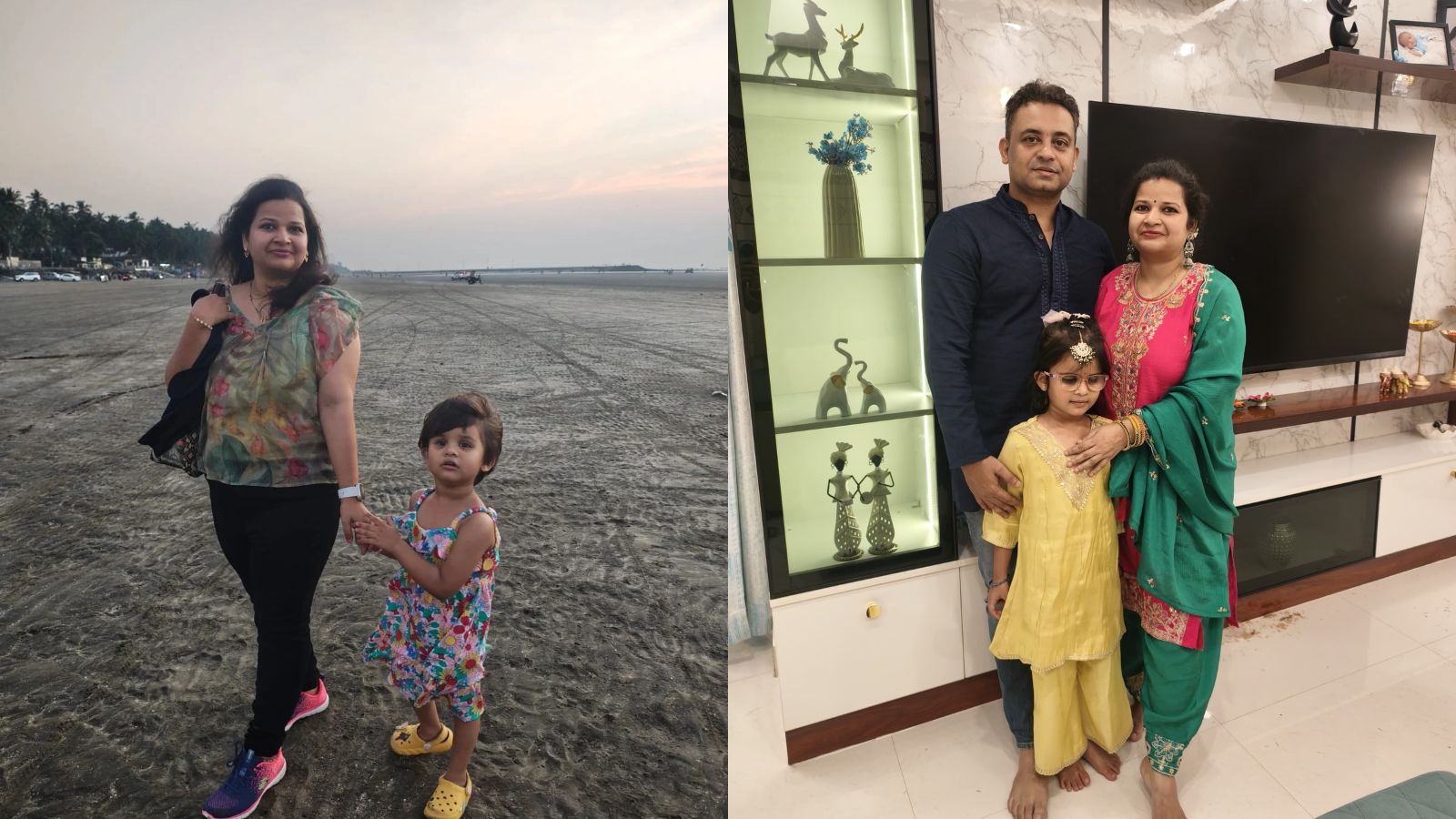
“We also started taking her to the beach and forests because I feel these places offer children different ways to imagine and experience the world. When she was two, she was very scared of the incoming tides, but now she enjoys them. The more we have taken her to different places, the more comfortable she has become in such environments,” she says.
Making Braille And Everyday Learning A Part Of Life At Home
Braille is the basic way for visually impaired children to start learning. Although multiple assistive devices are now available, Lopa feels it is better to know Braille.
“To be honest, learning Braille was very difficult. As a sighted person, it was challenging to understand how to teach it without being able to see what was on the page, or identify what was left or right, top or bottom. It took me two to three months to help her understand the Braille pattern. I started by making small strings and threads on paper. I helped her understand left to right, top to bottom, horizontal lines and vertical lines so that she could understand the flow of Braille reading,” she says.
Also Read: Cannes Grand Prix to Autism Dad: How Ashiish V. Patil’s Son Changed His Definition of Success
“I made multiple learning materials at home so that she could feel them and understand how to move from one place to another, read from one line to another and follow the pattern. I introduced her to a Braille device when she was three years and seven months old. Initially, I encouraged her to type randomly and explore the keys. Sometimes, I would tell her a story, and at other times, I would ask her to create a story and type it,” she added.
Her suggestion to parents is to give their children a Braille device and let them type randomly. Allow them to become comfortable with the keys because pressing them requires a certain amount of pressure. That should be the first step. Next, take an A4-sized sheet of paper, attach strings to it from left to right and encourage children to follow them with their fingers. You can also make zigzag lines to help them understand the Braille pattern.
Along with this, introduce them to different textures. Every learning experience starts at home. Give them vegetables and fruits to touch. Their sensory and motor skills develop through touching and exploring objects, helping them understand what things are. Give them rice and let them eat food with their hands. Spoon-feeding is definitely important, but in the early stages, allow them to feel different textures.
Also Read: An Ailing Wife, An Autistic Son And A Father’s Fight To Hold His Family Together.
Helping Aeny Discover Her Own Ways Of Exploring The World
“When Aeny asks me, “Mama, I can’t see things. How do you find them?” I explain to her that everyone experiences the world differently. I tell her, “You may not see things with your eyes, but you can explore the world through your hands, ears, touch, memory and other senses. Just as I use my eyes to find things, you are learning to use your own ways.” Says Lopa.
She also used to tell Aeny to look at what other children were doing. “I would explain that she could also do things like writing, reading, playing, jumping and shopping. More importantly, I would tell her to see how happy she was. I would also tell her that many people do not have hands or legs, but they are happy. That is what matters, Aeny. I don’t know how much she understands, but now she tells her friends upfront, “Don’t call me blind, as I can do everything,” says Lopa.
School Rejections And The Reality Of Inclusive Education
Every parent of a child with special needs must have gone through this situation, and many continue to face it even today.
“Every parent of a child with special needs must have faced this situation. Several schools claim to be inclusive, but the moment you approach them, they come up with excuses, often citing concerns about the child’s safety. My question is, why should her safety be treated differently? Just as you ensure the safety of every other child, you should do the same for her. She may need some additional support at school, but that should never become a reason to deny her admission.
Also Read: Beyond Perception: Arin Paul on Challenging Society’s Assumptions About Visual Impairment
Our education system has a long way to go. If a school calls itself inclusive, it must truly practise inclusion. Every school should have a special educator. As parents, we spend ₹3.5–4 lakh annually to meet our daughter’s needs, so why can’t an inclusive school have a special educator in place? We have laws protecting the educational rights of children with special needs, so why aren’t they being followed? It is heartbreaking that even in a Tier 1 city, parents continue to face rejection simply because their child has special needs,” says Lopa.
Exploring Music, Karate And Everything Beyond Limitations
For Aeny, walking, cycling and running are quite limited because she is visually challenged. The parents ensure to take her for walks and jogging, but she cannot do these activities entirely on her own. “I felt karate would be very good for her self-defence. It also involves deep breathing exercises, which are beneficial. So, I enrolled her in karate. I noticed that she was picking it up very well, and her trainer was also very happy. Aeny understood the instructions and performed the karate movements perfectly,” says Lopa.
Later, she developed her own interests in playing the keyboard, listening to music and other activities.
“I feel that whatever she is willing to do, we should let her explore. Children between the ages of two and six need enough exposure, and they want to try everything. I don’t want to stop my child from doing something just because she is visually challenged. I try to give her every opportunity to do whatever she feels like doing,” says the Mother.
Also Read: Autistic Teen Solves 1,000-Piece Puzzles in Minutes: How Rishaan Found His Happy Place
A Sharp Memory And The Ability To Recognise People Through Voice And Touch
She recognises people through touch and voice, mostly through their voices and Aeny surprises her mother in beautiful ways.
“I remember a time when she met a person, and that person visited our house again after several months. Aeny was able to remember and tell me her name. She was between three and four years old at the time, and that surprised me so much. She has such a sharp memory and better sensory abilities. Sometimes, I show her my hand or another person’s hand, and she is able to identify it. I feel she can easily recognise people in this way,” says Lopa
Understanding Blindness And Navigating Difficult Conversations
This is one of the toughest situations they are facing right now.
“At the age of five years and two months, we started noticing that she was becoming more aware of the fact that she could not see. Moreover, we are at a stage where her friends are also telling her that she is blind and cannot do certain things or play with them. She is learning to manage these situations. I have told her that if somebody says something like that, she should confidently tell them that they don’t need to remind her that she is blind. She already knows it, but she can still play with them,” says Lopa.
Initially, she would remain quiet. But over time, the parents have also started explaining things to her friends.
Also Read: The Mother I Became After My Child’s Autism Diagnosis
“I tell them that there are many blind people who have done tremendous work, including becoming IAS officers. There are also people who cannot walk or talk, but that does not mean they should be teased. That is bad manners. Nowadays, children also understand these things very well when you explain them to them. Sometimes, I tell her that there is an issue with her eyes and that if a treatment becomes available, she might be cured and see the world.
“She asks me, “Mumma, I am already five-and-a-half. Why can’t I see yet?” I tell her that there is a problem with her eyes. Whatever people say, she can tell them, “I can feel it. Let me feel it that way.” There is not much difference,” she says.
A Mother’s Message To Families Navigating A Similar Journey
There are many parents who contact Lopa through Instagram because they are facing similar situations, and she responds to everyone. “As a parent of a child with special needs, I understand their situation and am always open to helping them in whatever way I can,” she says.
“I want to tell the world that this is something life has given us, but it does not mean this is the end of life. The child might have come into our lives for some reason, so treat them accordingly. They are special children, so treat them with care. If we are giving 100 per cent to typically developing children, we have to give 150 per cent to children with special needs,” adds Lopa.
Take them out and let people see them as there is no need to feel insecure. The first time, people might look at your child. The second time, they might look again, but by the third time, they will stop looking.
“Do the best for your child. Keep exploring and researching different things. Try to meet other parents of children with special needs and join support groups. Don’t stay alone. You should be strong enough to face the challenges and support your child,” Lopa sums up.