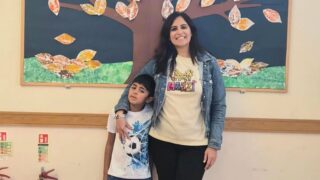

The life 33-year-old Praveen Vashist and 26-year-old Shivani Raghav turned upside down when their son Guru was diagnosed with Autism at an age of 3. Instead of dealing with uncertainty, expensive therapies and emotional turmoil, they took the unconventional route -converted their home into a learning ground for therapy and unconditional love.
Today, at an age of 5 years and 3 months, Guru’s Journey has become a beacon of hope for thousands of families on internet. In this interview, his father looks back at acceptance, strength, and daily victories that show that progress comes in the smallest of steps.
Q) Looking back, what were the earliest signs that made you realize Guru was developing differently, and how did you navigate the diagnosis?
I come from a fitness background, and my wife is a yoga teacher who specializes in prenatal and postnatal care. From the time we planned to conceive, and even after Guru was born, we were very mindful about everything. Nutrition, exercise, and even mental well-being through meditation.
In fact, after his birth, Guru was achieving all his milestones perfectly on time, some even earlier than expected. Everything felt normal, and we never imagined what was coming next.
But around 18 months, things slowly started changing. Between 18 to 24 months, it felt like everything turned upside down. His understanding, listening, eye contact, response, and communication all of it dropped significantly, almost close to zero.
Also Read: Why The SC’s Intervention On Therapy Centres Could Be A Turning Point For Special Children
It was a very confusing and overwhelming phase for us. We couldn’t understand what was happening. From his second birthday to his third, we were just searching for answers, going wherever people suggested, trying everything anyone recommended, hoping something would help. Finally, around his third birthday, our paediatrician advised us to consult a child psychologist. We went ahead with a proper assessment, and that’s when Guru was diagnosed with moderate autism. That moment was difficult, but it also gave us clarity. It was the beginning of truly understanding our child and his needs.
Q) Speech, focus, eye contact, and emotional regulation are central themes of your page. Which of these has shown the most remarkable improvement, and what do you believe made the biggest difference?
Answer) In my understanding, autism is a spectrum where no single skill can be called the “center of improvement”. A child needs support in multiple areas at the same time, while always keeping their comfort and individuality in mind.
However, if I have to highlight one area, it would be self-regulation. From my personal experience not just with Guru, but also with other special children I train. I have seen that when a child starts learning self-regulation, everything else begins to improve. As they gradually understand how to regulate themselves, they become more focused, more attentive, and more present.
Their sensory challenges start settling, their ability to learn improves, and they begin to form better connections with the world around them. Most importantly, they learn to manage their internal emotional fluctuations in a healthier way.
Also Read: Can Children Outgrow ADHD or Autism?
For us, self-regulation has been a foundation. it doesn’t solve everything instantly, but it creates the base on which everything else starts building.
Q) Can you share a milestone in Guru’s journey that seemed small to others but meant the world to your family?
Answer) For us, almost every day feels like a milestone. Every small step Guru takes is so special that it’s hard to even put it into words.
There was a time when I would just dream and pray, wondering when he would ask for his favourite toys or food, when he would sit with us for lunch or dinner, when he would express his feelings, say “mumma” or “papa,” or simply understand what we were saying. Those were the moments we longed for the most.
And now, slowly, he is doing all of it. Maybe not in the usual way, maybe in his own unique style, but that’s what makes it even more special. Every expression, every attempt, every connection he makes… means the world to us. Because in this journey, it’s not about how big the milestone is, it’s about how deeply it is felt.
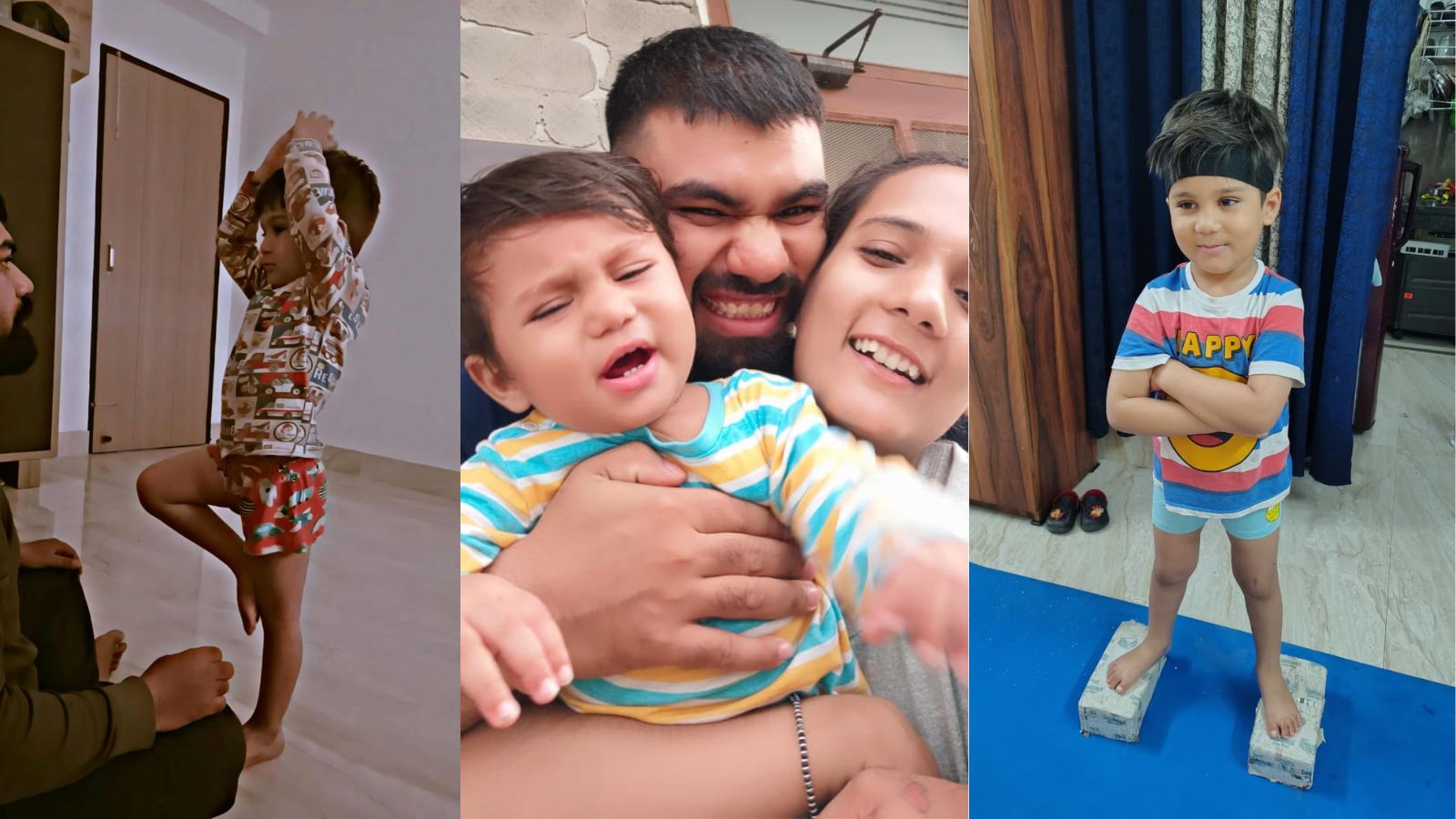
Q) Many parents struggle with balancing therapies, school, and everyday family life. What routines or strategies have worked best for Guru’s development?
Answer) Managing therapies, daily life, and everything that comes with it is not just difficult, it can sometimes feel almost impossible. There are financial responsibilities, time management, constant planning, and emotional pressure. It’s not something one person can handle alone.
That’s why I believe this journey requires a team approach. Husband, wife, and any available family members should work together as one unit.
But in reality, what I’ve seen is that many families step back out of fear when they hear the word “autism.” In most cases, only the parents remain and they become the two main pillars of the child’s life.
Usually, one parent focuses on earning while the other takes full responsibility for the child. Over time, this creates imbalance. The person handling the child alone can become physically and emotionally exhausted, and the child also misses the involvement of both parents.
Also Read: Sensory Need or Behaviour Issue? How to Tell the Difference
We also went through the same phase initially. But with time, we understood the importance of balance and made a conscious decision. we started sharing responsibilities. We planned in a way where both of us contribute, take turns in earning, give time to ourselves, and most importantly, give quality time to Guru. This one decision didn’t make things perfect, but it definitely made the journey more manageable and sustainable for all of us.
Q) Social media often highlights success stories. What are some of the less visible challenges your family continues to face, and how do you cope with them?
Answer) In my understanding, the goal in an autism journey is never “success” in the traditional sense. It’s not something you win or finish. It’s a lifelong journey where parents and the child keep moving forward, facing challenges every single day, with strength and patience.
One of the biggest challenges in our journey has been financial pressure and the lack of consistent support. As a fitness coach and my wife being a yoga teacher, our days start as early as 5 a.m. and go on till late at night with client commitments. Managing this schedule alongside Guru’s needs has never been easy.
Some people around us understood our situation, but many didn’t. Still, we kept going, adjusting, learning, and managing things in whatever way we could.
To be honest, in the beginning, one of the main reasons we focused on doing therapies and activities at home was because professional therapies were extremely expensive. We simply couldn’t afford everything at that time.
But that challenge became our turning point. As we started working closely with Guru, we learned, experimented, and discovered many effective approaches on our own. Over time, this learning grew so much that I began helping and training other special children as well. So yes, the challenges are real and often invisible to the world, but they also shape you, teach you, and sometimes even lead you to a purpose you never imagined.
Q) Through your journey, what are some common myths about autism that you wish more people would stop believing?
Answer) One of the biggest myths about autism is that it can be “cured.” After a diagnosis, parents, including us at one point. often enter a race, hoping that somehow their child will become “normal.” In that emotional state, many families end up spending money on anything that promises quick results, even when it may not actually be needed.
The truth is, autism is not a disease. It’s a different way of brain development. Just like people differ physically, height, color, body type. autistic individuals differ in how they think, understand, and process the world.
Another common myth is that therapy only happens inside a center or a closed room. In reality, therapy is not limited to a place. it happens in everyday life. Small interactions, simple instructions, daily activities, and real-world exposure. all of these are powerful forms of therapy.
There are also many claims around medicines or treatments. whether ayurvedic, allopathic, or homeopathic. promising to “fix” autism. In my experience, parents need to be very cautious with such claims. There is no shortcut.
Also Read: How This Autism Father Turned Fear into SafeScan, a QR Code for Child Safety
The most effective approach is spending quality time with your child, understanding their interests, building connection, and gradually helping them develop skills. That is the true essence of therapy, not quick fixes, but consistent, meaningful effort.
Q) If you could give one piece of advice to parents who have just learned their child is autistic, what would you want them to know from your own experience?
Answer) My advice to all parents who have just received a diagnosis is simple pause, breathe, and give yourself time to understand things. Don’t rush into decisions. Explore, learn, and move forward with awareness. Awareness and acceptance are your strongest tools in this journey.
The initial phase can be overwhelming. There is anxiety, overthinking, stress and I’ve personally gone through it all. At one point, it affected me so deeply that I even experienced panic attacks and had to seek help from a psychiatrist.
That’s why I always say, parents are the main pillars of the child’s life, and their mental well-being is extremely important. If at any point you feel emotionally disturbed or overwhelmed, don’t hesitate to seek support from a psychologist or psychiatrist. Taking care of yourself is not optional. it’s necessary.
And believe me, the day you truly accept your child 100%, everything starts to change. Your approach becomes calmer, your energy becomes more positive, and your child feels it. Our children are very sensitive to the energy around them. If there is anxiety or negativity, they absorb it. But when they are surrounded by calm, understanding, and acceptance. they begin to feel safe, and that’s when real growth starts. So build that environment. Stay strong, stay aware, and most importantly, stay connected with your child.