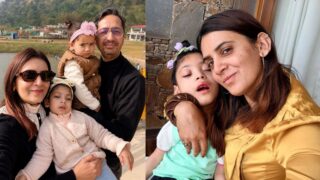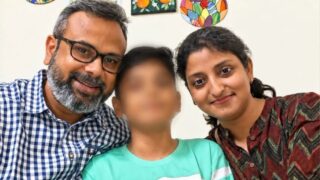
Motherhood had never meant labels to Ruchi Verma Rajan – motherhood meant knowing her child beyond the world. Her biggest concern when her son Shaurya was diagnosed with autism at 3 and a half years was simple yet devastating — “will my child ever be able to live independently?” This was not merely a journey of acceptance — it was a crusade of love, education, and commitment to what could still be in her boy.
Today, 11-year old Shaurya pours his emotions into mind-blowing paintings, which speak volumes of words ever could. Seeing him gain the freedom, self-confidence and bliss he found from art became one of the most moving experiences of Ruchi’s life. But she also knew an unspoken fear that every parent of children with special needs carries — how to secure the future for her child in a world where, someday, she wouldn’t be there.
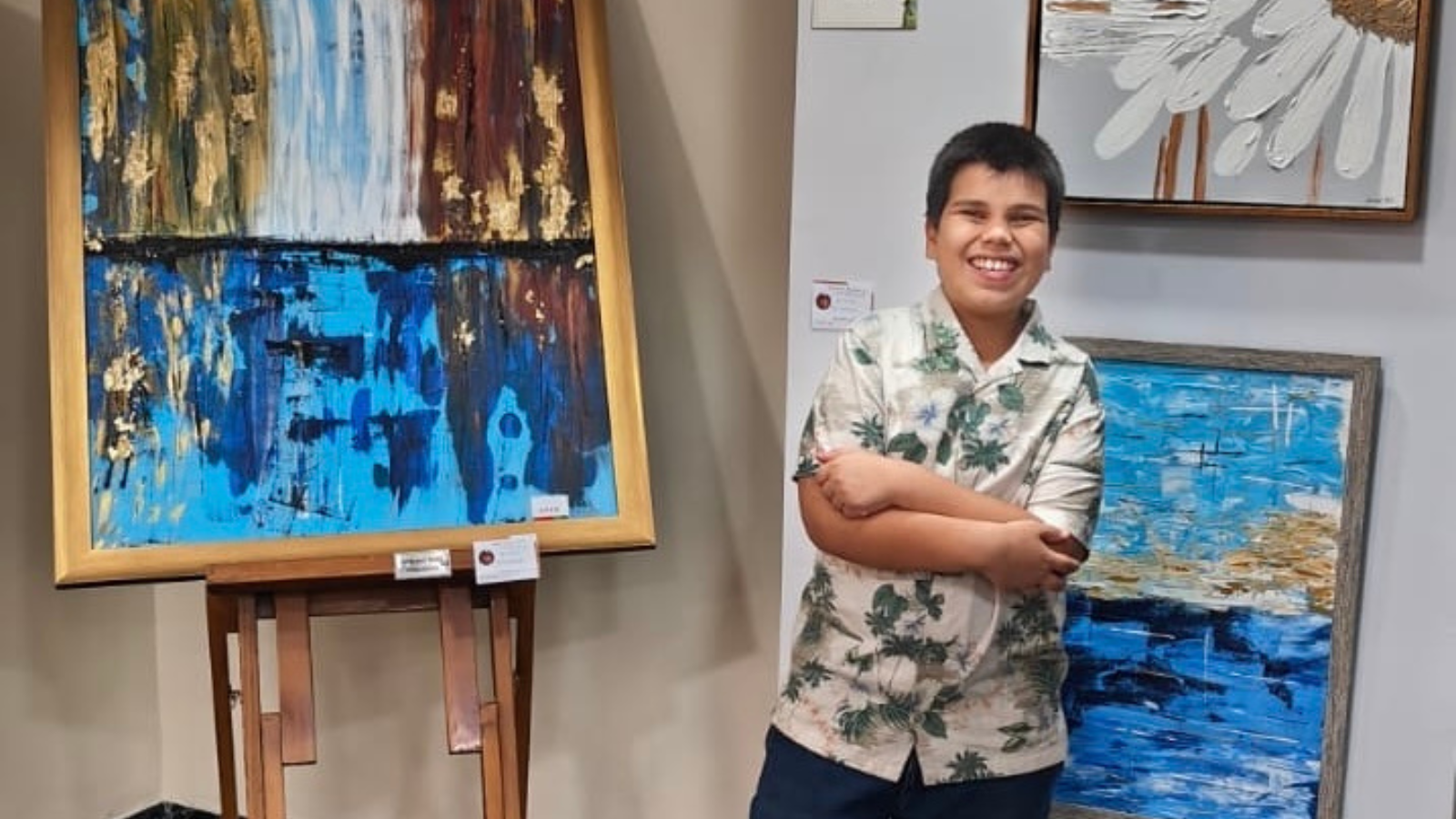
This eventually drove Ruchi, a parent volunteer & Autism advocate, to engage with the families of special-needs children on a much deeper level — ensuring they understood health insurance, financial planning and lifelong security for their kids. Not only is she educating through her work, but equally imparting to thousands of parents something invaluable — hope, preparedness and the idea that their children do not have to live without dignity, love and assistance.
Q) When did you first realize that your Shaurya saw and experienced the world differently, and how did that moment change you as a mother?
The thought that Shaurya perceives the world differently, first struck my mind when he was about one and a half years old. He was not in the least bit interested in play or exploring his world, unlike my older son. He was loving with his family while distant from new faces, and that stuck out to me. The day that he received his diagnosis of autism at three and a half, I was beyond overwhelmed. I remember asking the doctor if he would ever be able to live independently as an adult. There was an element of fear, confusion, and sadness in that moment but through the journey I eventually learned acceptance, patience, and what it really means to be a parent of a special needs child.
Q) Could you talk about the most challenging part from your journey as a mother of a special child and how did those challenges build you a stronger person?
Perhaps the hardest thing for me was navigating clinical recommendations with a motherly will. After Shaurya, I learned that there is no set path for how one can understand autism as each and every child on the spectrum sees the world differently. I read all about neurodiversity, and studied research and psychology, neuroscience… But by far the biggest lesson for me was to stop trying to make him fit a mould based on standardized expectations at that time. I started to pay attention to what his passions, comforts and connectedness were. When specialists told me he was ‘not school ready’, I chose an inclusive school because I felt that social integration and acceptance were a form of real growth. Eventually, I realized that professional expertise is very important, but no framework can substitute for really knowing the child you are working with.
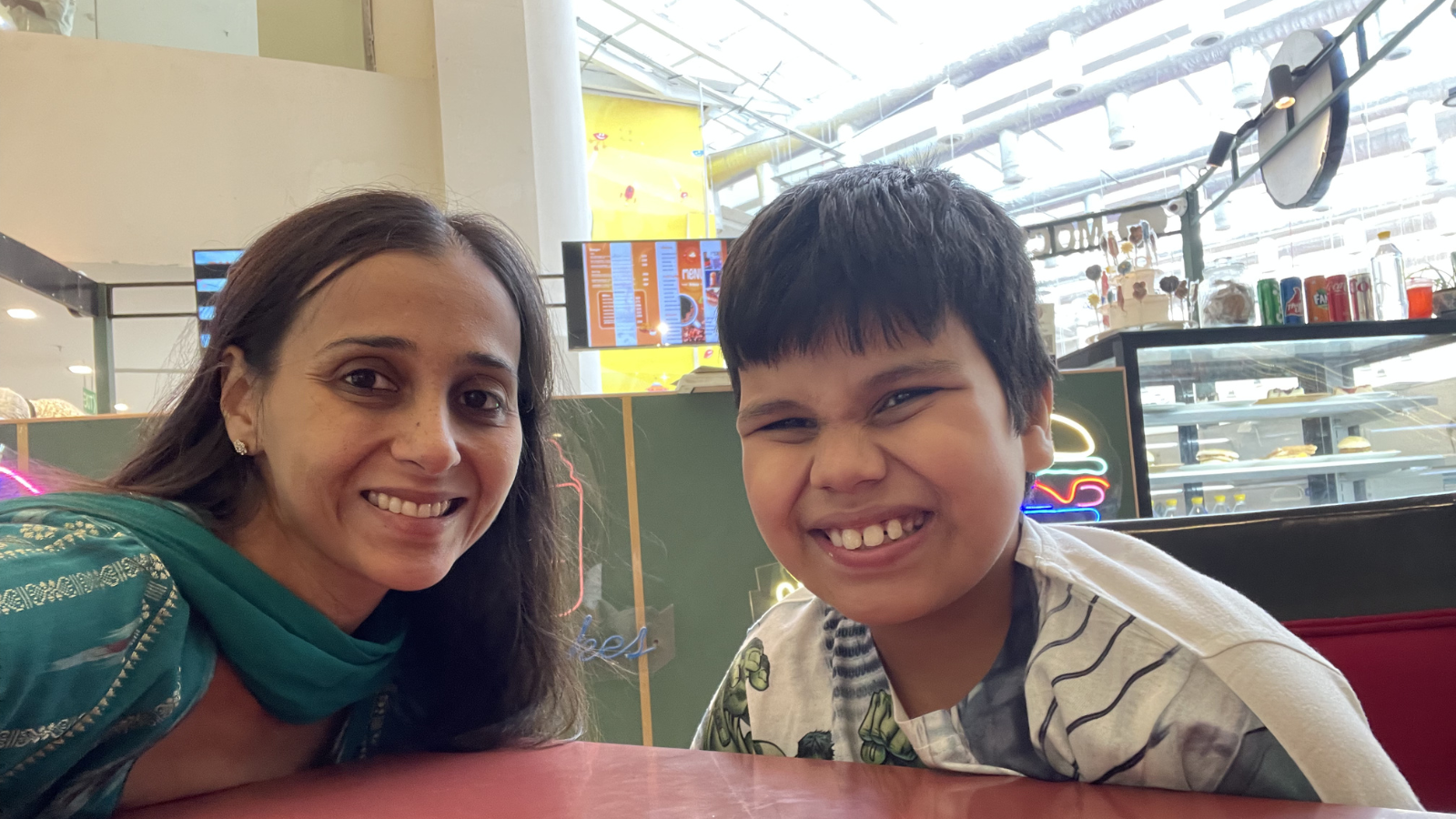
Q) You mentioned that your son finds his expression through art. When did you first spot this talent of his and what emotions do you feel when you first saw him communicate through his paintings in ways words sometimes cannot?
So this is a very interesting story.
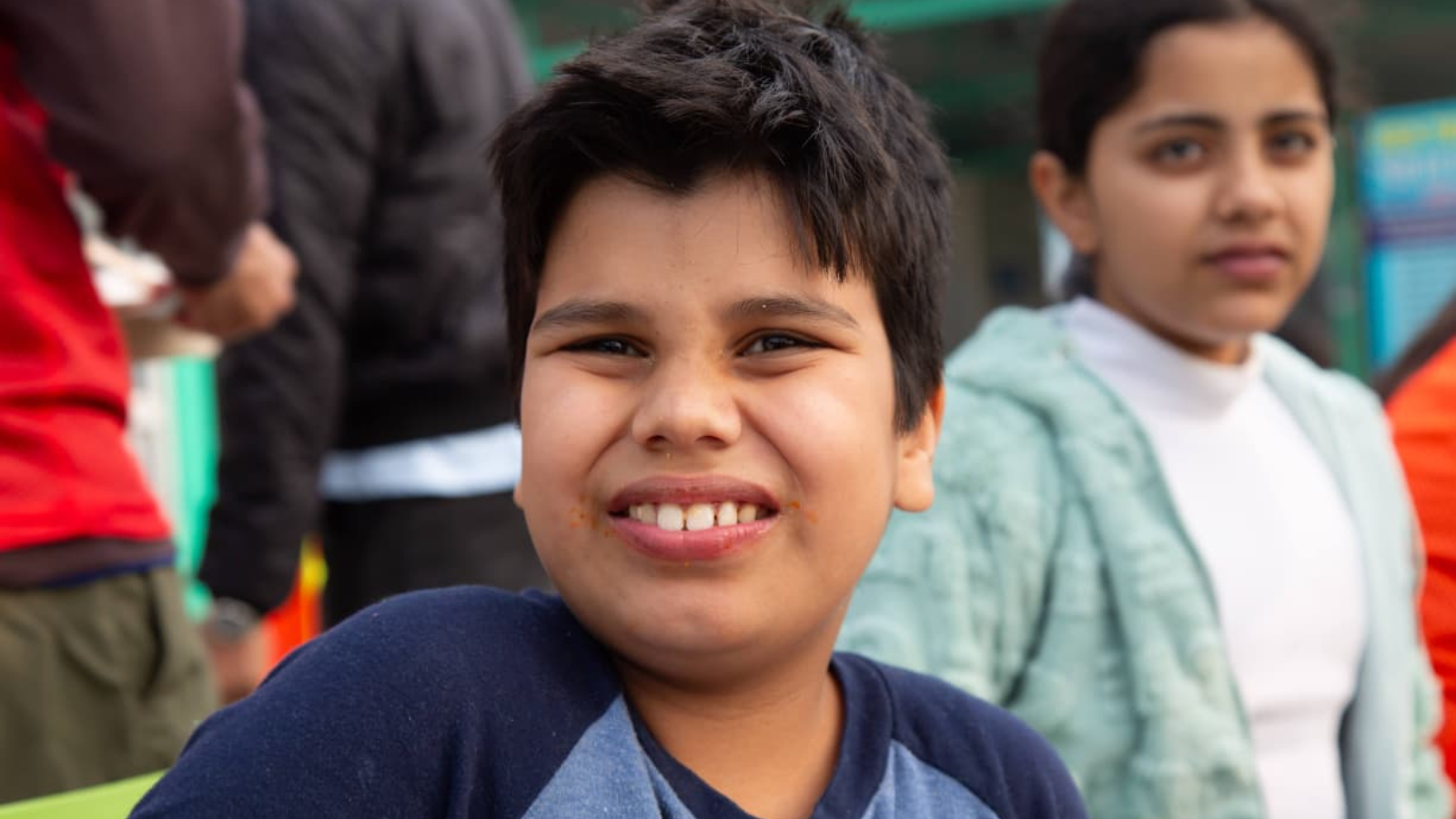
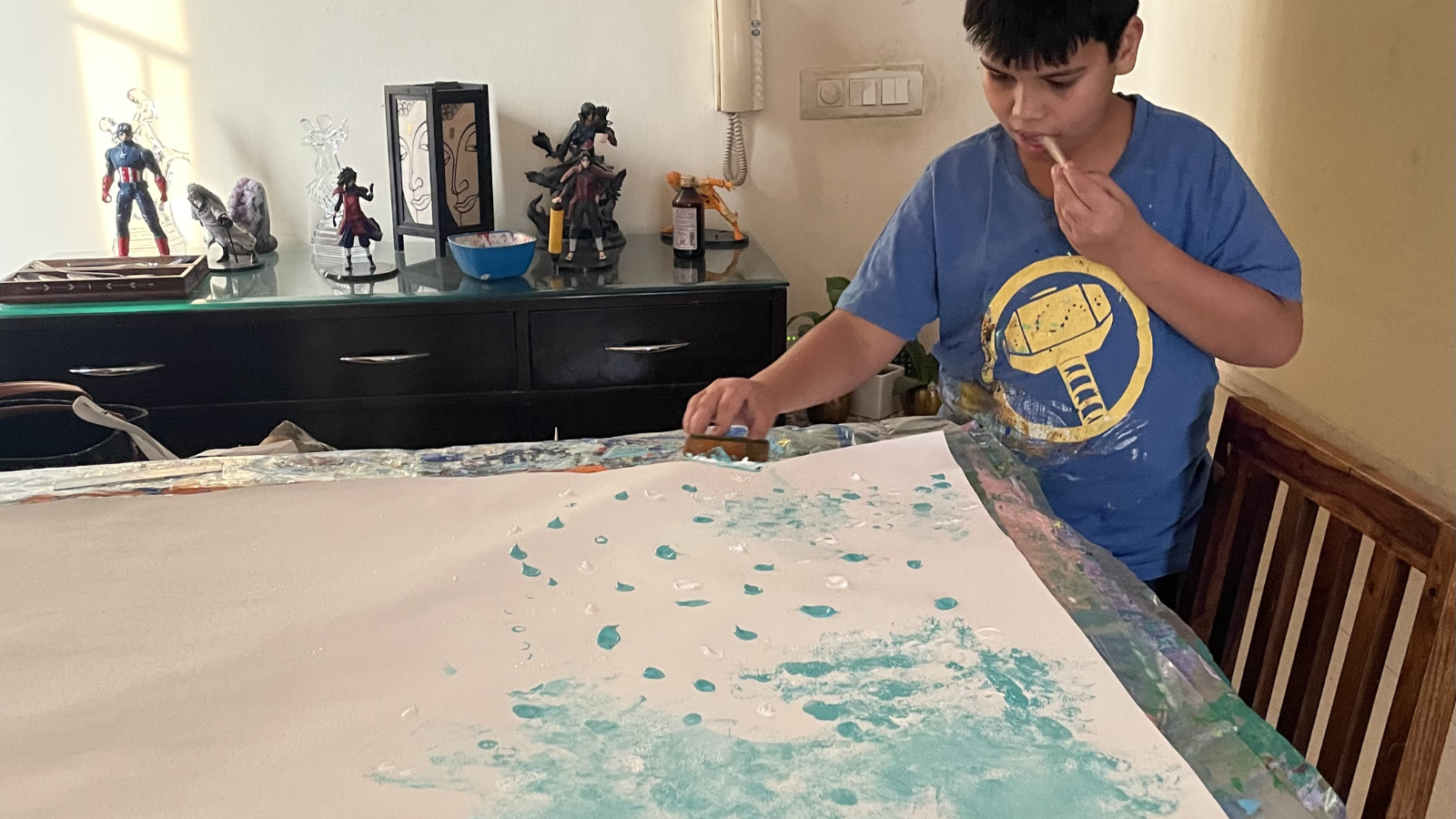
Shaurya accidentally discovered his love for art. I was looking for paintings to place in my new home when I came across another child with special needs, a beautiful painter. Shaurya by then had shown very little pull towards crayons or colours, but this painter’s mother suggested I let him have a go with paints. So I gave it a go, and as soon as he began working with paints, it clicked. He loved colour mixing, creating abstracts and working with the paintbrush so openly. I remember when I saw his first piece of work, a surprised me asked his teacher, “Sir is this made by Shaurya?” It was when art became his most beautiful form of expression.
Q) As a special needs mom, what has been the most challenging part of advocating for your child – and what has been the most unexpectedly beautiful part?
The most difficult aspect of advocating for my child is making people understand that they have to assume competence, even when that communication is not necessarily easy. For example, a lot of educators think children like Shaurya are severely impacted and they restart from scratch even though progress has already been made (as was the case with Shaurya). That can feel deeply disheartening.
However, this journey has also been beautiful in many ways. It is a delight to see how consistency with patience and connection gradually yields breakthroughs. I believe in the thought, “Keep giving input, and output will come.” Case in point being that after a few months of constantly asking Shaurya “Why,” to anything, he finally started reasoning and started replying by using the words “because it is….”, followed by the reason. Experiences like these are the reason why I take on every challenge.
Q) Your son studies in an inclusive school and is now participating in an exhibition. What does inclusion truly mean to you beyond textbooks and policies? How did he get where he is now in terms of art?
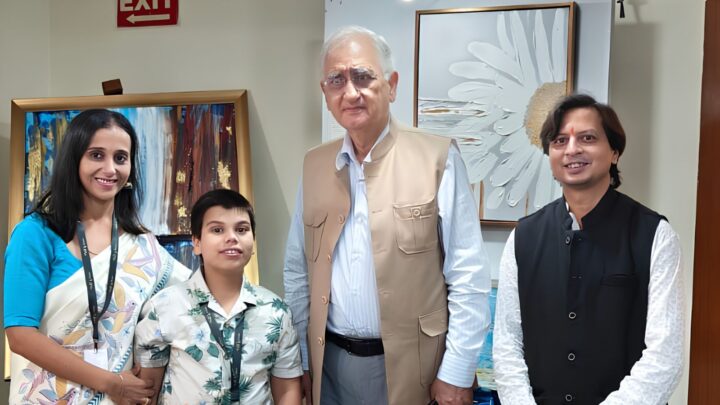
To me, inclusion is giving a child the chance to engage with an ever-expanding range of realities and possibilities; in all their vibrant messiness. Shaurya brought structure and routine through school to his life, enabling him to find his footing among different people, situations and environments as well. Art, on the other hand, has provided him real liberation — that is, the liberty to vent and just be himself. He has met top quality artists by participating in exhibitions at Arts and Souls Foundation, as well. But the best is watching him listen, and then point to his painting proud as can be saying, “Yeh mera painting hai.” It is even more meaningful to see his neurotypical classmates celebrating and supporting his art.
Q) Through your work with special needs families around medical insurance and financial awareness, what are parents’ fears that go unseen?
Financial insecurity is one of the most paralyzing fears parents of special needs children internalize. Therapies, interventions and special education add substantially to the financial burden of parenting a child with special needs but worry about the future never goes away. Parents are always worried about what-ifs if their child cannot live independently, or needs lifelong care. That fear made me delve deeper into Shaurya’s financial planning and health insurance. I recognized that there is very little understanding about ensuring proper long-term medical care coverage for special needs children. At present through my work at Swadhyaay IMF Pvt Ltd, I help families with insurance, investments and future planning so that they can feel peace in knowing their child has a better future.
Q) Please tell us more about how the right insurance can ensure a child with special needs can remain secure when their parents are no longer around? List out the top most questions that a parent should ask to be sure about the insurer before taking up any such policy?
One medical emergency can wipe out your entire savings.This is where health insurance plays a very crucial role and assumes an inevitable task when it comes to special needs children. Children may not need health insurance in their childhood but preparing a safety net for their life as adults is important. To avoid complications at the time of claim, it is important to reveal such conditions, like autism, in a transparent manner while buying a policy. There are key questions like whether the policy comes with lifelong renewability, whether it will be continued after the child turns 18 and whether relevant therapies or treatments are covered.
There is also so much confusion of what to declare, what not, which insurance provider to depend on, how much cover is enough.. I help families sort out these fears. I feel clarity today can help parents lock in some stability and peace of mind for their child’s tomorrow.
Q) What would you tell another mother who has just started her journey raising a special needs child to hang onto on the hardest days?
The first thing I will tell another mother is that it most definitely gets better with time. The early days can feel like a slog, but growth comes gradually and consistently and will happen if you just stick at it — patience is key.
I would also remind her that every parent and every child has particularly hard days, and she should not be too upset with herself. But even more so, I would tell her: don’t forget yourself. Keep your friends, keep some hobbies and moments that bring you pure joy! When you are feeling upbeat emotionally and mentally, then only you can give your child the love, energy and support that they need.