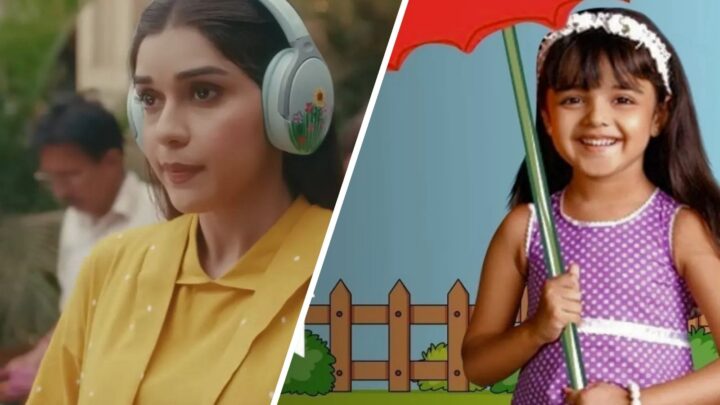
On June 29, 2026, when Colors TV introduces Juhi Mui, autism will once again be brought to the forefront of prime-time television. Eisha Singh stars as Juhi, an autistic girl who wants to become a lawyer despite living in a world that views her limitations before her abilities. In the promos, she’s smart, aware, and a fighter—not struggling with autism but battling everyone’s ignorance about it.
View this post on Instagram
The timing is significant. It has been almost 17 years since ‘Aapki Antara’ brought autism into the living rooms of millions of Indian homes, and now television is providing another primer on neurodiversity. But one question has gone unanswered: has awareness come through acceptance?
Autism was after all, an invisible disability that had remained largely in the shadows of India for decades. To describe their child as ‘slow’, ‘stubborn’ or ‘living in their own world’. Medical diagnoses did not exist, schools had no idea what to do, and there was virtually no dialogue about developmental differences.
‘Aapki Antara’ tried to bring awareness.
View this post on Instagram
The show that launched on Zee TV in 2009 was about Antara, a young autistic girl struggling to breathe and existed in a world where she was constantly misunderstood. Autism itself was the story, not a subplot, unlike most family dramas of the time. The series revolved not only around Antara’s struggles, but also the emotional process experienced by her family as well in comprehending what autism is actually.
‘Aapki Antara’ was special not just because it was a fiction story. Each episode finished with authentic stories from families who had children on the autism spectrum. In some ways, Aapki Antara achieved what campaigns heaped on raising awareness were unable to do in the past. It humanised autism.
The effects of this can still be seen years down the line. Viewers frequently used the term “first exposure to Autism” on forums. “The show that taught me about autism,” wrote one user on Reddit, while another said the families featured at the conclusion of each episode — all so that “awareness would be raised.”
But awareness is only half the battle.
The trouble with ‘Aapki Antara’ and ‘Juhi Mui’, or for that matter ‘Extraordinary Attorney Woo’, is that it is creating emotional understanding without structural changes.
View this post on Instagram
Autistic characters on screen ultimately find acceptance. However, some families are still striving over basic awareness off screen.
Take for example Education. In shows, schools are often portrayed as the place where all everyone come to see how talented the main character of the show is but reality is often harsher. Parents frequently complain that schools deny admission, place kids into special classrooms regardless of skill level or do not have teachers trained to work with neurodivergent learners. It takes an hour on TV to explain away a diagnosis, years for a family in real life.
Employment presents another contradiction.
Juhi Mui focuses on an autistic lawyer. This is an important narrative as it challenges the assumption that autistic people cannot be successful in the workplace. However, a number of autistic adults end up struggling before ever making it to a courtroom.
Recruitment systems favour eye contact, impromptu conversation and general social competence—qualities that some autistic candidates may find difficult in spite of having the perfect qualifications.
Stereotypes also widen the gap between reel and real.
Television loves exceptional autistic characters. They are bright, talented and have exceptional memory or analytical skills. Juhi’s legal genius strikes a chord with the existing global archetype espoused by characters such as Woo Young-woo from ‘Extraordinary Attorney Woo’ and Shaun Murphy from ‘The Good Doctor’.
Although, these representations are important in making the public know about it but they will only help make a very limited image of autism over the public. All autistic people are not geniuses. Not every autistic person is labouring under the same kind of burden. Autism is a spectrum in that it includes people with very different strengths, challenges and support needs.
India’s another problem: sympathy for others is an alternative to inclusion.
People might feel touched deeply by Antara or Juhi. You might weep when a character is bullied or excluded. However, that same society often takes a different line when tasked with the realities of autism in real life: a child distressed by sensory overload while shopping, an adolescent who flinches and looks away from eye contact, or an adult colleague with an unusual communication style.
The result is a paradox. India knew more about autism than it did in 2009. But this understanding continues to be more emotional than rational.
Television can introduce a conversation. It can challenge myths. It can make viewers care. What it can not do is build inclusive classrooms, train teachers and change hiring practices or make diagnosis and therapy accessible.
Juhi Mui enters Indian homes at a time when autism is more visible than ever. However, the real test for autism awareness is not whether India falls in love with Juhi but whether India embraces the autism with open arms and comfort.