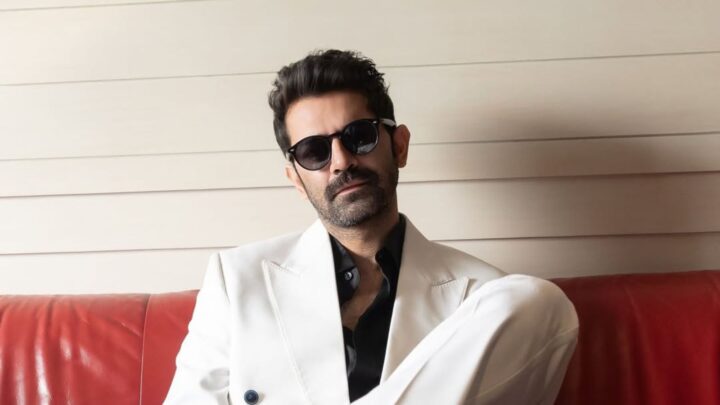
When Actor Barun Sobti decided to speak up about living with ADHD, he earned a lot of praise for his candor. This is the kind of acceptance that felt rare in an industry where celebrities pick apart every little detail about their public image before going out.
In a chat with Pinkvilla, Sobti was able to put light on the reality that rarely gets attention within mainstream entertainment. Yet weeks later, when the audience viewed that truth onscreen, the reaction was a lot less sympathetic.
What began as a guest spot on Farah Khan’s YouTube vlog snowballed into a full-blown Internet debate over Sobti’s conduct. He was scrutinised for his statements, and asked whether something was wrong with him. Users of social media speculated as to why he appeared distracted, withdrawn or “out of the zone.”
It was impossible to ignore the irony of this.
This is the same actor who had revealed publicly that he has ADHD and as such, struggles with attention, communication, social skills—suddenly being ‘called out’ for things many neurodivergent individuals do every day.
The conversation quickly escalated beyond this small-scale celebrity issue to something far larger — neurodiversity; and societies often complex relationship with it.
Overall, we see more openness to celebrate a conversation about ADHD. But are they so willing to accept what ADHD can really look like? That is the question that gives rise to this entire discussion over Barun Sobti’s possible appearance on Farah Khan’s show.
When Barun Sobti Revealed He Is ADHD
In a recent interaction with Pinkvilla, the actor opened up about his ADHD and how it has impacted his personality as well as way of living. The actor says he realised that conventional markers of success never encouraged him in the same way they do to other people, and recognised ADHD also shaped his career and ambitions.
To its audience, it was one of the few times a mainstream television and streaming star talked openly about neurodivergence. Although conversations about mental health are gaining traction as a topic in the entertainment industry, ADHD “is still something you don’t see discussed widely.
His honesty was widely appreciated. However, in an ironic twist it was soon to be relevant for a whole separate reason.
The Farah Khan Vlog That Made People Question
View this post on Instagram
The controversy started when Sobti featured in an episode of Farah Khan’s YouTube cooking vlog, which included the actor, his wife Pashmeen Manchanda and a house tour.
While one part of social media was exploring the light-hearted nature of the banter, another section obsessed over Sobti’s awayness.
Many viewers were worried about his face and actions, as per a report by Hindustan Times A user commented, “He has something off with him. One wrote, “His is talking very bizarrely” while another wrote,” There’s some thing wrong with Barun… he is out of zone.
NDTV also reported similar reactions stating that viewers asked why the actor looked distracted and less enthusiastic than before. The debate soon raged everywhere on social media as users tried to dissect everything from his speech pattern to how he moved.
What started as a side show upturned into something more malign: an online diagnostic run by total strangers.
The Context Many Viewers Missed
To all that speculation was lost a very important point.
In the vlog, as per both Hindustan Times and NDTV, Sobti said that he had just returned home from about four months of continuous stay outside due to shoot for a project.
And some other fans suggested that fatigue, travel and long hours of work would easily account for the star looking quieter than usual.
A fan quoted by Hindustan Times said in defense of the actor, “He must be really tired or has not taken a sleep. He has been by nature a rather shy person and one who hardly says anything at all.
The Neurodiversity Double Standard
Consider the troubling question raised by this episode.
What does it look like when everyone professes to care about neurodivergent people but then has trouble accepting behaviour that goes beyond what is considered the ordinary bounds of social engagement?
As much as ADHD training does not explain every quirk of Sobti’s in the vlog, the subsequent backlash was a reminder that people don’t take kindly to those they perceive to be different (from what they expect).
ADHD itself can look like many things — changing focus, different patterns of communication, seeming in and out of it, hyperfocus on specific subjects. These characteristics manifest in unique ways for every person and no two individuals present exactly the same.
Nevertheless, the general public is usually a bit more dependent on stereotypes.
This is where the hypocrisy in Sobti’s case hits hard. He has garnered headlines for talking about ADHD in an unprecedented run of the media. However, when people noticed odd behaviour, many made statements based on concern, speculation and judgement rather than kindness.
Beyond Barun Sobti
The story is larger than any single actor or short vlog.
But the response to Sobti’s look sheds light on how much more work there is to be done when it comes to discussions of neurodiversity. There has been a huge increase in public awareness in the past 10 years, but an awareness is not the same as acceptance.
When a celebrity talks about ADHD, you cheer but when the same celebrity behaves in a way a neurodivergent behaves in unscripted settings, question starts pouring on him and that is what the real hypocrisy is.