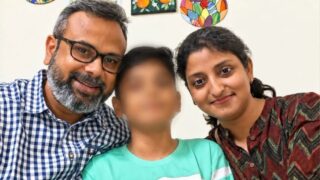
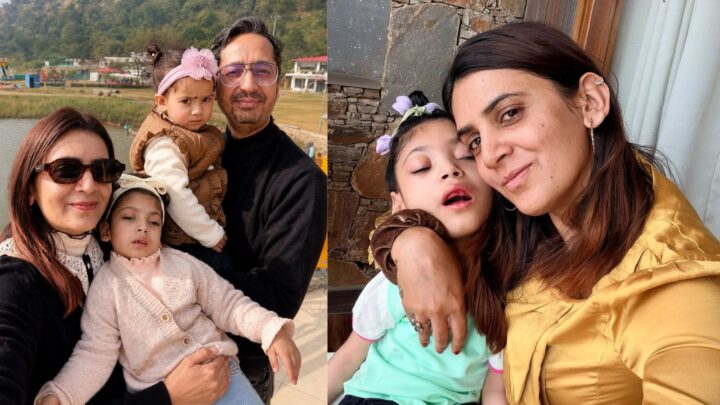
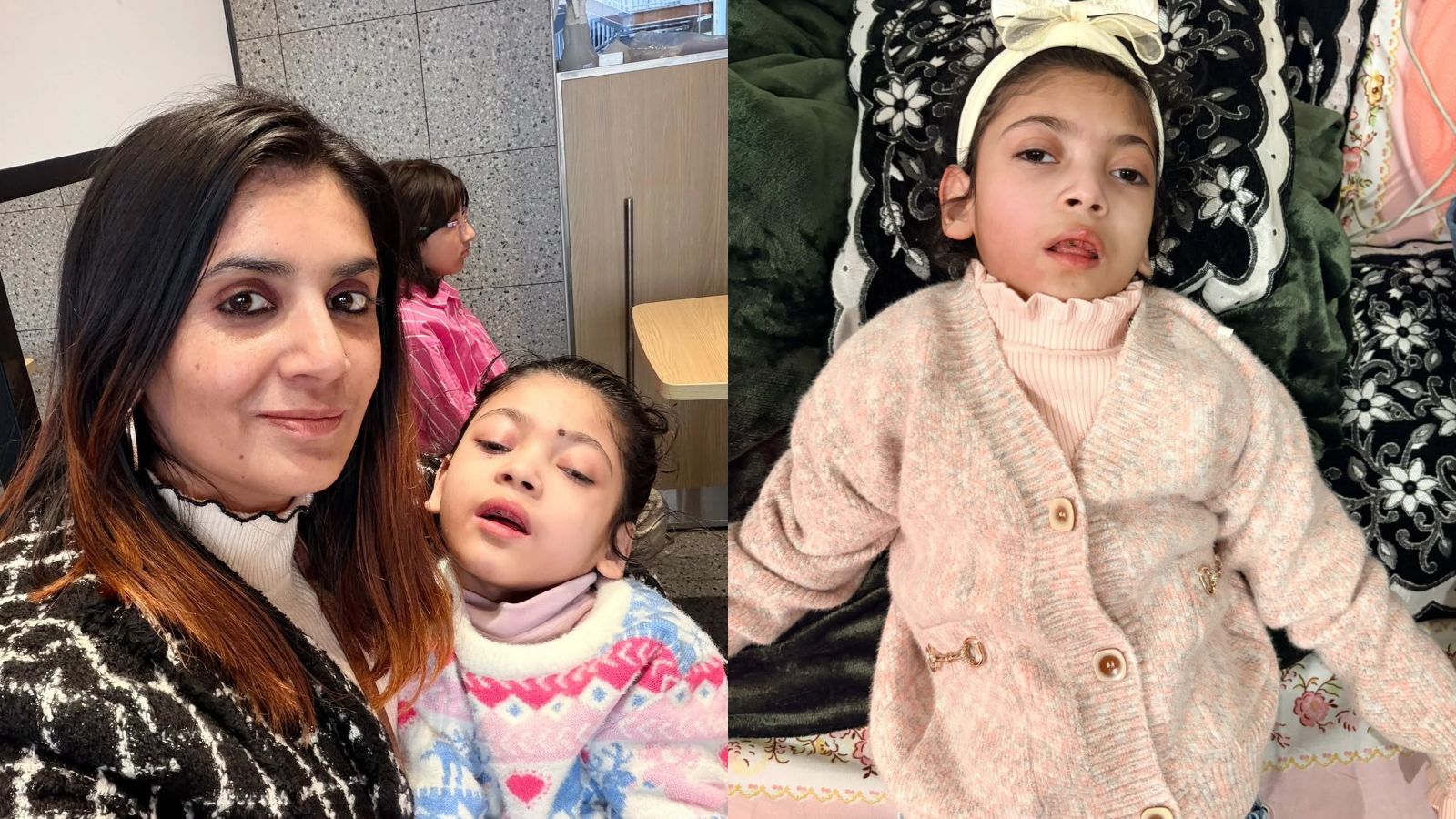
“My family is my world, and my daughters have taught me so much about love, patience, and resilience. Anaishaa’s journey has changed my perspective on life and made me stronger as a mother and as a person”. This is the story of Chandigarh-based Preeti and her seven-year-old daughter, Anaishaa, who continues to embrace life with courage despite the challenges she has faced.
Like any mother, Preeti wished to watch her child grow up, but life took an unexpected turn when her daughter, Anaishaa, suffered a brain haemorrhage during heart surgery. Later diagnosed with hydrocephalus, cerebral palsy and West syndrome, seven-year-old Anaishaa has faced numerous challenges along the way.
Also Read: An Ailing Wife, An Autistic Son And A Father’s Fight To Hold His Family Together.
Yet, Preeti, 38, and her husband, Varun, 41, find joy in Anaishaa’s smiles, love for music and precious everyday moments. Parenting Anaishaa and 2.5-year-old Madhvika has made this Chandigarh couple realize that it doesn’t matter what milestones one achieves but how one celebrates life through love and acceptance. Through Anaishaa’s story, she hopes to help other parents feel less alone.
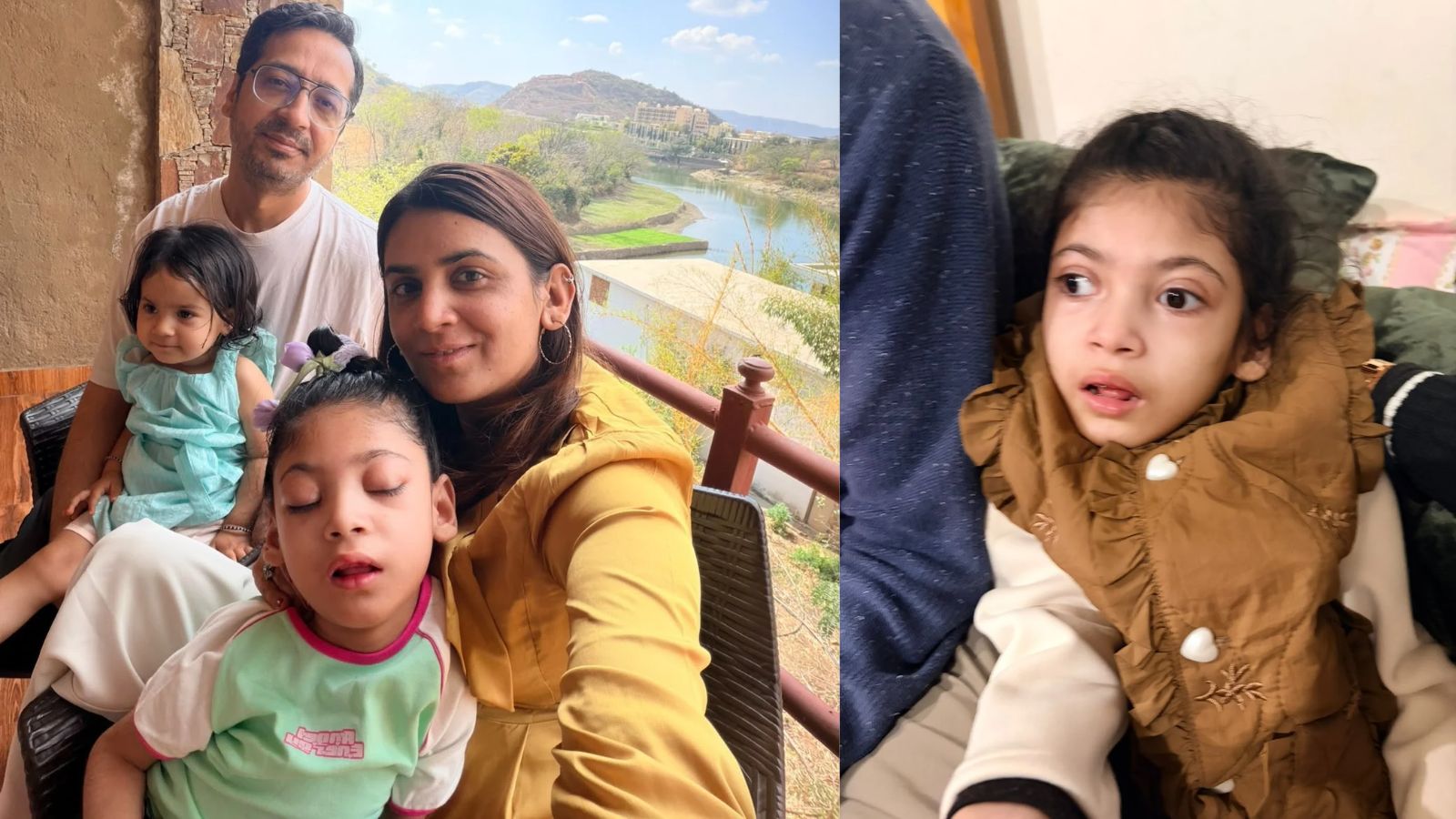
Excerpts from her Interview:
Q) Preeti, could you take us back to the beginning of Anaishaa’s journey? What led to the surgery during which she suffered brain damage, and how did your world change when you learnt what had happened to your daughter?
Answer) Anaishaa’s journey began like any other mother’s dream. Like every mother, I had so many hopes and dreams for my daughter. However, during her heart surgery, a serious complication occurred, and she suffered a brain haemorrhage. Later, she developed hydrocephalus.
When I learnt that my daughter had suffered significant brain damage, my entire world changed. It was incredibly difficult to understand why this had happened to my little girl. I had imagined a beautiful future for her, and suddenly, I found myself facing so many uncertainties and questions.
But one thing became clear to me: Anaishaa needed me more than ever. Even though I was breaking inside, I knew I had to be there for her.
From that moment, my life became a journey of caring for her, fighting for her well-being, giving her love, and finding the strength to face each new day. My dreams for her may have changed, but my love for her has never changed.
Also Read: Teaching Neurodivergent Girls About Periods: Senior Doctor Shares Proven Tools and Tips
Q 2) When Anaishaa was diagnosed with hydrocephalus, cerebral palsy, and West syndrome, how did you process the news as a mother? What were your biggest fears and uncertainties, and how did you find the strength to navigate those early days?
Answer) Hearing about your child’s medical conditions is one of the most painful experiences a mother can go through. I had so many fears. I wondered what kind of life my daughter would have, whether she would ever be able to sit independently, hold her head up, or how I would manage all her needs in the years ahead.
The hardest part was not having answers to all my questions. Some days, I felt hopeful, while on other days, fear and uncertainty overwhelmed me. Whenever I looked at Anaishaa, however, I reminded myself that she needed my strength and love. I will not pretend that I am strong every single day. I cry, I worry, and sometimes I feel emotionally exhausted too. But motherhood has taught me to gather myself again and again for my child.
Q 3) Managing multiple medical conditions can mean years of hospital visits, treatments, therapies, and uncertainty. What has Anaishaa’s journey looked like over the years?
Answer) Anaishaa’s journey has been filled with challenges. Managing her medical conditions, seizures, feeding difficulties, and physical needs has required a great deal of patience, care, and emotional strength. Hospital visits, medical consultations, medications, and her daily care have become a part of our lives.
There are times when I become extremely worried about her health. When she struggles to eat properly or experiences discomfort, my heart feels restless because, as a mother, I wish I could take away all her pain.
This journey has taught me that life does not always unfold according to our plans. Earlier, I had dreams about the future, but today, even seeing Anaishaa comfortable, enjoying a peaceful moment, or spending a good day with her means so much to me.
My understanding of motherhood has completely changed. I have learnt that every child develops differently and that what may seem like a small moment to someone else can be a significant achievement for a family like ours. Anaishaa has taught me to appreciate the present, to be patient, and to find meaning in the smallest moments of life.
Also Read: Can Children Outgrow ADHD or Autism?
Q 4) Beyond her medical conditions, who is Anaishaa as a person? What are her likes and dislikes, how does she express her feelings and preferences, and what have you learnt about understanding and connecting with her?
Answer) For me, Anaishaa is not defined by her medical conditions. She is my daughter, my world, and an irreplaceable part of our family. She has her own preferences, feelings, and ways of experiencing the world.
Anaishaa enjoys listening to music. When I spend time with her, hold her close, or sit beside her, I realise that connection does not always require words. Sometimes, I try to understand her through her facial expressions, little reactions, and the ways she responds to the people around her.
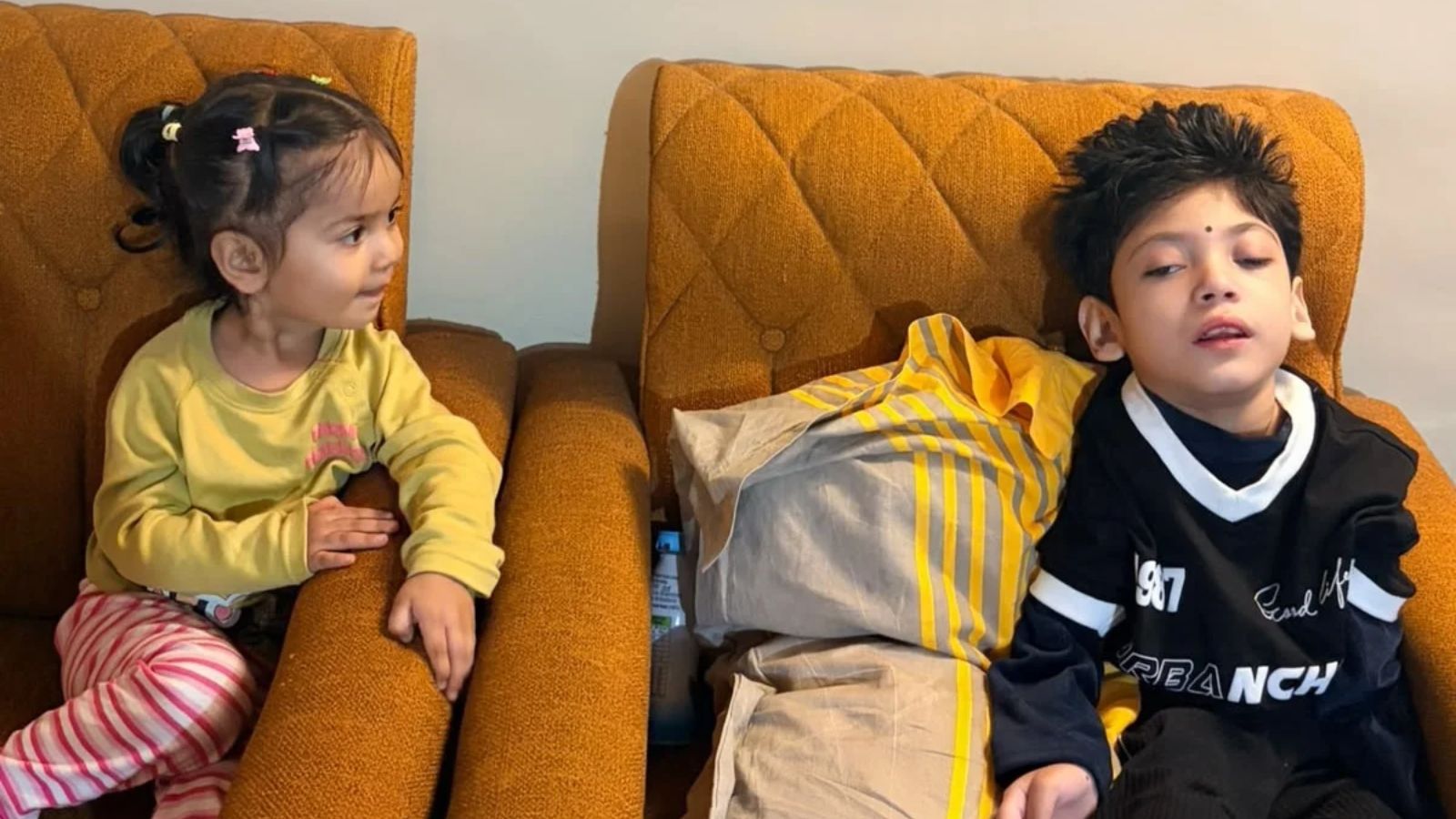
Her sister, Madhavika, is also a beautiful part of this journey. Sometimes, when I see Madhavika playing with her doll and caring for it in the same way I care for Anaishaa while feeding her, my heart fills with emotion. It reminds me how naturally children learn love and compassion from what they see at home.
These everyday moments mean so much to me. Anaishaa has taught me that understanding someone is not just about listening to their words. Sometimes, we must learn to understand their silence with patience, sensitivity, and love.
Q 5) Amid the medical challenges and difficult days, can you recall a moment, milestone, or small achievement that filled your heart with hope or made you especially proud of Anaishaa?
Answer) For me, every little moment in Anaishaa’s life is precious. Something that may seem small to the outside world can bring immense happiness to a mother raising a child with complex medical needs.
Whether I am caring for her, spending time with her, trying to feed her, or doing something new to make her more comfortable, I feel that I am doing my best to improve her quality of life. Her little smiles, the moments when she enjoys listening to music, and the peaceful time we spend together are all incredibly meaningful to me.
For me, hope does not always mean waiting for a major improvement or a dramatic change. Sometimes, hope simply means being able to spend another day with your child, surrounding her with love, and making that day as comfortable and happy as possible.
Also Read: The Mother I Became After My Child’s Autism Diagnosis
Q 6) What has your experience been with medical support, therapies, accessibility, and social acceptance while raising Anaishaa?
Answer ) As the mother of a child with complex medical needs, I believe families need much more than medical treatment. They need continued guidance, understanding, and support.
Doctor appointments, hospital visits, medications, and the daily responsibilities of caring for a child can become overwhelming. When a child has multiple medical conditions, every decision requires careful thought. Families need clear medical information, better coordination between specialists, and emotional support throughout the journey.
I also believe our society needs greater awareness and acceptance. Too often, children with disabilities are seen only through the lens of their limitations. But they deserve to be treated as individuals, with respect, affection, and dignity.
I would like to see better guidance for families in hospitals, greater support for caregivers, more accessible public spaces, and financial and emotional assistance for families raising children with disabilities.
Most importantly, I want people to understand that these children do not need pity. They need acceptance, opportunities, appropriate care, and the freedom to be included in society. Every child deserves a safe, loving, and dignified life, regardless of their abilities or medical condition.
Also Read: How Special Olympics Is Changing the Meaning of Inclusion for People with Intellectual Disabilities
Q 7) What would you say to a parent navigating an unexpected diagnosis or a life-changing medical crisis involving their child, and what is the one thing you wish society understood about children like Anaishaa?
Answer) Anaishaa has taught me the purest form of love — a love without conditions, expectations, or comparisons. I do not love her because of what she can achieve or what she may be able to do in the future. I love her exactly as she is.
She has also taught me that acceptance does not mean giving up. Acceptance means understanding your child’s reality, recognising her needs, and continuing to do everything possible to give her the best life you can.
To parents who have recently received an unexpected diagnosis for their child, I want to say that you do not have to appear strong every single day. You are allowed to cry, feel afraid, ask questions, and seek help. Learn about your child’s medical needs, seek appropriate professional guidance, and remember to care for yourself as well. Your feelings matter too.
To society, I want to say: please do not define children by their disabilities. A child’s worth is not measured by how well they can walk, speak, sit independently, or perform everyday activities.
Anaishaa may have changed the direction of my life, but she has never diminished its beauty. She has taught me the true meaning of love, patience, acceptance, and inner strength.
My greatest wish is for every child like Anaishaa to receive love, respect, proper care, and opportunities to live with dignity. I also want parents to know that they are not alone in this journey.
If sharing Anaishaa’s story helps even one mother feel understood, supported, or a little less alone, then I will feel that telling her story to the world has served a meaningful purpose.