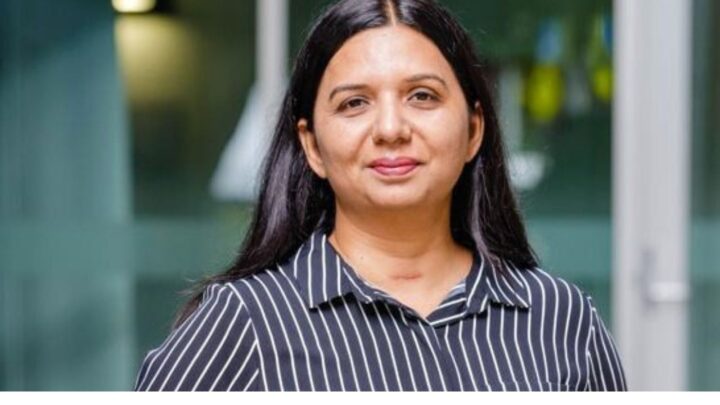
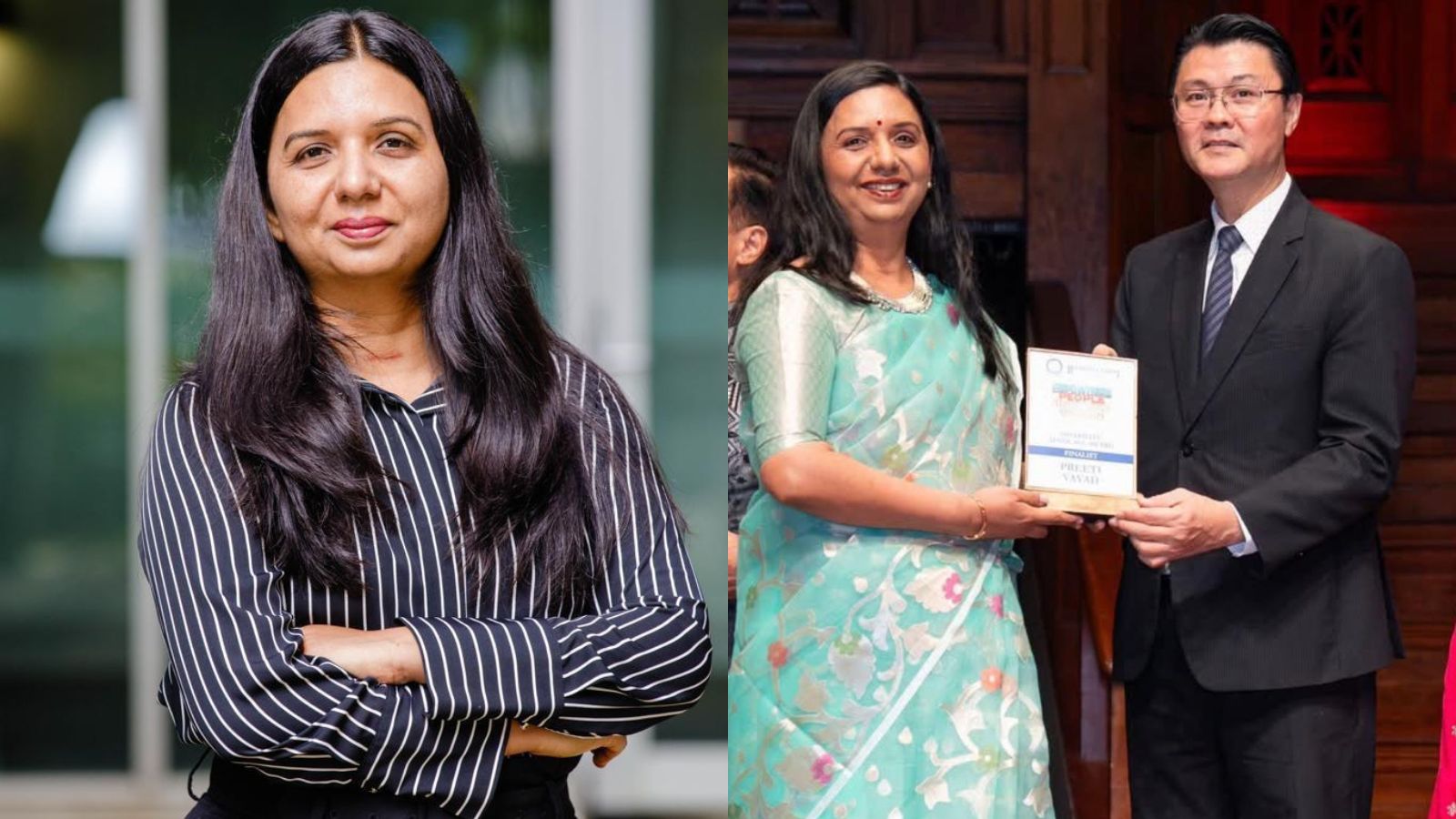
The right school can often feel like a maze for most parents of children with autism, ADHD, dyslexia and other neurodevelopmental conditions. Is mainstream education truly inclusive? Is a child who has learnt to talk fluently or scores well no longer in need of help? And what really constitutes meaningful inclusion, beyond getting in? A PhD holder and a special educator with over a decade of experience in the field, Dr Preeti Deven Vayada, 52, has an evidence-based perspective molded by her professional experience both in India and Australia.
Also Read: How Home-Based Autism Therapy Helped Little Guru Thrive Against the Odds
She debunks the myths that often accompany thoughts of inclusion, exposes the silent battles experienced by many neurodivergent children and discusses why schools must not only offer access, but also belonging, participation, support and student voice.
Q) Many parents in India still believe that children with autism, ADHD, or learning disabilities should study only in special schools. Is that always true? How can parents decide whether a mainstream or special school is the right fit?
Answer) No, not at all. A diagnosis can help us understand the support a child may need, but it should not decide the limits of that child’s potential.
I also think we need to move away from seeing mainstream school as automatically inclusive and special school as somehow a lesser option. Neither is true. What matters is the individual child’s experience. Are they safe? Are they understood? Are they learning, developing relationships and able to participate?
For some children, mainstream education can offer wonderful opportunities to learn alongside peers and be part of their local community. But if a child is constantly overwhelmed, excluded or expected to cope without the support they need, simply sitting in that classroom does not make the experience inclusive.
Equally, some children may thrive in a specialist setting with smaller groups, individualised teaching, communication support and a highly adapted environment. Parents should not feel that choosing such a setting means they have failed their child. I would encourage families to look beyond the name on the school. Look at the support actually available, how the school understands your child and, wherever possible, what your child is communicating about being there.
Also Read: Diagnosed With Autism at 2.5, Thriving at 22: Milan Singh Shares Son Samar’s Journey
Q) In countries like the US, UK, and Australia, inclusive education is more widely practised. What are the biggest lessons India can learn from these models, and what changes are realistically possible here?
Answer) The first thing I would say is that we should not idealise any country. I have worked in the Australian system, and while the structures, funding and expectations around inclusion are more established, there are challenges there too. India does not need to import inclusion. We need to make the inclusion already promised in policy consistently visible in practice.
What I have experienced in Australia is a strong emphasis on putting support around the student. There is consultation with students and families, reasonable adjustments within mainstream schools, specialist staff and government-funded special schools for students who meet state-specific eligibility criteria. Importantly, specialist education itself is not treated as something that should carry stigma.
The lesson for India is not to copy another country’s system. It is to recognise that inclusion does not mean treating every child the same; it means giving children what they need to participate. That might mean changes in communication, assessment, sensory environments, teaching methods or classroom routines. Reasonable adjustment is not about lowering expectations. It is about removing barriers that have very little to do with the child’s actual capacity to learn.
India is not starting without a framework. The Rights of Persons with Disabilities Act 2016 and NEP 2020 already reflect a commitment to inclusive education. The challenge is what that commitment looks like on an ordinary school day, in an ordinary classroom. We need better teacher preparation, accessible specialist support, stronger partnerships with families and much greater attention to student voice.
Q) One common myth is that if a child is speaking well or scoring good marks, they don’t need special education support. How do you explain the ‘hidden challenges’ that many neurodivergent children face?
Answer) This is an important myth because we often judge a child’s support needs by what is easiest for us to see. A child may speak fluently, achieve excellent marks and still be struggling enormously. Good grades tell us what a child can achieve. They do not always tell us what it costs that child to achieve it.
Also Read: How My Autistic Son Changed My Life: A Father’s Inspiring Story
A student might understand the academic content but struggle with sensory overload, executive functioning, transitions, social communication, group work or emotional regulation. Some children also become very skilled at masking—watching others, rehearsing responses, suppressing their natural behaviours and working incredibly hard to appear as though they are coping.
That is why a teacher may genuinely say, “Your child is doing so well,” while the family sees a completely exhausted or overwhelmed child once they get home. The same applies to speech. Being able to speak does not necessarily mean a child can communicate every need, explain what is overwhelming them or ask for help at the moment they need it.
So, I would never decide support based only on marks, spoken language or whether the child appears to be causing any difficulty in class. We need to look at the whole child—and sometimes we need to look beyond performance and ask how much effort that performance is requiring.
Q) Parents often hear conflicting advice from doctors, therapists, teachers, and relatives. As a special educator, what are the biggest mistakes families make in the first few years after a diagnosis, and how can they avoid them?
Answer) hesitate to call them mistakes. I think there are common traps families can be pulled into, especially in those early months when they are receiving advice from everyone around them.
One is feeling that they have to do everything immediately—therapy after therapy, programme after programme—because they are frightened of losing time. But more intervention is not automatically better intervention. Parents should understand what each intervention is trying to achieve and whether it is meaningful for their child and family.
Another trap is making the entire goal about reducing autistic traits or making the child look more typical. Instead of only asking, “How do we stop this behaviour?”, sometimes we need to ask, “What is this behaviour telling us?” And I feel very strongly about parental agency. When you are surrounded by doctors, therapists and educators, it can be easy to assume that everybody else knows more and that your role is simply to follow instructions.
Professional expertise should inform parents, not sideline them. Ask questions. Why is this being recommended? What is the goal? What evidence supports it? How will we know whether it is helping? Parents need to remain in the know because they are partners in the decision-making process.
Professionals bring specialist knowledge, but families know the child across everyday life. And as the child grows, their own voice and preferences need to become increasingly central too. Importantly, protect family life. A childhood should not become an endless therapy schedule. There must still be time for play, rest, relationships and simply being a family.
Q) True inclusion is often confused with simply admitting a child into a mainstream classroom. What does meaningful inclusion actually look like—for teachers, classmates, and the child—and where are Indian schools still falling short?
Answer) For me, meaningful inclusion is really about belonging. For the teacher, it means understanding that children will access learning in different ways and planning with that diversity in mind. For classmates, it means that the neurodivergent student is not always the child sitting separately with an adult. Friendship, group work, lunch breaks, playgrounds, excursions and school celebrations matter too.
I also think we underestimate the importance of educating peers about neurodiversity. Children are capable of understanding difference when adults explain it well. That understanding can create more accepting friendships and can also help reduce stigma and bullying. But the most important perspective is the child’s.
We often ask whether the school has provided something. I also want to know: What does the child experience? Do they feel safe? Can they communicate in a way that works for them? Can they ask for help? Can they make choices? Do they have some agency over their day? We often measure inclusion by what adults provide. We also need to measure it by what the child experiences.
And this is where the Indian reality can be heartbreaking. Parents continue to share experiences of children being denied admission, being accepted only if the family privately pays for a shadow teacher or being admitted without the support necessary to participate meaningfully.
Also Read: Sensory Need or Behaviour Issue? How to Tell the Difference
What troubles me most is knowing that there are children with diverse learning needs who are simply at home because their families cannot find a school willing or equipped to support them. That should trouble all of us. A child’s access to education should not depend on whether their family can privately purchase inclusion. Admission is only the doorway. Meaningful inclusion is what happens after the child walks through it.
Q) If you could change three things about India’s education system to make it more inclusive for children with autism, ADHD, dyslexia, and other neurodevelopmental conditions, what would they be, and why?
Answer) I would focus on three things: accountability, capability and agency. First, accountability. We already speak about the right to education and inclusive education. I would like those rights to become something families can actually experience. There need to be clear expectations around inclusive access and meaningful mechanisms for accountability when children are excluded. A right that exists only on paper is not yet a right experienced by the child.
Second, capability. We cannot simply tell teachers to “be inclusive” and then leave them without the training, time or support to do it. Teachers need practical preparation in neurodiversity, access to special educators and allied professionals where needed, and flexibility in teaching and assessment.
I would also like us to stop waiting until a child has failed before support begins. We should anticipate learner diversity from the beginning. Third, agency. Families should be genuine partners, but we also need to take student voice much more seriously.
Too often, plans are developed around children while the child has very little influence over what is being decided. Student voice does not always mean spoken language. Children can communicate preferences, discomfort, choices and goals in many different ways. We have to become better at listening. If we could build a system where rights are enforced, schools are equipped and children and families have a genuine place in decision-making, we would be much closer to meaningful inclusion.
Q) Share your journey as a special educator. What drove you towards this field? Your background and also about your family.
Answer) My journey into special education was not a straight line and I think that is why I speak about inclusion with a certain humility. I am not speaking from a pedestal because I have worked across different education systems, seen what works, seen what fails, and I am still learning.
Student voice, agency and partnership have always been very close to my heart. That interest eventually led me to undertake my PhD at the University of Queensland, Australia. Through my research and different collaborations, I became increasingly interested in student’s agency, inclusion and, particularly, whose voices are heard when decisions are made in education.
Then life took an unexpected turn. I went through a cancer-related health scare, and it was a very dark period personally. It was around that time that I was introduced to special schooling in Brisbane. In many ways, that experience changed the direction of my life.
I walked into a world I had never experienced quite like that before. I saw sensory calming rooms, hydrotherapy pools, communication supports and thoughtful environmental adjustments. But more than the facilities, what stayed with me was the dedication of the people. Teachers and multidisciplinary teams were constantly thinking about what each individual student needed in order to participate.
It put many things into perspective for me. I realised that inclusion is not an attitude alone. It has to be built into the environment, the teaching and the relationships around a child.
From there, I undertook extensive professional development and specialist training and began working closely with occupational therapists, speech and language therapists and other professionals. Gradually, special education stopped being simply an area of professional interest. It became work I felt deeply connected to.
Today, a significant part of my work is around Senior Schooling and post-school transitions—what happens when these young people finish school, and how we prepare them towards meaningful adult lives with greater choice, participation and independence.
I also remain involved with university research, contribute to the preparation of pre-service teachers and mentor teachers who are beginning their careers. That connection between research and what actually happens in classrooms remains very important to me.
My family has been part of this journey too. My son, Dhairya, is a doctor working in a major Brisbane hospital, and my husband heads AI within a multinational company. We work in very different worlds, but perhaps that has reinforced one of my deepest beliefs about education: Our role is not to decide how far another person can go. It is to create the conditions in which they have the opportunity to find that out for themselves.
Looking back, special education did not simply change my professional direction. It changed the way I understand ability, education and what it really means for a person to belong.