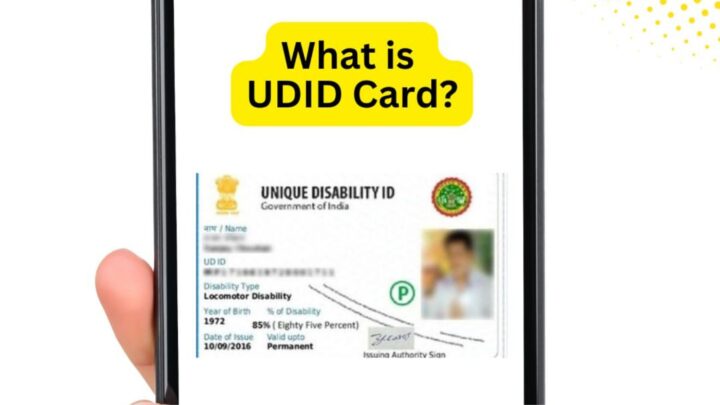
The Unique Disability ID (UDID) Card is a nationwide identity card issued by the Department of Empowerment of Persons with Disabilities (DEPwD), Ministry of Social Justice & Empowerment. It serves as a single document for identification and verification of persons with disabilities and helps them access various government schemes and benefits.
Also Read: Teaching Neurodivergent Girls About Periods: Senior Doctor Shares Proven Tools and Tips
Who is eligible for a UDID Card?
According to the Government of India, any Indian citizen who has a disability certified by a competent medical authority can apply for a UDID Card. The disability must be assessed and certified by the medical board or medical authority notified by the respective State or Union Territory.
Also Read: School Denied Admission to Your Neurodivergent Child? Delhi High Court Lawyer Explains Your Rights
The card is available to people with disabilities recognised under the Rights of Persons with Disabilities (RPwD) Act, 2016, including conditions such as:
- Autism Spectrum Disorder (ASD)
- Intellectual Disability
- Cerebral Palsy
- Multiple Disabilities
- Hearing Impairment
- Visual Impairment
- Locomotor Disability
- Mental Illness
- Specific Learning Disabilities
- Parkinson’s Disease
- Muscular Dystrophy
- Dwarfism
- Thalassemia
- Hemophilia
- Sickle Cell Disease
- Multiple Sclerosis
- Chronic Neurological Conditions
- Acid Attack Survivors
- Speech and Language Disability, among others.
Does a person need 40% disability to get a UDID Card?
No. This is one of the biggest misconceptions.
A person does not need to have 40% disability to obtain a UDID Card. Individuals with less than 40% disability can also receive a UDID Card, provided they have a valid disability certificate issued by the competent medical authority. However, many government welfare schemes and legal entitlements are specifically meant for persons with benchmark disability, which is defined as 40% or more disability under the RPwD Act.
Who is not eligible?
A person is generally not eligible for a UDID Card if:
- They do not have a disability recognised under the RPwD Act, 2016.
- Their disability has not been certified by the competent medical authority.
- They fail to complete the prescribed certification process or provide the required documents during the application.
Also Read: Why The SC’s Intervention On Therapy Centres Could Be A Turning Point For Special Children
What are the disability categories on the UDID Card?
The government uses different colour categories based on the assessed disability percentage:
- White Card: Less than 40% disability.
- Yellow Card: 40% to 80% disability (benchmark disability).
- Blue Card: More than 80% disability.
Why is the UDID Card important?
The Government says the UDID project aims to:
- Create a national database of persons with disabilities.
- Provide a single, universally accepted disability identity card across India.
- Reduce the need to carry multiple disability documents.
- Enable easier access to government schemes, reservations and benefits for eligible persons.
- Improve transparency and efficient delivery of disability-related services.
Also Read: Choosing Between Special and Inclusive Schools
A UDID Card is not limited to people with 40% or more disability. Anyone with a disability recognised under the RPwD Act and certified by the competent medical authority can apply. However, government reservations, many financial benefits and other entitlements are generally available only to persons with benchmark disabilities (40% or above), unless a scheme specifies otherwise.