For many autistic children, board examinations are not only about academics. Even before they enter the exam hall, they have dealt with issues that seldom get identified – being misunderstood, judged for communicating or learning differently and facing challenges like anxiety, sensory overload and social isolation. We laud marks, without realizing what goes into surviving those scars before being eligible at the starting line.
Autistic students, despite their ability to perform academically above average, continue to face stigma and misunderstanding. Accommodations like extra time or a scribe are often seen as special privileges, when they simply give autistic children a fair chance to show what they know
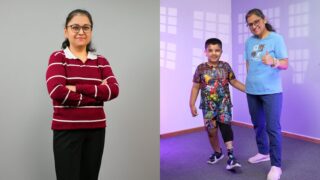
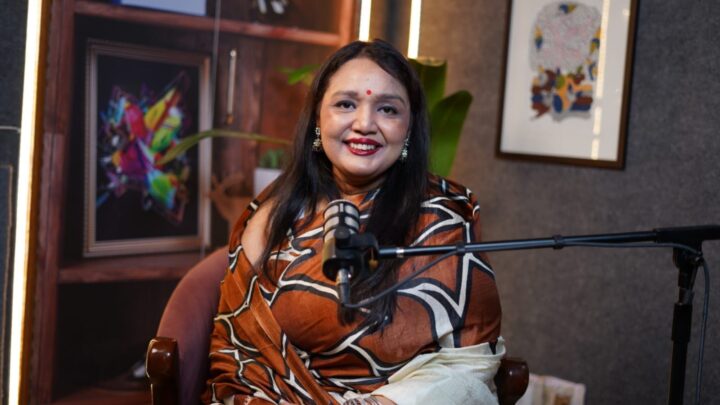
In this conversation, psychologist and special educator Dr Rajul Tiwari, also a mom to two neurodivergent sons, explains why readying autistic children for board examinations don’t begin in Class 10.
Question) There is growing awareness about autism today, but mental health challenges among autistic children and teenagers are still not discussed enough. From your experience as both a psychologist and a mother, what are the biggest emotional and mental health concerns that parents should understand?
Answer )I often say that autism is visible, but the emotional pain behind it is often invisible.
People notice when a child doesn’t speak, avoids eye contact or behaves differently. But they don’t always notice the fear, anxiety, loneliness or confusion that child may be carrying inside. Many autistic children constantly try to adjust to a world that doesn’t understand them. Imagine waking up every day knowing that people expect you to behave differently from who you naturally are. That is emotionally exhausting.
As they grow into teenagers, many become aware that they are “different.” They may struggle to make friends, face bullying, or start believing they are not good enough. This can lead to anxiety, depression and low self-esteem. As parents, we should remember one thing: every behaviour has an emotion behind it. Instead of asking, “Why is my child behaving like this?” ask, “What is my child feeling right now?” That one question can change the way we parent.
Question) You have worked closely with autistic children and have also tutored many of them to successfully clear their board examinations with the support of scribes and appropriate accommodations. What are the biggest myths parents and schools still have about the academic potential of autistic children?
Answer) The biggest myth is that autism means a child cannot succeed academically. That is simply not true. I have worked with children who couldn’t write independently but could solve difficult maths problems in their heads. I have taught students who needed a scribe to write their answers, yet scored beautifully in their board exams.
The problem is not always the child’s ability. Sometimes it is the way we measure ability. A child who cannot write fast is not less intelligent. A child who needs extra time is not weaker than others. Accommodations don’t make the exam easier. They make the exam fair. Every time one of my students clears the board exams, it reminds me that when we remove barriers, children surprise us with what they are capable of.
Question) Could you explain the provisions available for special children during board examinations? How can parents access accommodations like scribes, extra time, or other support, and what should they know before their child appears for these exams?
Answer) Today, boards like CBSE provide several accommodations for eligible children with disabilities, including autism. These may include extra time, a scribe, exemptions in certain situations and other forms of support depending on the child’s needs. But I always tell parents one thing—don’t wait until the last moment.
Start preparing the paperwork early. Speak to your school well in advance. Keep all medical and psychological documents ready and understand what your child is entitled to. Most importantly, parents should never feel guilty for asking for accommodations. A scribe or extra time is not a favour. It is a bridge that allows the child to show what they truly know.
Question) How can strong foundations be built from the grassroots to support a special child for board exams? What about children who are academically bright? How can schools help them become independent enough to appear for exams on their own?
Answer) Preparation for board exams doesn’t begin in Class 10. It begins much earlier. Children need to slowly learn how to organise themselves, manage time, handle stress, solve problems and believe in themselves.Many autistic children are excellent in academics. Their biggest challenge is often not the syllabus. It is anxiety, sensory overload or coping with the pressure of exams.
Schools can help by giving them practice exams, teaching planning skills, building confidence and gradually encouraging independence. The aim should never be to make children dependent on support forever. The aim should be to help every child become as independent as they possibly can.
Question) You are not only a psychologist but also a special mother. Could you tell us about your two sons and how their journeys have shaped your understanding of neurodiversity?
Answer) People often ask me where I learned the most about autism and ADHD. My answer is always the same. Not from books. From my sons. My elder son taught me that a restless mind can also be a brilliant mind.
My younger son taught me that a child can struggle in one area and be extraordinary in another. They showed me that no diagnosis can ever define a child completely. Because of them, I stopped looking at labels and started looking at individuals. Every child has a different story. Our job is not to rewrite that story. Our job is to understand it.
Question) Your elder son has ADHD while your younger son is an autistic savant. What was it like raising two children with very different needs?
Answer) It was like learning two completely different languages at the same time. What helped one child didn’t always help the other.
There were days filled with joy and there were days filled with tears. There were therapy appointments, school meetings, difficult questions from people and moments when I questioned myself as a mother. But there were also victories that many people would consider small—a new word spoken, a new friendship made, an exam completed independently.
Those moments taught our family to celebrate progress instead of perfection. And I think that lesson has changed us forever.
Question) As a mother, was there a moment when you felt overwhelmed? Looking back today, what gave you strength and what would you say to parents who have just received a diagnosis?
Answer) Of course. Every parent feels afraid at some point. The day you receive a diagnosis, it can feel as if someone has suddenly changed the future you had imagined for your child.
But over time I realised something important. A diagnosis does not tell you how far your child will go. It only tells you where your journey begins. The strength came from watching my children achieve things that once seemed impossible.
To every parent who go through this phase, I want to say this— Don’t lose hope. Don’t compare. Don’t rush. Believe in your child before the world does. Children grow best where they feel accepted, not where they feel constantly judged.
Question) How has being the mother of children with ADHD and autism influenced your work as a psychologist?
Answer) Before I became a special mother, I understood autism with my mind. After becoming a special mother, I understood it with my heart.
Today, when parents sit in front of me, I don’t just hear their words. I understand the sleepless nights, the guilt, the worry about the future and the silent tears they don’t always talk about. That has made me a better psychologist. Because counselling is not only about giving advice. It is about helping people feel that someone truly understands their journey.
Question) . If every parent, teacher and principal in India could hear just one message from you, what would it be?
Answer ) I would simply say— Please stop asking autistic children to become like everyone else. Instead, help every child become the best version of themselves.
A fish is not bad because it cannot fly. Every child has strengths waiting to be discovered. The day our schools begin celebrating differences instead of trying to erase them, inclusion will stop being a policy and become a way of life. And when a child feels accepted, something beautiful happens. They stop trying to hide who they are. They finally begin to grow!
From my side, India still needs a lot of work in acceptance of mental health issues in children, forget about neurodivergent children. Life becomes even more challenging for them because they are seen as different species, that is beyond sad. Their brains are differently wired, that is not abnormality at all – inclusion comes in a society when people understand this. You fear what you don’t know, you don’t want to come near until you know. Inclusive society is created by spreading enough knowledge that converts into shared empathy for each other irrespective of how your brain is wired.