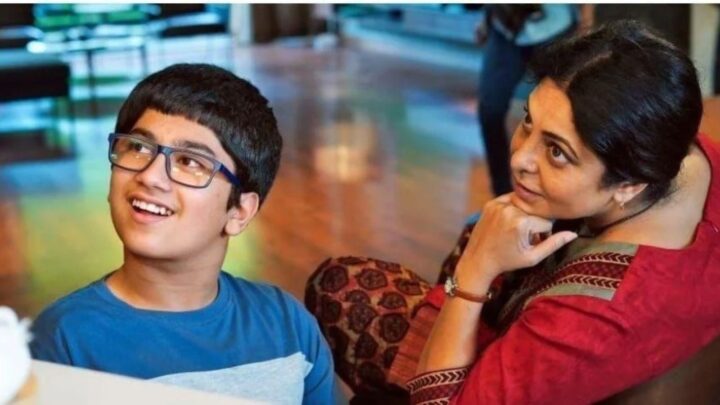
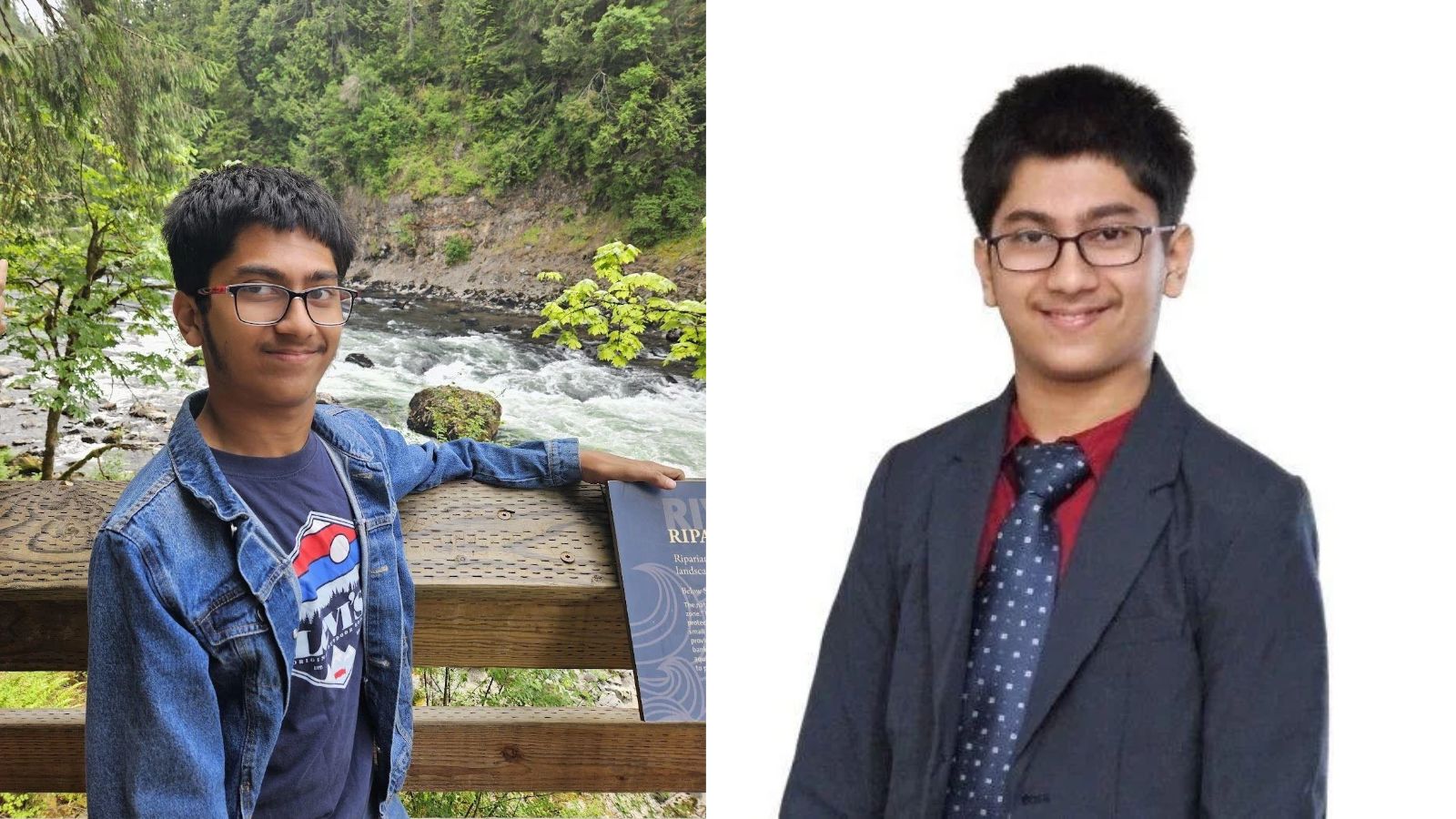
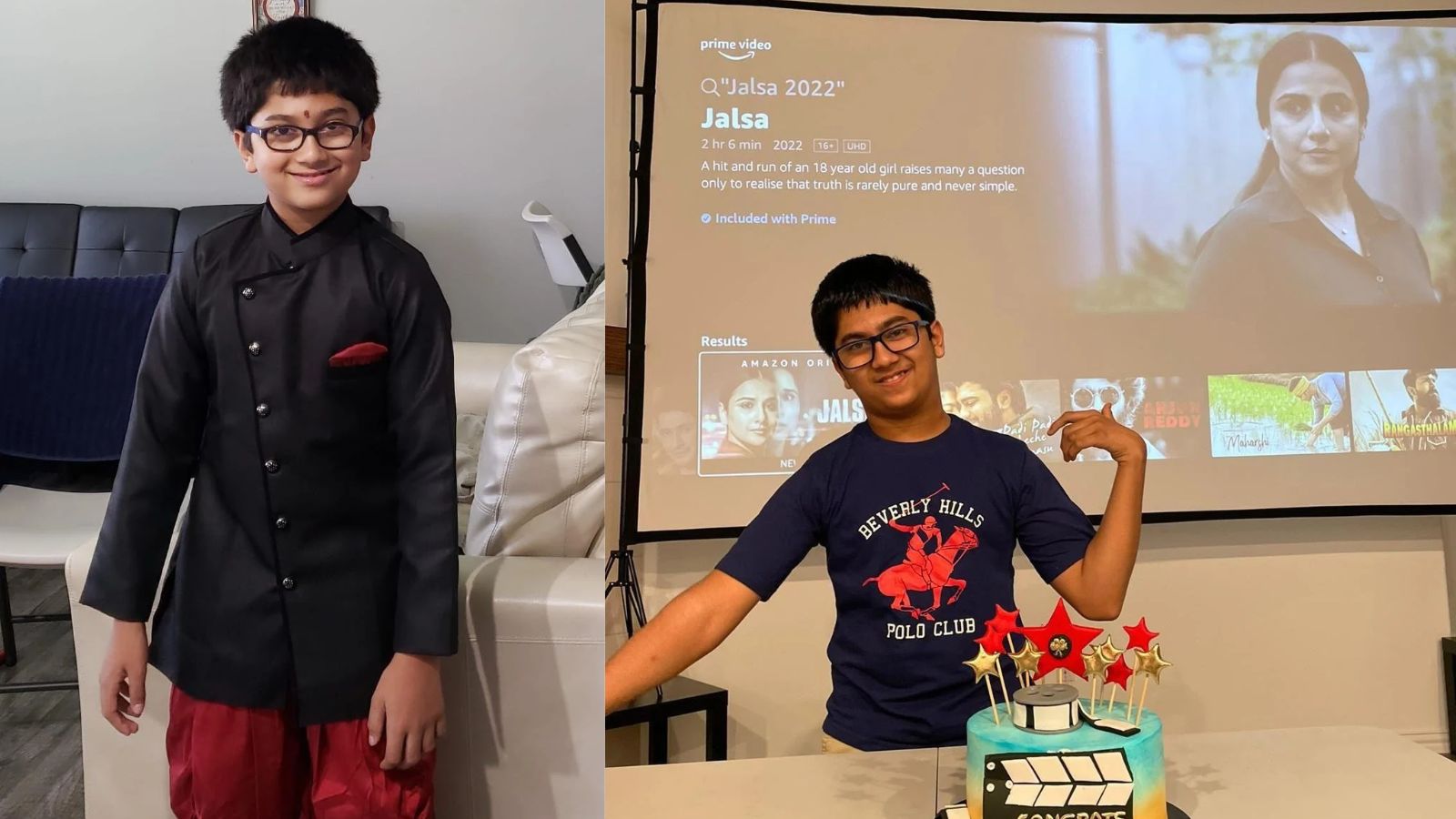
From taking his first step at an age of seven and then featuring alongside actors like Vidya Balan and Shefali Shah in ‘Jalsa’, Surya Kasibhatla’s life story shatters all prejudices against cerebral palsy. Now 19 years old, Surya is presently pursuing a Computer Science degree at The University of Texas at Dallas while spreading the message of disability inclusion through his words. The most valuable thing that has always been with Surya throughout his life is the unfailing support of his parents; his mother Sunitha, who gave up her job for bringing out the best in him, and his father Krishna who taught him programming.
Inspired by HOPE, Surya aims to develop technologies that will make the world where disability doesn’t matter anymore. Surya’s life is a testiment of how right family support and meaningful representation can help a person thrive. Here, in this exclusive interview with All About Inclusive, Surya tells us about himself, his journey in the world of Bollywood, HOPE and future aspirations.
Question) You were born with cerebral palsy, yet you’ve built a career in technology, public speaking, and acting. Looking back, what moment transformed your challenges into a source of strength? Also, what were the initial days of diagnosis like?
Answer) I was born with cerebral palsy so I didn’t know what it meant at that time, however the diagnosis was a shock for my family, as it would be for any parent. But, my mom never felt anything was different about me. She wanted to take care of me and stay positive, and that attitude shaped everything. People often wondered and commented about my mobility, but she kept believing. After six years of physical therapy, her hard work and determination, I took my first independent steps at age seven.
That was the moment everything shifted. I didn’t realize it then, but something changed within me, and I started looking at life with more positivity. I never let my CP hinder my ability to do anything. It may make things take more attempts or more time, but it has never decided what I can or can’t do. Each challenge became a chance to prove that to myself. That belief became my HOPE framework: Heartfelt courage, Optimism, Perseverance, and Empowerment.
Question) Every success story has a support system behind it. How did your family become your biggest team, and what role did they play in helping you believe in your potential when others may have had doubts?
Answer) My family has been my absolute anchor and most dedicated team from day one. They never allowed external expectations or societal doubts to set a ceiling on what I could achieve. Instead of focusing on limitations, they focused on solutions, whether that meant supporting my passion for computer science, encouraging me to pursue acting, or simply building an environment where small wins were celebrated. My parents decided early on not to treat me differently, and they included me in every decision about me.
My mom has been the heart of that support. Her greatest strength is her positivity. When I’m with her, I feel secure and confident that I can achieve anything, even what the world considers impossible. She pours her heart, her patience, and her belief into every step of my journey.
My parents instilled in me the discipline to work hard, the courage to step into spaces where I might be the only person with a disability, and the confidence to advocate for myself and others. Knowing I had that solid foundation made it possible for me to take bold risks and pursue multifaceted paths in life.
Also Read: Teaching Neurodivergent Girls About Periods: Senior Doctor Shares Proven Tools and Tips
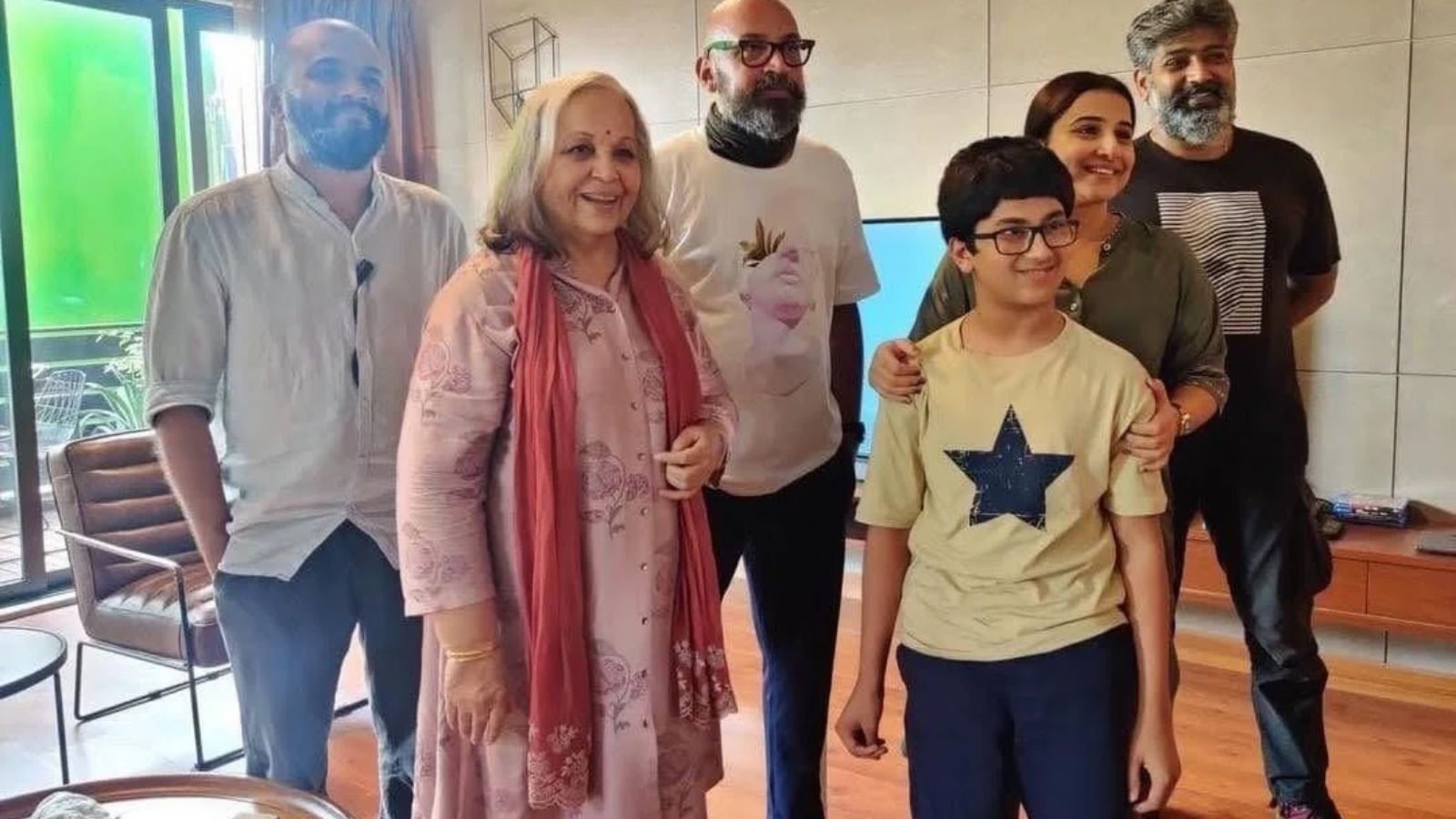
Question) Your role in Jalsa introduced you to a global audience. What was it like sharing the screen with accomplished actors like Vidya Balan, and what lessons from that experience still stay with you today?
Answer) It was my childhood dream to act in movies. I grew up watching Vidya ma’am’s films and getting an opportunity to work with her was surreal. On the first day of shoot, she saw me nervous and comforted me by saying “Acting is all about reacting”. I practiced the same and it made the process easier. What stays with me most is her caring approach and her total dedication to acting.
Also, sharing the screen with Shefali Shah ma’am and Rohini Hattangadi ma’am was just as special. These are legendary actors who are really experienced but still remain very humble, warm, and down-to-earth. That lesson stays with me today as I try to bring the same full-hearted dedication and the same humble attitude towards everything I do, and to stay open to learning from everyone.
Question) Many films still portray disability from an outsider’s perspective. As someone who has lived that reality, what changes would you like to see in how the entertainment industry represents people with disabilities?
Answer) I’d like to see people with disabilities play these roles themselves, and be given accommodations instead of being turned away. Cerebral palsy is just a condition. Actors with CP can do whatever others can in their own capacity, and sometimes they only need a little support. After Jalsa released, viewers with CP told us they felt seen. I never forgot that. Representation isn’t a favor. It shows people with disabilities what they can dream of, and it shows everyone else who we really are. I’d also like disability to be treated as normal on screen. Many households have a family member with a disability, and it’s simply part of everyday life. When creative outlets like films normalize it, audiences begin to do the same in their lives.
Also Read: Can Children Outgrow ADHD or Autism?
Question) Are there any actors, filmmakers, or public figures who have genuinely championed disability inclusion and inspired you through their actions rather than just their words?
Answer) I deeply respect filmmakers and industry leaders who actively prioritize inclusivity rather than making superficial statements. Working with Suresh Triveni sir on Jalsa showed me what genuine inclusion looks like. He made sure the entire set was empathetic. He made the set accessible, tried to understand my limitations and made sure I received all the support I needed. He created an environment where I could focus entirely on giving my best performance.
I’m also inspired by CODA, the movie that won Best Picture, and by Troy Kotsur, who became the first deaf male actor to win an Oscar. They show that when people with disabilities are given real opportunities, they succeed on the biggest stages.
Question) You are balancing multiple identities, including programmer, entrepreneur, speaker, and actor. How do you manage these different passions, and which one challenges you the most?
Answer) I don’t see my passions as challenges. I pour my heart into everything I do. Acting taught me to communicate and to connect with an audience. TEDx gave me a voice and showed me how powerful it is to share a story. Building software products lets me turn ideas into something real that people can use. Rather than competing with each other, they’ve become different tools that make me better at all of the others. The real challenge is time. I’m now an undergrad student, and managing all my interests alongside coursework is difficult. I’m learning to prioritize, plan my weeks carefully, and protect time for what matters most. Some seasons call for more studying, others for more building or speaking, and I’ve learned to be okay with that rhythm. I wouldn’t give up any of them, because each one is a different way of doing what I love.
They also all point toward one long-term goal: starting a tech company focused on products for people with disabilities. Living with cerebral palsy has shown me firsthand where technology falls short for people like me. Acting and speaking give me the platform to raise awareness across industries and also is a creative outlet I love, and building software gives me the skills to create real solutions. I want to bring all of it together to build technology that is accessible by design and gives people with disabilities more independence and opportunity.
Also Read: Shivani and Vivaan: An Inspiring Autism Story From the UK
Question) On difficult days, when things don’t go as planned, what keeps you moving forward, and what personal philosophy guides your life?
Answer) HOPE. I used to think hope was just a wish, a gentle prayer that things would sort themselves out. Now I know it’s a way of life. It stands for Heartfelt courage, Optimism, Perseverance, and Empowerment, and on hard days I lean on each one. I fill my heart with courage to face the problem instead of avoiding it. I stay optimistic that a setback is temporary. I keep practicing, because progress rarely comes in a flash. And I remind myself that I’m empowered to keep going, because I have done hard things before.
I also think about where I’ve come from. I took my first independent steps at seven, after six years of therapy. I spent eight hours teaching my fingers to type one capital letter. I practiced my lines in front of a mirror hundreds of times before facing the camera for Jalsa. Each of those moments felt impossible until it wasn’t. So when a day goes wrong, I remind myself that I’ve faced worse odds, and that slow progress is still good progress.
Question) If every parent of a child with a disability, every young person facing self-doubt, and every employer questioning someone’s potential could hear one message from you today, what would you want them to remember?
Answer) To parents: Focus on what your child can do, not on what people say they can’t. My parents never treated me as different. They gave me room to try, fall, and try again. That made me progress every day and believe I could do anything.
To young people facing self-doubt: Your story is your strength, not something to hide. Don’t shrink yourself to fit into places that weren’t built with you in mind. Step in and help reshape them. Hold on to HOPE(Heartfelt Courage, optimism, perseverance, empowerment), because every hard thing feels impossible until you do it.
To employers: Every day, people with disabilities find creative ways to work around a world that wasn’t built for them, and that makes us natural problem-solvers. Give us a real opportunity and a few accommodations, and you gain someone with resilience, adaptability, and the drive to keep going when things get hard. I know this because I’ve lived it. It took me eight hours to type one capital letter, and now I build software and speak on stage. Hire for potential, not for assumptions, and your whole team gets stronger.
Question) You often speak about hope and positivity. If someone looked at your life 10 years from now, what impact would you want them to say Surya Kasibhatla had on the world?
Answer) Ten years from now, I want people to say that Surya helped break down barriers, both digital and societal. I hope the software my company builds helps people of all abilities create and communicate without limits because I know firsthand where technology falls short. I also hope actors with disabilities are routinely cast in movies and that my work in Jalsa played a small part in that shift. Most of all, I want people to see that HOPE works. With courage, optimism, perseverance, and a strong support system like the one my family gave me, the challenges you live with can become the impact you make.
Also Read: Raising a Child with a Limb Difference: How Dubai Influenced DIYAAHQ Founder’s Approach To Inclusion
Question) Could you please talk about your family?
Answer) I’m 19 years old and live in the United States, where I’m studying Computer Science at The University of Texas at Dallas as a Eugene McDermott Scholar. I’m an only child, and my parents are the foundation of everything I’ve done.
My mother, Sunitha, is my superhero. She was a software professional for 15 years before but quit her job to take care of me. After a career gap of 10 years, she founded K2C Prep, an online educational platform, and enjoys teaching. Seeing her bring her passion to life and building something of her own taught me what it means to have a vision and work at it every day. What I admire most is the way she shows up for me. She stays positive, even on the hardest days, and she has believed in me always. Her patience, drive, and faith in my abilities have shaped the way I see the world. Whenever I feel unsure, I think of her and remember that I can do more than I imagine.
My father, Krishna, is a software professional too and has been my mentor in every sense. He introduced me to programming, and he is one of the first people I turn to when I’m stuck on a project or weighing a decision. He gives me honest advice and technical guidance, and he pushes me to think deeper while always making me feel supported. Many of my software projects began with a conversation with him.
Between my mom’s warmth and determination and my dad’s guidance, I got the perfect balance. They never treated me as different. I know I’m always loved, and that’s why I can dream big.