The CCTV footage of the Neerja Modi School in Jaipur is uncomfortable viewing; it shows a child desperately trying and repeatedly failing to elicit help. The video, released by the family of nine-year-old Amaira, who died after jumping from the fourth floor of the school building on November 1, 2025, has reopened national debate over bullying, school responsibility and child safety.
Her parents claim that she was bullied for months and that her requests to step in fell on deaf ears. The school was alleged to have many lapses in supervision, anti-bullying mechanisms and the provision of counselling support, according to an inspection by the Central Board for Secondary Education (CBSE).
However, behind a legal investigation is an even deeper and much more uncomfortable question: what happens to children who either cannot or do not explain what is happening to them?
That question should haunt every inclusive school.
Also Read: School Denied Admission to Your Neurodivergent Child? Delhi High Court Lawyer Explains Your Rights
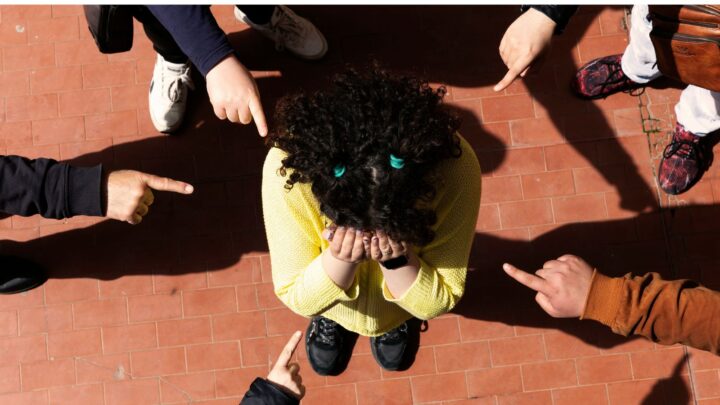
Children with autism spectrum disorder, intellectual disabilities (ID), ADHD, speech and language disorders or other developmental conditions are much more vulnerable to bullying compared to their neurotypical peers.
Many struggle to identify bullying, interpret social manipulation or communicate abuse in ways adults understand. Some may simply withdraw. Others may show behavioural changes, meltdowns, sleep disturbances or school refusal—signals that are often dismissed as “behavioural problems” instead of cries for help.
Also Read: Teaching Neurodivergent Girls About Periods: Senior Doctor Shares Proven Tools and Tips
Inclusive education cannot just simply mean putting children with disabilities in a regular classroom. When we think about inclusion, it is really about ensuring that every child (particularly the most vulnerable) has access to safe support when they need help.
Such a responsibility is already established in Indian Law. Social and emotional well being is part of schooling according to National Education Policy 2020. The guidelines prescribed by CBSE mandate that anti-bullying committees need to be formed in schools, counselling services and safe reporting systems have been made obligatory.
Also Read: Preparing Your Autistic Child for Board Exams? Here’s What a Senior Psychologist Suggests
The Rights of Persons with Disabilities Act, 2016 ensures inclusive education and reasonable accommodation to them. In addition, the Mental Healthcare Act, 2017, recognises every person’s right to access mental healthcare, including children, although it does not mandate that every school employ a full-time psychologist.
Yet implementation remains inconsistent.
Most schools in India continue to be without a full-time school counsellor or psychologist. Most go to professionals only once or twice a month. Very few teachers receive training in identifying trauma responses among neurodivergent children. Anti-bullying committees exist on paper but our studies show they are rarely known to, or visible to, students. Parents often find complaints dismissed as being, ‘Kids will be Kids’
“One of the biggest misconceptions about bullying is that it only comes in loud packages,” explains Dr Shristi Talwar, a Mumbai-based child psychiatrist.
“In reality, the most dangerous bullying is often psychological—exclusion, humiliation, social isolation and repeated intimidation. Neurodivergent children may not tell you what happened, but they will show you through anxiety, regression, aggression or refusal to attend school. Every behavioural change deserves investigation, not punishment,” she adds.
Also Read: Why The SC’s Intervention On Therapy Centres Could Be A Turning Point For Special Children
Experts have long been arguing that schools need to think about a more proactive system of addressing mental health rather than just reactive counselling. This will encompass routine emotional well-being assessments, peer-support schemes, confidential reporting channels, compulsory educator training in neurodiversity and classroom evaluations/individual safety plans for children deemed vulnerable. Just as important is confirming that every child knows they have at least one trusted adult in school who will listen without judgment.
The Neerja Modi case will ultimately be decided by investigators and courts. Responsibility will be established through due process. But whatever the outcome in court, those images of that classroom have already revealed an ugly fact: children often signal destress before taking tragic step.
A school is not just an infrastructure or board results or international affiliations. t is whether the quietest child in the room—the one who struggles to speak, who cannot advocate for themselves, who keeps returning to an adult hoping someone will notice—is truly seen.
Also Read: This Gurgaon Mother is Teaching the World the Value of Right Health Insurance for A Special Child
Because safety in an inclusive school is not defined by ramps and resource rooms.
It is measured by whether every child can seek help without hesitation and know that someone will stop, listen and take action.