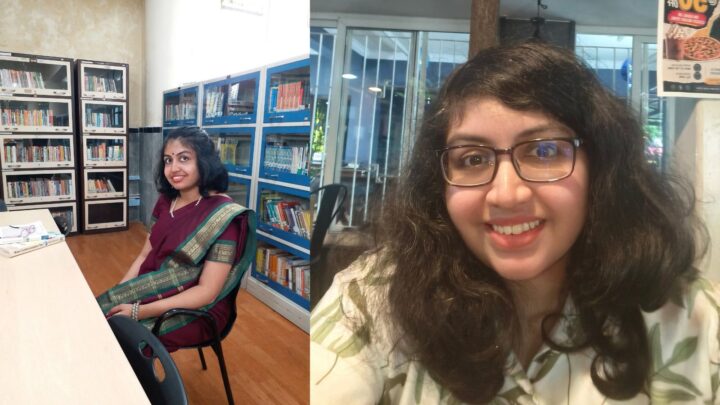
For 34 years, Apoorva Ravi has struggled with the feeling of being different and tried to conform to a world that was too much for her. She hid her struggles, self-criticized and for over three decades, thought something was wrong with her. Her diagnosis at 34 gave her the answers and acceptance she sought for decades. Her story serves as a important lesson to special parents everywhere that understanding a child can change the way they perceive themselves for the rest of their lives.
In an emotional and deeply touching conversation with All About Inclusive, Apoorva Ravi, writer, content creator and late-diagnosed autistic individual, shares her experience with loneliness, masking, missed signs, grief and ultimately embracing herself.
Also Read: Her Speech Was Delayed, Not Her Potential: Story Of 10-year-old Sanvika
Question: Apoorva, before you knew the word ‘autism’, how many years did you spend convincing yourself that there was something wrong with you?
I was always the odd one out- be it in school, pre-university, engineering college or during my master’s program. I felt left out among friends and would agree to whatever they would say just to make them happy. I remember picking up a book called Genome from my father’s book collection, during high school to identify any genetic anomaly (differences) within me, since we were being taught about genes in high school. That was the first time I consciously acknowledged that I was different from others but was helpless.
Question: You learned to act Shakespearean on a stage yet found yourself drained in day-to-day social interactions. Do you think people mistake an autistic woman’s ability to act in society for an ability to fit in?
Yes, I completely agree with you. I used to perform on stage yet struggled making friends and encountered difficulties in group and one-on-one interactions. Being a late diagnosed autistic woman, I had unknowingly been acting normal since a young age. Autism shows up differently in girls and boys. And, owing to my masking and lack of awareness about the signs to look for in autistic girls, my parents, teachers and doctors failed to recognise that I am on the autism spectrum. I am left-handed and also had neo-febrile convulsions at a young age, both of which are probable signs of autism. But they were missed by my neurologist owing to lack of awareness about autism in girls.
Also Read: Autism Diagnosis to Graduation: US-Based Mother Vidya Banerjee on Believing in Her Son
Question: Your mother bringing you lunch and feeding you under a tree was one of the highlights of your school days. Looking back, do you see that little girl as lonely or as someone who had found a haven?
As I mentioned previously, I got neo-febrile convulsions in UKG (upper kindergarten). and had to be hospitalized, and so I missed classes during that time. So, later when I started attending school in the 1st standard; I used to be very shy, scared and anxious, owing to a gap in attendance, because of my sickness. My mother used to bring me lunch to check on me, and yes, it used to be a safe haven for an otherwise lonely girl in school. I used to look forward to her visit but also endured the curiosity and gossip of friends owing to my mother coming to meet me every day during the lunch break.
Question: You spent years trying to make yourself ‘acceptable’ to society. What is one thing that is a part of you that you wish no one had tried to take away?
During school, I used to participate in extracurricular activities. My mother used to teach me poetry recitation, elocution, mono acting etc. I also used to participate in school dances and plays. So, despite not having good friends, these activities kept me happy and engaged. But, when I started attending college, it felt daunting and I grew further shy and stopped participating in extracurriculars, which led to me feeling very lonely and isolated. I wish that I had not put a restriction on myself from participating in extracurricular activities. I wish the challenges of college life had not taken away my participation in extracurriculars from me.
Also Read: How to Develop Language Skills in Neurodivergent Children
Question: There were teachers, doctors, classmates, even loved ones; all who tried their best to explain to you what was happening to you. How heartbreaking is it that everyone has a name for what you go through, and no one asks you how it feels like?
As mentioned previously, I am left-handed and hold the pencil/pen very differently from others. My teachers were primarily concerned about me writing faster and did not identify it as a trait of an autistic kid.
And, having suffered neo-febrile convulsions at a young age, I had to undergo regular EEGs. The neurologist treated my physical symptoms but failed to observe my behavioural symptoms of autism. They named my disease as epilepsy and did not go further to understand my behaviour which was heartbreaking.
Also Read: How Home-Based Autism Therapy Helped Little Guru Thrive Against the Odds
Question: As an autistic woman, do you mourn for the girl you could have been, had people understood your differences?
Yes, I have often looked back and wondered how it would be, If I had gotten an earlier diagnosis during childhood. Perhaps I would have got better accommodations, and I would have a language to name my differences, which were mocked at by friends and hidden by me. So, yes, I grieve for that little girl who always used to beg her teachers for extra time, just a few minutes more to complete the paper, which would have been my right, had I been diagnosed. Also, I grieve for my adult self, who struggled in different jobs with stress, anxiety and burnout; not realising that my shortcomings were owing to my autism, and that I had to ask for accommodations and not blame myself.
Question: You say that acceptance is a gift that you have given yourself. Is there a moment in time when you chose to accept yourself, over waiting for the world to?
Receiving my autism diagnosis was a celebratory moment for me. I now accept that as an autistic woman I am not very good at group interactions, especially with extended relatives. This is just one among the differences I live with every day, when compared to a neurotypical person. And I don’t hesitate to excuse myself after a few minutes of interaction with a group, to protect my energy levels. I do not worry about how I might be perceived and choose to accept my ability of limited interaction rather than forcing myself to interact.
Also Read: Diagnosed With Autism at 2.5, Thriving at 22: Milan Singh Shares Son Samar’s Journey
Question: If you could sit next to little Apoorva, who spent a year outside the classroom, too scared or ‘inconvenient’ to enter; what would you say to her about the wonderful life she would lead, if only she was true to herself?
I remember playing on the slide and swing in prenursery and not attending classes. I was an anomaly then, without knowing that my anomaly had a name. From then, till my diagnosis at 34 years, I have observed and hidden many differences, to seem normal.
My message to my younger self would be to not hide that laughter, not to doubt myself for not being good at sports and other games and still participate just to have fun. I would also tell myself that it was alright that I enjoyed sitting and reading in the library more than spending time with too many friends and that it was alright to have few friends who understand than having many friends who wouldn’t understand. I would tell my younger self to be carefree, joyous and remove any self-doubt that she had.