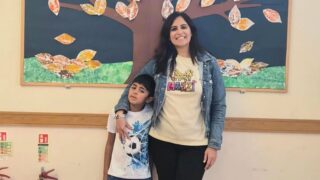

If you are a parent of a neurodivergent child, developing language in them often feels like an impossible task but according to Speech-Language Therapist Bisma Shaikh, who has over 14 years of experience working with children, effective communication begins when parents understand and accept all forms of communication.
Bisma is a Mumbai based paediatric Speech and Language pathologist for kids with Autism, late talkers, GDD, misarticulations, fluency etc. She holds a bachelor’s and master’s degree in audiology and speech language pathology from AYJNISHD, Mumbai and is also the founder First Words, speech language development materials for children.
View this post on Instagram
A mother herself, Bisma suggests tips that include very simple practical ways parents can enhance language development through natural and playful interactions along with an intentional communicative tone.
Question) Many parents are told to “wait, children speak at their own pace.” How can they tell the difference between a late talker and a child who needs a speech-language evaluation?
Answer) Children speak their first words between 12-15 months. Between 18-24 months there’s a huge increase in their expressive vocabulary.
If the child spoke their first word by 18 months and is slowly and gradually making progress, that is trying to speak more words , i would be positive they would catch up by 24 months, a late talker one can presume.
However, if the child is struggling to imitate or copy words, has difficulty even with language comprehension- following instructions or understanding simple questions for example where is mumma? , and/or has challenges with social communication- responding to name, eye contact, pointing, or playing with caregivers , I would recommend an evaluation.
Also Read: Sensory Need or Behaviour Issue? How to Tell the Difference
Question) For autistic children who are non-speaking or minimally speaking, what are some of the biggest myths about communication that you wish more families understood?
Answer) Minimally speaking doesn’t mean the child does not understand or does not want to communicate. The child is not being stubborn as most people feel, they are genuinely having a difficulty with using verbal language or speech so providing and accepting all forms of communication, i.e gestures, pictures, AAC becomes extremely important.
Question) How can parents naturally build language skills at home without making every interaction feel like a therapy session? Could you share a few simple activities?
Answer) Add language to your routine- describe things, label objects, use verbs, be a narrator. For e.g bath time- there are so many words you can teach a child using this simple routine. Nouns like T shirt, pant, towel, toothbrush, verbs like open, close, remove, put, wash, scrub wipe, adjectives like hot, cold, dirty, clean. All of these words build the foundation for communication.
Play with your child as a PARTNER NOT AN INSTRUCTOR. The more connected and happier they feel with you, the better they will learn. CONNECTION leads to COMMUNICATION. For children connection is through play.
Read to your children- make it a routine, everyday! I don’t mean read read but tell the story in your own words, describe the pictures, pause and wait to see what your child finds interesting, re-read the books they love, share a story! The learning will naturally follow.
Also Read: How This Autism Father Turned Fear into SafeScan, a QR Code for Child Safety
Question) What are some early communication milestones that parents often miss in babies and toddlers, even before first words emerge?
Answer) Difficulty with nonverbal communication- even before a child uses words, they start using different forms of iconic gestures like pointing, waving, tapping to express their needs. It’s an important milestone for speech imitation.
Lack of consistent response to their own name , that begins as early as 7-8 months or limited understanding of verbal language, difficulty following simple verbal instructions. Lack of to & fro interaction in simple games like peek a boo…
Question) How do sensory processing differences affect speech and language development, and why is it important to look beyond just the child’s ability to speak?
Answer) Imagine you are crossing the road, but the horns of the cars feel too loud, the headlights are too bright, your speed of walking becomes slow, you will struggle to cross the road. This is because the information you are getting from your sensory systems is a lot and you are unable to integrate it and form your response.
Children with autism, SPD ( Sensory Processing Disorder), ADHD, experience a sensory dysregulation and this can affect their ability to listen, pay attention and participate with their caregivers, affecting their ability to communicate. Therefore it becomes important to provide the child with supports that can help them communicate- visuals, pictures, AAC. Occupational therapy and speech language therapy needs to go hand in hand. As sensory processing improves, so does attention and even speech / communication.
Question) Many parents worry that introducing AAC (picture boards, communication apps, or speech-generating devices) will delay spoken language. What does research actually say?
Answer) There has been tons of research in this domain, and every research has concluded that AAC in no way diminishes a child’s ability to speak. It in fact supports communication by reducing the frustration the child experiences due to lack of speech, thereby reducing the pressure & anxiety they feel, and may even result in speech development in conjunction with AAC.
Denying AAC to a non speaking child is like denying spectacles to a child who can’t see well, and hoping they will eventually start seeing well.
Question) In India, speech therapy is often started only after a child enters preschool. How much difference can early intervention really make, and when is the ideal time to seek help?
Answer) Early intervention is crucial as we all know how rapid is brain development in the early years. A child’s brain is making millions of synapses in the early years and therefore therapy when started early results in faster progress. It also helps parents understand and learn startegies to support communication at home. The same thing that a parent will do at 4 years of age could be done even at 2 years because of early intervention.
Also Read: Diagnosed With Autism at 2.5, Thriving at 22: Milan Singh Shares Son Samar’s Journey
By the time the child is ready for school, they have already caught up on their speeh language skills. Again there will be differences and variations considering the severity of each child’s challenges. Nevertheless, early intervention is crucial and make huge differences in every child’s journey.
Question) If you could give every parent of a child with speech or language delays one piece of advice that could change their child’s communication journey, what would it be?
Answer) Focus on connection first, don’t become an instructor or interrogator with your child. The more comfortable and safer a child feels with you, the better they will communicate. Same applies to adults as well, right?
See them as a child first, follow their interests and use things they enjoy doing to teach them the difficult things. Don’t rush, slow down, pause and wait for your child to understand and respond. These will be your important tools.